• About
  • My Fiction
  • Reviews

The Subway Test

~ Joe Pitkin's stories, queries, and quibbles regarding the human, the inhuman, the humanesque.

The Subway Test

Category Archives: Literary criticism

The Year In Reading: 2016

28 Wednesday Dec 2016

Posted by Joe in Literary criticism, Reading Roundup, Stories

≈ 2 Comments

Tags

books, Reading Roundup, sci-fi

At the end of 2015, I posted a roundup of what I had read that year, with a mini-review of each book. The post went over quite well, so I thought I would reprise this heavy year’s reading as well. Here’s the piebald mix:

Adler-Olson, Jussi The Keeper of Lost Causes.  I’m not normally a fan of mystery stories, but I was entertained enough by this example of Nordic crime fiction to keep reading and to finish it. The conceit of torturing someone through increasing the atmospheric pressure in a cell made out of a pressure vessel was both interesting and creepy, and the vibe of the book spurred my to try writing a sci fi murder mystery of my own. (The draft of that story has been disappointing, but I will see if it’s salvageable)

Bradbury, Ray. The Martian Chronicles.  This story cycle had a few truly excellent works in it (I’m thinking especially of the first three Mars expeditions). Other tales seemed emotionally lame—either overwrought or full of implausible motivations. Much as War of the Worlds seemed like a meditation on British Imperialism, this book seems like a metaphor for the conquest of the American West, as well as an early work on nuclear apocalypse. I’m glad I read this book—and I feel it gives me some external validation to keep going with my own story series on John Demetrius—but overall I felt a bit flat about the experience.

Calvino, Italo. The Baron in the Trees.  One of the sweetest, most heart-warming books I’ve ever read. Baron Cosimo di Rondo climbs a tree during a temper tantrum when he is twelve years old and he never comes down. For the next fifty-odd years, through the height of the Enlightenment, the French Revolution, and the disappointments of Napoleon, Cosimo reads, philosophizes, carries on love affairs, and corresponds with the great minds of his day, all from his home in the branches. Calvino, for much of his youth a communist, apparently wrote this book as a response to the Soviet repression of the Hungarians in 1956 (an event which caused him to leave the communist party and never join another). It’s a story of how one can keep to one’s philosophical commitments in the face of the many let-downs that the world has in store for us.

Catmull, Ed. Creativity, Inc.  What an inspiring book: this account of what it takes to run a creative company (in this case, two companies–Pixar and Disney Animation) filled me with ideas for my work at my own college and for my creative work as well. Catmull is big-hearted, generous, modest, and also committed to excellence in his work. I’m so glad my wife put me on to this book; I never would have sought it out myself.

Cline, Ernest: Ready Player One. This gift from my sister was a very enjoyable little read. The writing was in some ways terrible—Cline trades in clichés and underwriting—but the story is quite well-plotted and gave me many geeky moments with its references to D&D, old 80s movies and music, and early video/computer games like Zork. Good fluffy fun.

Fuentes, Carlos. La Muerte de Artemio Cruz. After four attempts over the course of six years, I have finally finished this short, sad work. I’m a very slow reader in Spanish under the best of circumstances, and this work, written with Faulknerian paragraph-sentences, unclear points of view, and unannounced time shifts, really put my creaky Spanish to the test. Yet in spite of its brevity, it’s a monumental novel, the history of Mexico in miniature, a chronicle of thwarted ambitions and broken promises and, underneath all that, an indomitable dignity. The Wikipedia page for the novel claims that the book was heavily influenced by Citizen Kane, and I can dig that, but just as much I see the influence of The Sound and the Fury and As I Lay Dying. It’s a poignant and unflinching look back at the life of a tough, bad hombre.

Grossman, Lev. The Magicians. I had seen a lot of good buzz around this series, but I found this book pretty hard to like. The characters were so, so privileged and self-involved, so jaded and irresponsible with their powers, that it seemed like nobody had anything on the line in this book. The characters seemed far more Jay McInerney than J.K. Rowling—I just never felt invested in any of them.

Holdstock, Robert: Mythago Wood. While interesting and sometimes fascinating, this book was ultimately a big disappointment to me. I loved the idea of a primeval forest with its own mythopoetic, psychological characters drifting out of it like ghosts. Shades of Solaris, there. However, the dialogue was pretty wooden, and I was shocked at how many plot points were totally contrived or were abandoned so carelessly (I know that the book is one of a series, but still—there’s no excuse for the lame non-explanation of Keeton’s leaving, nor the off-handed dismissal of the three following warriors who had barely figured in the story up to that point). I don’t remember who put Holdstock in the same league as LeGuin, Crowley, and Marion Zimmer Bradley, but this book does not lend much support to that claim.

Liu, Cixin: The Three Body Problem. I have mixed feelings about this one. The story is a truly original first contact tale, and I was blown away by the episodes that involved computing (both the episodes in the Three Body game and the creation of the sophon). However, I also found the characterizations wooden and the characters’ motivations at times truly unbelievable. How much of that stems from the translation, or from the different aesthetic of Chinese fiction, and how much of my trouble stems from the weak writing that afflicts so much science fiction?

Palmer, Parker. Let Your Life Speak.  I’m surprised that it has taken me so long to read Parker Palmer, probably the most famous living Quaker in the United States. This book seemed to take the form of half a dozen loosely-related Pendle Hill Pamphlets, most of them inspiring or heartening, and none of them useless. This is a great book about vocation, looking at our work through the lens of how we can best serve others and live out of our deepest identities. This may on the face of it sound totally contrary to the advice of another book I loved, So Good They Can’t Ignore You, but I would call these books complementary: Cam Newton’s focus was on building skills and getting paid for them, while Palmer’s seems to be on discernment about what our gifts are and how to use those gifts to serve others. Palmer is a true Hufflepuff—I needed his advice as I struggle with my own Hufflepuffery.

Sorokin, Vladimir. Day of the Oprichnik.  Near-future sci fi from one of contemporary Russia’s most celebrated authors. In the Russia of the 2020s, a Francisco Franco-esque figure has taken power, re-instituting the Tsardom and the ostentatious rites of the Orthodox Church. The oprichnina—Sorokin takes the name from the secret police of Ivan the Terrible—go about knocking heads, terrorizing people, and taking some weird-ass drugs.  The book is one part Atwood’s The Handmaid’s Tale one part Gogol’s Dead Souls, with a dash of Burgess’ A Clockwork Orange thrown in. Violent, intense, and a solid read.

Stapledon, Olaf. Star Maker. One of the oddest works of sci fi I’ve ever encountered. This read more like an extended essay or history than like a true story. Yet this history of the universe as told through the eyes of hive mind energy beings was quite imaginative and often interesting. I can see how Stapledon influenced Stanislaw Lem, Arthur C. Clarke, and Freeman Dyson, among many others.

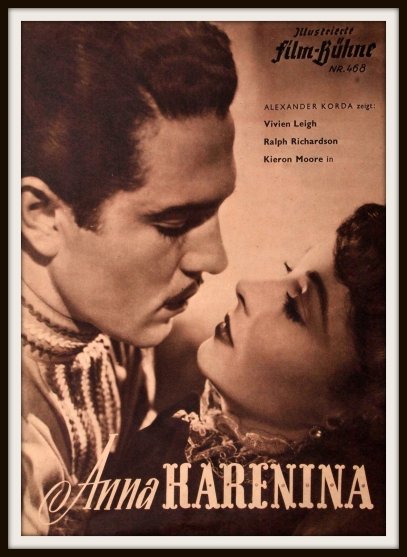
Tolstoy, Leo. Anna Karenina.  One of the great reading experiences of my life. Slower than War and Peace—Anna Karenina took me about three months to finish—but I was amazed by the large-heartedness of the book. There were practically no unsympathetic characters at the end (except for the pharisaical religious woman who insinuates herself into Karenin’s life, I can’t think of a truly unsympathetic character). Even Karenin becomes, halfway through the book, a figure of deep love and pity. I was happy to see the book end—it’s a real emotional drain to read it—but I was amazed by Tolstoy’s powers of characterization here, as well as his plotting (the book reads like a collection of about 40 linked short stories).
OLYMPUS DIGITAL CAMERA

Wells, H.G. The War of the Worlds.  So different from the film treatments. But such a story! I can see why Wells was so influential. I love how the narrator characterized himself as a writer “on philosophical themes.” The whole book seems like an allegory for the failings of British Imperialism—one of the best sci fi stories I’ve ever read.

Witwer, Michael: Empire of Imagination. This was a fluffy, entertaining history of the creation of Dungeons & Dragons by Gary Gygax. I didn’t realize exactly how much of a rockstar Gygax had been in the 80s (nor how much of the rockstar lifestyle he copied). I did know something of the rags-to-riches-to-rags arc of his story, but there were some wonderful details here, as well as a bit of redemption in Gygax’s later years (even if the telling of it seemed a bit contrived). A fun memory trip.

Zinn, Howard. A People’s History of the United States. I wrote a longer review of this book a couple of weeks ago.  While I was familiar with every period Zinn wrote about in People’s History, I don’t think I had ever seen all these periods stitched together into a single overarching vision. Basically, Zinn’s contention is that the true history of the United States is not defined by the actions of presidents and congresses who have worked at practically every turn to enrich a tiny economic elite–by preserving slavery, by massacring the natives, by invading Mexico and Cuba and The Philippines, by overthrowing democratically elected governments in Guatemala and Chile and Iran. Rather, American history is made up of the often overlooked struggles of the oppressed, the working class, the unrepresented. It is a history of people fighting, over centuries sometimes, to be included in the opening phrase of the Constitution: “We the People.” It’s an inspiring–if sometimes flawed–vision. I believe that what it offers, in a crowded field of history texts, is a truly alternative analysis of the history of the nation.

Science Fiction: the New Philosophy?

06 Saturday Aug 2016

Posted by Joe in Literary criticism, Musings and ponderation, Science Fiction

≈ 2 Comments

Tags

Bertrand Russell, nerd culture, sci-fi

One of the best books I’ve read in a while–and one of the most engaging graphic novels I’ve ever read–is Logicomix. It’s one of those books that seems so improbable that I think a lot of readers probably picked it up just to see how the authors would carry off a graphic novel biography of Bertrand Russell and his quest to systematize all mathematics in Principia Mathematica. Frankly, the topic sounds about as dull as Principia Mathematica itself–I’ve always thought of Principia as being one of those books that people refer to in order to sound educated but which nobody has actually read. And, after learning that Russell and his collaborator, Alfred North Whitehead, spent several hundred pages of densely-packed logic script in order to “prove” that 1+1=2, I suspect I won’t be reading Principia Mathematica anytime soon.

But Logicomix is about so much more than Bertrand Russell’s monumental (and ultimately failed) endeavor to create a self-contained logical system for all maths. Really it’s a surprisingly engaging story about how human beings make meaning out of the universe. I loved the book and will be giving it to loved ones that are into that sort of thing. And, the book made me curious about Russell, whom I’d never really encountered very deeply in college, even though I spent a couple of meandering years as a philosophy major as an undergrad.

I looked up this delightful little interview with Russell, filmed near the end of his life, one of the millions of forgotten treasures on YouTube. In front of the curtain painted to look like a library of ancient books, Russell holds forth in his high-pitched, elfin voice on the uses of philosophy. His basic thesis is that science deals with questions of “how things are” in the world, while philosophy serves to speculate about “how the world might be,” that is, to ask questions which science is not yet prepared to answer.

I think that’s a pretty solid explanation, though it immediately got me thinking that Russell’s definition could just as easily apply to science fiction. Perhaps it applies to science fiction even better: far, far more people read and watch science fiction than philosophy. The field of philosophy has ceded much of the intellectual territory that it occupied in Russell’s day: topics like metaphysics and epistemology get much more airplay in fields like theoretical physics and cognitive science than they do in traditional philosophy departments. Even in 1960 when the interview was filmed, Russell was speaking of the retreat of academic philosophy from topics that could be properly answered by science. But I think even in the realm of thought experiments and counter-factuals, science fiction is adding at least as much to the questions of “how the world might be” as philosophy–or any other academic subject, for that matter.

I know that not all science fiction is Stanislaw Lem and Margaret Atwood–there’s still a huge body of science fiction that doesn’t even try to concern itself with serious questions, science fiction whose sole purpose is an escapist entertainment about laser guns and robots with big boobs. And that stuff can be fun–I’m not too much of a snob to enjoy a Guardians of the Galaxy-type confection. But as we explore the deep stuff, the nature of our universe and of the human predicament, it’s hard to think of a question of metaphysics, epistemology, phenomenology, ethics or aesthetics that hasn’t been explored at least once by some pretty great science fiction.

I’m sure someone who sees this post was a better philosophy major than I. Can you think of an exception to my claim in the paragraph above?

Finn the Human Boy: a Modern Gilgamesh

27 Friday May 2016

Posted by Joe in Biology, Literary criticism, Musings and ponderation

≈ 2 Comments

Tags

fantasy, Finn and Jake, Gilgamesh, monsters, mythopoesis, nerd culture

I’ve been trying to learn a little more about graphic novels–a literary genre that I have almost no experience with–and pulled from the public library shelf Gilgamesh: A Graphic Novel by Andrew Weingarner. I have always been fascinated by the epic of Gilgamesh, the oldest written story known to humanity: I loved the old John Gardner translation of the story, and I had a good time with this graphic retelling. The various cosmic monsters that Gilgamesh battles are drawn very well–they’re intense, original, but also evoke a Mesopotamian vibe.

The central partnership in the story–the ur-dynamic duo that informs so many later character dyads–is that of Gilgamesh and Enkidu: Gilgamesh, the civilized, anxious, ambitious king, and Enkidu, the wild and natural “hairy man.” The duo appears later as Don Quixote and Sancho Panza,  as Prince Hal and Falstaff, as Han Solo and Chewbacca.

And, I realized a little later, as Finn and Jake from Adventure Time.

Besides the cosmetic similarities of the two pairs, Finn the human boy and Jake the magical talking dog are also spiritual and characterological siblings to Gilgamesh and Enkidu. Like Gilgamesh and Enkidu, Finn and Jake are perfectly matched combatants, each unable to defeat the other, whether in combat, in their long-running pranking competitions, or in their frequent video game and Card Wars match-ups. Like Gilgamesh, Finn is a rambunctious upstart, eager to attack real or perceived injustice head-on, usually through violence. Like Gilgamesh, Finn is also beset with anxiety–often as a result of his phobias or bad dreams–yet Finn and Gilgamesh are also paradoxically able to set aside their nagging dread and fight fearlessly, even foolhardily, in battle.

Jake is a striking modern recreation of Enkidu, literally a magic talking animal. In much the same way that Enkidu advises and guides Gilgamesh, Jake is wiser and more experienced than Finn in most matters, especially those relating to the basic animal appetites for sex and sleep and food.

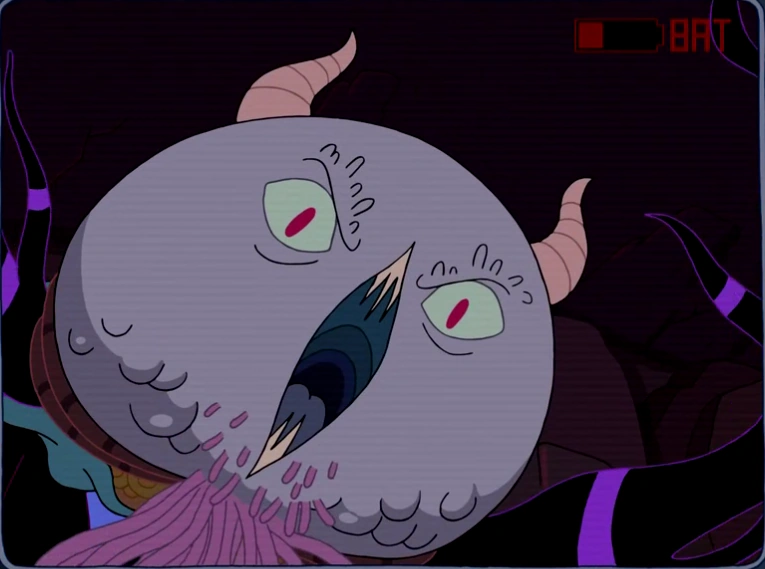
Both duos spend their time hustling from cosmic battle to cosmic battle with monstrous or demonic antagonists. It’s easy to imagine Humbaba, the earlier epic’s demonic guardian of the cedar forest, as a creature drawn for Adventure Time (even Humbaba’s name would fit well in Adventure Time); it’s just as easy to imagine an Adventure Time antagonist like Hunson Abadeer appearing in a sculpture from some Sumerian ruin.

Found on a Mesopotamian fresco…

The mapping of one duo to another isn’t perfect–Gilgamesh is a character rooted in a 3000 year-old value system that doesn’t translate well to our own. He is cruel by our standards: violent, an abuser of women, a despoiler of the environment (ironically, the pre-civilized Enkidu is much easier for contemporary readers to sympathize with). But the Gilgamesh-Enkidu pairing still speaks to us in much the same way that Finn and Jake speak to us, because the relationship is archetypal. The relationship speaks to our odd predicament as creatures that are both animal and transcendent of our animal nature: we are, as Hamlet says, “in action how like an angel! In apprehension, how like a god,” yet we are at the same time deeply aware of our brutish status as just another mammal, tied down to the “Four Fs” of feeding, fighting, fleeing, and reproducing that govern all animal life. For both Gilgamesh-Enkidu and Finn and Jake, we are promised that all good things in life–justice, mercy, peace, love–come to us when these two natures are reconciled and act in partnership. We are warned that madness follows when we act in opposition to it.

Newer posts →

Subscribe

  • Entries (RSS)
  • Comments (RSS)

Archives

  • August 2026
  • July 2026
  • June 2026
  • May 2026
  • March 2026
  • February 2026
  • January 2026
  • November 2025
  • September 2025
  • August 2025
  • July 2025
  • May 2025
  • April 2025
  • March 2025
  • January 2025
  • December 2024
  • October 2024
  • September 2024
  • August 2024
  • June 2024
  • May 2024
  • April 2024
  • March 2024
  • February 2024
  • January 2024
  • December 2023
  • October 2023
  • August 2023
  • July 2023
  • June 2023
  • April 2023
  • March 2023
  • May 2022
  • August 2021
  • June 2021
  • January 2021
  • October 2020
  • May 2020
  • March 2020
  • February 2020
  • January 2020
  • July 2019
  • June 2019
  • December 2018
  • October 2018
  • July 2018
  • May 2018
  • April 2018
  • January 2018
  • December 2017
  • November 2017
  • September 2017
  • August 2017
  • July 2017
  • June 2017
  • May 2017
  • April 2017
  • March 2017
  • February 2017
  • January 2017
  • December 2016
  • November 2016
  • October 2016
  • August 2016
  • July 2016
  • June 2016
  • May 2016
  • March 2016
  • February 2016
  • January 2016
  • December 2015
  • November 2015
  • October 2015
  • July 2015
  • May 2015
  • March 2015
  • February 2015
  • January 2015
  • December 2014

Categories

  • A Place for my Stuff
  • Advertising
  • Artificial Intelligence
  • Beta Readers
  • Biology
  • Book reviews
  • Curious Fictions
  • Dungeons and Dragons
  • Exit Black
  • fantasy
  • Games
  • HPIC
  • Journeys
  • Let's All Admire That Fantastic Can
  • Lit News
  • Literary criticism
  • Musings and ponderation
  • My Fiction
  • Pacifica
  • Politics
  • Reading Roundup
  • Science
  • Science Fiction
  • Science Fiction Writers of America
  • SETI
  • Stories
  • Stranger Bird
  • The Ideal Vehicle
  • The Time of Troubles
  • Uncategorized
  • Utopia and Dystopia
  • Welcome
  • YA fantasy

Meta

  • Create account
  • Log in

Authors

  • Joe's avatar

Blog at WordPress.com.

  • Subscribe Subscribed
    • The Subway Test
    • Join 172 other subscribers
    • Already have a WordPress.com account? Log in now.
    • The Subway Test
    • Subscribe Subscribed
    • Sign up
    • Log in
    • Report this content
    • View site in Reader
    • Manage subscriptions
    • Collapse this bar
Loading Comments...