• About
  • My Fiction
  • Reviews

The Subway Test

~ Joe Pitkin's stories, queries, and quibbles regarding the human, the inhuman, the humanesque.

The Subway Test

Category Archives: Musings and ponderation

How to Comp

15 Tuesday Aug 2023

Posted by Joe in Advertising, HPIC, Musings and ponderation, My Fiction, Pacifica, Utopia and Dystopia

≈ 13 Comments

Tags

books, marketing, publishing, query letters, sci-fi, Science Fiction, utopia

I’ve known for a long time that writing is a business. But knowing that writing is a business is no guarantee that one knows how the business works. There’s good circumstantial evidence that for the past 20+ years, I haven’t had the foggiest idea about what I’m doing.

Where my writing career is concerned, I’ve tried to follow Steve Martin’s exhortation to be “so good they can’t ignore you.” But what that quote elides is that it’s still up to the writer to give the audience a chance not to ignore you. I could be as good a writer as Emily Dickinson, but if I don’t know how to get people’s attention, my career could still end up like, well, Emily Dickinson’s.

I’m facing this challenge as I go out for a literary agent for my third novel, Pacifica. (I have an excellent agent, Scott Veltri, for TV and movie projects, which is the hope for my novel Exit Black. But Pacifica is not on the list of 10,000 books I would think of for a movie tie-in). As anyone who has ever gone out for an agent knows, a query letter is one of the writer’s few early opportunities to show their understanding of writing as a business. And one of the things I’ve only recently gotten a feel for is the importance of comps for the novel I’m trying to sell.

Comps–short for comparative titles–are a short list of recent books that are similar to the novel you’re selling. And there are apparently rules, or at least norms, regarding the art of good comps. Here are the ones I’ve picked up at conference panels, in writing guides, and intuition:

  • Pick no more than three books (though apparently one of the books can be a movie or tv program)
  • Pick recent, commercially successful works, but
  • Avoid comparing your work to that of literary A-listers (e.g. no Annie Proulxes or Cormac McCarthys)

Are these the rules? If I knew, more people would probably be reading my writing. If you have better intel on how comps work, please jump in the comments or feel free to DM me! I can tell you what wasn’t working for me, though:

  • Not offering a list of comps in my query letter
  • Comparing my work to Ursula K. Le Guin’s (though I don’t think I’m wrong! Read Stranger Bird yourself and you be the judge)
  • Dissing other writers’ work (at the time I was lathered up about what I called the Harry Potter Industrial Complex)

None of these remarks got me an agent, and I suspect now that that was because my approach showed that I didn’t understand how the publishing business works. Agents and publishers want to know comps for a simple reason: they want to know what has already sold well that is similar to the book you are selling. It doesn’t matter if your book is the most exquisitely constructed exploration of the human heart since Anna Karenina–an agent wants to know if your novel will sell.

Is that a mercenary attitude? Maybe. Is it a rule that you must have comps? Absolutely not. But there’s also no rule that says I have to wear pants to a job interview. If I want to wear jorts to my next job interview, that’s my right as an American. However, wearing jorts to an interview will foreclose on just about every job offer outside of a very small set of jorts-positive jobs, many for which a 53 year-old man wouldn’t be an attractive candidate anyway.

My last unsuccessful job interview. Photo credit Carlyn Eames

So, what am I pitching as my comps for Pacifica? My three are Gabrielle Zevin’s Tomorrow, and Tomorrow, and Tomorrow; Anthony Doerr’s Cloud Cuckoo Land, and Russell Brand’s The Magic Kingdom–three very different books (and one of them I wasn’t even crazy about). But they’re three recent, commercially successful books, each with a passing resemblance to my book about a guy who has a religious vision playing video games which spurs him to found several increasingly ridiculous, polyamorous intentional communities. I guess that’s not exactly a concept which sells itself. Hopefully the comps will help me market it.

Dungeons & Dragons and the Trap of High Fantasy

24 Monday Jul 2023

Posted by Joe in Dungeons and Dragons, fantasy, Games, Literary criticism, Musings and ponderation, Uncategorized, YA fantasy

≈ 1 Comment

Tags

D&D, Dungeons & Dragons, fantasy, Fritz Leiber, high fantasy, Lord of the Rings, LOTR, Michael Moorcock, Robert E Howard, sword and sorcery, swords and sorcery, Tolkien

In a post of mine from a couple of weeks back, I mentioned as an aside my preference for the gritty, noir quality of sword & sorcery fantasy over the flash and bombast of high fantasy. As I’ve reflected on that offhand comment over the last days, I’ve wondered precisely what I meant by it. And I’ve wondered, both as a fantasy writer and a teacher of a fantasy and science fiction literature class, whether I even know what I mean by the terms high fantasy and sword & sorcery.

I’m not the only one to struggle with what seem like ill-defined terms. As the Wikipedia page on low fantasy argues, the distinction between high and low fantasy rests on where the action takes place: if the fantasy story takes place on another world (or a hidden world within this world), then it is high fantasy; if the action takes place in this world, then it is low fantasy. But this is hardly everyone’s definition: for many, the distinction between high fantasy and low fantasy involves the role of magic and morality in the story, not the question of where the story takes place. As the same Wikipedia page helpfully explains, “Thus, some works like Robert E. Howard‘s Conan the Barbarian series can be high fantasy according to the first definition but low fantasy according to the second.”

Fafhrd and the Gray Mouser have the same problem. . .but high fantasy or not, Dark Horse’s omnibus edition is coming soon!

So what did I mean when I said I preferred sword & sorcery to high fantasy? Well, here’s what I talk about when I talk about high fantasy: the world of the high fantasy novel or game is a cosmic battleground between the powers of good and evil. Magic is common, perhaps ubiquitous. The protagonists of the story or game–who are good–forge alliances and fellowships with other good creatures (often, and maybe usually, including elves, who often, maybe usually, represent an extreme incarnation of western beauty standards), who are locked in a mortal struggle with a host of evil creatures in the service of an even more evil master. If it sounds like I am describing The Lord of the Rings, I am: Tolkien’s work is usually held up as the type specimen of high fantasy. Many of the great high fantasy franchises you may be familiar with–like J.K. Rowling’s Harry Potter, The Inheritance Cycle of Christopher Paolini, Lloyd Alexander’s Chronicles of Prydain, and the Forgotten Realms setting of Dungeons & Dragons–are influenced by Tolkien’s cosmology. Some are downright derivative, little more than Tolkien reskins.

Behold, good folk, your hot ally has arrived. Legolas cosplay at Chicago Comic Con 2014, Photographer Gabbo T

Sword & Sorcery, by contrast, involves fewer world-spanning struggles between good and evil; instead, sword and sorcery focuses more on the trials and adventures of a single adventurer or a handful of them. Those adventurers are not “good” in the sense that high fantasy uses the term. Rather, “heroes” of sword & sorcery fantasy are typically a bundle of contradictions, a mix of noble and base impulses–often, much like the characters of hard-boiled detective fiction, they are just conflicted people trying to get a dirty job done. In short, sword & sorcery protagonists are a lot more like us, at least on the inside.

Magic, too, is less flashy, and far less common, in the typical sword & sorcery story. Unlike high fantasy, where in many franchises practically everybody can shoot lightning bolts and fly about like the superheroes of an MCU movie, magicians in sword & sorcery are rare, misunderstood, and mysterious figures. They are often sinister or at least morally compromised, as though magical power itself involves a deep and unsavory moral choice. They are far likelier to act as antagonists in the story, representatives of a shadowy corruption that it’s the protagonist’s job to resist.

Many of the classic heroes of sword & sorcery literature–Conan, Fafhrd and the Gray Mouser, Elric–had their heyday over forty years ago. And it’s probably been since the 1980s that I really read those books voraciously. There is no doubt that some of the writers’ underlying assumptions about gender and race have not aged well at all (of course, the same has certainly been said, fairly or not, about Tolkien’s work). In calling for a renaissance of sword & sorcery, I’m not arguing for a return of the passive, white-skinned, Frazetta-drawn “chainmail bikini” damsel in distress to fantasy literature. Sword & sorcery is cool for a totally different set of reasons, reasons which I believe are separable from the socially retrograde ideas of some of the original sword & sorcery creators.

Rather, what sword & sorcery offers, and what I wish Dungeons & Dragons would take more seriously, is moral complexity. Instead of simplistic good-vs.-evil alignments and the racial essentialism of “savage orcs” and “cultured elves,” I’d like to see more D&D that presents players with competing visions of the good, with life a series of tradeoffs to be made rather than a body of questions that one gets right or wrong. I’d like to see a magic system where the costs of devoting oneself to magic–or even wielding a magic item–are high enough that not every player will pursue magic power.

Dungeons & Dragons isn’t really built around those ideas. Too much about alignment and race and magic in D&D seem to assume a high fantasy worldview, and most D&D creators and players clearly seem more comfortable in a Tolkien-inflected high fantasy world. But one of the things I love about the current edition of D&D–and which I hope will continue in the coming version–is the game’s open environment for modifying, for mixing-and-matching. D&D today is more like a great set of cookbooks than a list of prescriptive instructions. And, just as it would be a lot of ridiculous work to prepare every recipe in a cookbook at the same time, most good dungeon masters know not to use every class and race and monster and option presented in the D&D books, at least not at the same time. One can make a sword & sorcery campaign in D&D; it’s just a matter of removing a few of the million options presented in the books.

There is a lot that I still love about high fantasy. I still attend Tolkien’s Birthday Bash every January at McMenamins Kennedy School in Portland to watch 6-13 straight hours of LOTR movies. But I prefer to think of the world we live in as something other than a cosmic battle between pure good and pure evil. And I like my storytelling and games, no matter how fantastic, to say something about the world as it is, not the world that black-and-white thinkers imagine that it is.

Birthplace of the Thieves’ Guild

09 Sunday Jul 2023

Posted by Joe in Dungeons and Dragons, fantasy, Journeys, Literary criticism, Musings and ponderation

≈ 6 Comments

Tags

Cervantes, Dungeons & Dragons, fantasy, Fritz Leiber, Thieves' Guild

Followers of this blog are familiar with my deep Dungeons & Dragons nerdity. I certainly felt the nerd in me rising over the last couple of weeks during my first ever trip to Spain: it’s hard not to be reminded of D&D when there is an ancient castle on every hill and a painting of knights in every church.

But one of the greatest D&D connections on this trip was unexpected to me. We managed to spend two glorious, sweltering days in Seville, “the frying pan of Spain,” and I was brought face to face with the literary roots of the thieves’ guild.

Skyline of Seville from the Giralda Tower. Photo Carlyn Eames

Many people, even non-D&D players, are aware of how many ideas from D&D were lifted whole cloth from Lord of the Rings: elves, dwarves, orcs, halflings, rangers. But the idea of the thieves’ guild–which is so central to D&D’s concept of the rogue–has no antecedent in Tolkien’s work. So far as I know (and please correct me, fantasy nerds, if you have a better story) the original thieves’ guild in fantasy comes from the work of Fritz Leiber, one of the titans of swords and sorcery fantasy. (By the way, I far prefer Leiber’s gritty, noir-ish vibe of swords and sorcery fantasy to the Wagnerian bombast of high fantasy–but that’s a subject for another post). Leiber’s odd-couple duo of Fafhrd and the Gray Mouser often had to tangle with the thieves’ guild of Lankhmar, and so many of the details of that story made their way into D&D (and into Terry Pratchett’s Discworld, and The Elder Scrolls, and Assassin’s Creed, and a thousand other fantasy franchises). By the way, Dark Horse is publishing a new omnibus of Fafhrd and the Gray Mouser in early 2024–I’m very excited to get my hands on it!

But where did Leiber’s concept of the thieves’ guild come from? I don’t know, and it may be impossible to know, but it’s almost certain that Leiber pulled the idea from earlier literature rather than from any historical criminal organization (which were generally gangs rather than guilds in the D&D sense).

The earliest literary treatment of the thieves’ guild that I am familiar with is Cervantes’ delightful story “Rinconete and Cortadillo,” which follows two likeable young rogues to the city of–you guessed it–Seville, where they get recruited into a hilarious (and oddly pious) thieves’ guild. Seville was, in Cervantes’ day, a kind of boom town and very much a city on the make, swollen with silver that the Spanish crown had plundered from the Americas. For about a hundred years or so, it was probably the wealthiest city in Europe (as well as a pretty gritty place).

The Seville tomb of a far less likeable rogue. Photo Carlyn Eames

When we visited, it was just charming and hot. But everywhere we looked, there were plaques memorializing events that appeared in Cervantes’ life and in “Rinconete and Cortadillo,” from Cervantes’ years in debtor’s prison (ironically, there’s a bank on the site now) to the spot on the cathedral steps where Cortadillo steals the sacristan’s handkerchief. We had our hotel room in the Casco Antiguo, right in the neighborhood where Rinconete and Cortadillo had their territory in the story. The whole experience lined up Cervantes with Leiber with Dungeons & Dragons in my soul like a wonderful convergence of nerdly planets.

Seville loves these plaques. Photo Carlyn Eames

I call it “Bold and Brash”

30 Sunday Apr 2023

Posted by Joe in A Place for my Stuff, Advertising, Exit Black, Musings and ponderation, My Fiction, Pacifica

≈ 3 Comments

Tags

Bold and Brash, marketing, sci-fi, Science Fiction, Spongebob, Squidward, Stories, that strumpet Fame

I experienced a weird constellation of three events last week. First, my editor, my agent, and I hashed out the jacket copy for my upcoming novel, Exit Black. It was weird to realize that I was basically helping write ad copy for a book that I labored over for two years. Second, I sent out a query to a literary agent for the book I drafted after Exit Black, called Pacifica. (My current excellent and extant agent, Scott, works on film and TV projects, and Pacifica definitely isn’t movie material, so I am looking for a bookish agent as well).

And third, I was driving down Broadway in Portland when I saw this bumper sticker ahead of me:

Millennials and Zoomers–and their parents who might have watched Spongebob Squarepants with them twenty years ago–will recognize this as Squidward Tentacles’ self portrait, “Bold and Brash.” I was happily shocked to see it on a bumper sticker. And I realized when I saw it that this publication process I am experiencing with my books is drawing up all of my deeply Squidwardian impulses: my vanity, my hunger for approval, my inner conflict about how art intersects with commerce. Squidward, c’est moi.

If you need a blast from the past, or you somehow never saw the original, here is a clip of me Squidward from the episode “Artist Unknown:”

New Pitkiny Fiction in Boston Review

14 Friday Apr 2023

Posted by Joe in Literary criticism, Musings and ponderation, My Fiction, Stories

≈ Leave a comment

Tags

Boston Review, Rejection, sci-fi, Science Fiction, SFF, William Stafford

I’m late bringing this news to The Subway Test–a sign of the recent moribunditude of my blog. But last year I entered the Aura Estrada Short Story Contest at Boston Review and…I didn’t win. But my story, called “Nomenclator of the Revolution,” was a finalist for the award, and that means the story will be appearing in Boston Review soon!

One of the reasons I feel so proud to have “Nomenclator” coming out in Boston Review–besides the obvious, that Boston Review is an excellent publication which has hosted writing from titans like Rita Dove, John Updike, Susan Sontag, and Saul Bellow–is that “Nomenclator” had been rejected by 26 other magazines before it was accepted at Boston Review.

Which is another way of saying don’t invest too much meaning in any particular rejection of your work. When a story of mine is rejected a few times–say, half a dozen rejections or so–I do need to look hard at what I’m sending out. Maybe the piece isn’t ready. Maybe it’s not as good as I would like to believe it is. But once in a while, I scrutinize the much-rejected story and it still looks good to me. It’s hard to assess my own work honestly. But if I really believe the story is good, then I’ll keep sending it out until I find someone who agrees with me.

One of my formative memories as a writer was seeing the great poet William Stafford read at the end of his career. He would have been 75 or 76 years old at the time–a wizened, kindly fellow who I appreciated only later as one of the most important poetic voices in the 20th century. At one point in the reading, he introduced one of his poems by reciting the names of all the magazines and journals that had rejected it. The list was long–I don’t remember how many publications were on it–but, journal names being what they are, the list sounded like a poem of its own. I didn’t have the courage to tell Stafford how important his reading had been to me, and he died mot much later. But thank you, William Stafford, for reading that list when I was 19 years old.

I Used ChatGPT to Write My Novel!

04 Tuesday Apr 2023

Posted by Joe in Musings and ponderation, My Fiction, Pacifica, Science, Science Fiction, Stories, Uncategorized, Utopia and Dystopia

≈ 5 Comments

Tags

AI, Artificial Intelligence, ChatGPT, sci-fi, Science Fiction, utopia

Well, not really. Or at least not in the way that you might think: I’m definitely not one of those scammy side hustlers sending ChatGPT-generated concoctions to award winning science fiction magazines.

But the novel I’m working on now, Pacifica, begins each of its 74 chapters with an epigraph. Much like the computer game Civilization, each chapter is named after one of the technologies that have made modern humanity possible. And, much like Civilization, each technology is accompanied by an apposite quote. Leonard Nimoy was the gold standard narrator for those quotes in Civilization IV (though Sean Bean has his moments in Civilization VI).

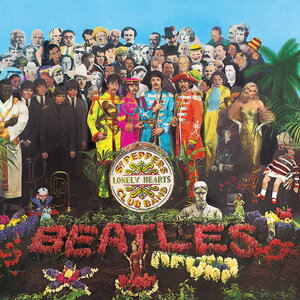
One of the most fun parts of drafting Pacifica has been finding the right quotes for each chapter. I picked from books and poems that I love (as well as a few books that I hated) to put together what I imagined as a kind of collage or mosaic of human knowledge. I imagined the task as something like a literary version of the cover of Sgt. Pepper’s Lonely Hearts Club Band, where The Beatles assembled a photo-collage crowd of their favorite thinkers and artists and goofball influences.

Many technologies were easy to find quotes for. Especially for early technologies like pottery, masonry, and currency, there are a thousand great writers who had something pithy to say. Mostly I would page through books in my office, or CTRL-F through digitized books in Archive.org, to find quotes that spoke to the technology in question and also, hopefully, to the action of the chapter. Sometimes I had to draw the connections myself, in which case the quote turned into something of a writing prompt; other times the quote fit the chapter in deep and unexpected ways that I couldn’t have engineered if I tried.

Some of the later technologies were much harder: for instance, no one from Homer to Virginia Woolf seems to have much to say about the superconductor. Who could I quote for a tech like that?

It just so happened that by the time I got to the superconductor chapter of the book, everybody was talking about ChatGPT. At my college, the discussion revolves entirely around students’ using ChatGPT to plagiarize their essays, an issue which seems to me as trivial, in the grand scheme of dangers that ChatGPT represents, as the crew of the Titanic arguing about a shortage of urinal cakes in the men’s rooms of the Saloon Deck.

So I asked ChatGPT to find me some quotes about superconducting. It suggested some quotes from Larry Niven’s Ringworld and Niven’s and Jerry Pournelle’s The Mote in God’s Eye. They weren’t bad references, exactly–those books do mention superconducting–but none of them resonated with me. So I asked about Arthur C. Clarke, a fave of mine: surely, I thought, Clarke must have written somewhere about superconducting.

According to ChatGPT, Clarke has written about superconducting: of the two references ChatGPT gave me, the one which jumped out at me was this one: “Clarke’s short story ‘The Ultimate Melody,’ published in 1957, briefly mentions the use of superconducting materials in the construction of a futuristic musical instrument called the ‘ultimate melody.'” Now that’s a resonant quote–that would work perfectly for Pacifica!

So I looked up the story and read it (like 90% of Clarke’s short fiction, I had never read it before). Here’s the thing, though: there’s absolutely nothing about superconducting in that story! (For that matter, the futuristic musical instrument is called “Ludwig;” the ultimate melody was the ideal music the instrument was designed to find).

And here’s the other thing, which I discovered later: Arthur C. Clarke did write a short story, called “Crusade,” in which superconductivity is a central plot point. ChatGPT didn’t think to mention it (because ChatGPT doesn’t think yet). I tracked that story down with a simple DuckDuckGo search for “Arthur C. Clarke superconducting.” It’s an excellent story, by the way–very Arthur C. Clarke. And that story had the perfect quote, which fits both Pacifica and the life I feel I am living lately: “It was a computer’s paradise. No world could have been more hostile to life.“

So, for now, I agree with John Scalzi’s excellent assessment: “If you want a fast, infinite generator of competently-assembled bullshit, AI is your go-to source. For anything else, you still need a human.” That’s all changing, and changing faster than I would like, but I’m relieved to know that I’m still smarter than a computer for the next year or maybe two.

The School Down the Hill From the Ivory Tower

15 Sunday Aug 2021

Posted by Joe in Musings and ponderation, Utopia and Dystopia

≈ 5 Comments

Tags

community college, education, Khan Academy, online learning, Wikipedia

I’ve known that community college teaching was my calling almost from the moment I knew what a community college was. Working at an open door institution–that is, offering an education to anyone who comes through the door–spoke to something deep in my moral DNA.

But it didn’t take many years of actually working in a community college for me to see how far the reality falls short of the dream: there are many community colleges, including the one where I teach, where students are likelier to default on their student loans than they are to graduate on time. And, as with just about every other institution in the United States, there are serious equity gaps between how easy it is for middle class, traditional age (usually white) students to navigate the system, compared to how many roadblocks exist for first generation and other “non-traditional” students, who are disproportionately people of color.

In the twenty-plus years of my career, I’ve imagined the work of my college as analogous to the function of a large, overburdened public hospital: the community is glad that such places exist, but anyone who knows better takes their kids elsewhere if they can.

Yet the educational ecosystem of the US (indeed, of the entire world) is changing more rapidly, and more profoundly, than at any time in decades and perhaps in centuries. The ultimate driver of these changes is the internet: no information technology since the printing press has had such a seismic effect on people’s access to knowledge. And, if our society approaches the changes mindfully, I believe that this transformation will lift the stock value of America’s community colleges.

I am not speaking here of the wholesale move to online education that began to accelerate twenty-odd years ago and then sped up cataclysmically during the coronavirus pandemic. Years of teaching both online and face to face have convinced me that online learning is a pale substitute for the educational experience that many students are hoping for. But that’s an argument for another essay. For this post, I will say that the internet has done more than simply spur the growth of a million mediocre online courses; far more importantly, the internet has upended some of the fundamental assumptions of what school is for.

Before the internet, the central educational challenge for any society was access to content, whether that knowledge was locked up in books or in the experience of elders, who are limited in the number of people they can teach at one time. It is still the case today that where access to content is scarce, societies have difficulty in delivering even basic literacy to their citizens. Back in the pre-internet age, even where literacy was widespread it was hard out there for an auto-didact. Anyone who wished to know more than the barest rudiments of chemistry or mechanical engineering or ancient history or whatever had to have physical access to an institution of learning: a library, a museum, a university. Advanced knowledge in many fields was locked up in these ivory towers, preserved for the elect who had the social connections, the money, or the talent to access the lectures and the rare manuscripts, the academic journal subscriptions and the Erlenmeyer flasks. Thomas Hardy’s Jude the Obscure offers a poignant description of this state of affairs: Jude’s failed attempt to enter “Bibliol College” at Oxford because of his background as a stonemason was thought to have been drawn from Hardy’s real life experience failing to gain entry to Balliol College Oxford.

Balliol College.jpg
The Real-life Balliol College, photo by Steve Cadman. Note the literal tower.

The community college was conceived as a disruptor of this elitist system. It’s hardly the only one: the public library, Wikipedia, and the land grant university system were also developed to increase ordinary people’s access to educational content. But the community college has come to occupy a special niche in the educational ecosystem: unlike land grant universities, the community college is a truly open door institution. Pound for pound, the community college helps to lift far more people out of poverty than universities do, given the formal and informal barriers to entry at most universities. And yet, the community college is also unlike those other great open door institutions like the public library, Khan Academy, and Wikipedia: at a community college, whatever subject you hope to study, there is a knowledgeable guide there to speak with you personally, to offer you personal feedback on your writing, to help you frame your questions and offer suggestions for tracking down the answers. It is the personal relationship between teachers and students–what the parents of elite students pay tens of thousands of dollars for at small liberal arts colleges–that the community college can offer.

Of course, anyone who has actually studied at a community college knows that not everyone who works there is a knowledgeable guide: some community college teachers are lackluster, ineffective, or worse. Outside the classroom, the processes for getting academic advising or help in the financial aid office can be so byzantine that they would be at home in a Franz Kafka novel. And many college administrations mismanage their institutions with such energy that one can be forgiven for wondering whether there are saboteurs among them.

But despite these defects, many of which are the result of America’s decades-long disinvestment in public services, the community college remains one of the only institutions where an adult can walk in, without any prior credentials or letters of recommendation, and receive caring, personalized instruction in nearly any field from an experienced teacher. The community college aims to help those students who are most vulnerable to misinformation and disinformation; those most vulnerable to the predatory sales pitch of the for-profit university; those least likely to be able to afford an internet paywall, or the more consequential paywall of university tuition. The internet may have exploded many people’s assumptions about how education works. But here is one thing the internet hasn’t changed: most students still want to be seen, to be recognized, to be known by other human beings. Students with money can get those attentions at hundreds of prestigious universities. But anyone, rich or poor, young or old, neurotypical or not, can find teachers who see them, recognize them, and know them at a community college.

112

28 Monday Jun 2021

Posted by Joe in Biology, Musings and ponderation, Politics, Science, Uncategorized, Utopia and Dystopia

≈ 4 Comments

Tags

climate change, Fox News, Portland heat wave

Today the temperature on our backyard weather station topped out at 112 degrees Fahrenheit. Apparently the reading at the Portland International Airport was 116 degrees. It was the hottest day ever recorded in the history of Portland. Indeed, it was very likely the hottest day that has ever occurred in this valley in the entire history of human habitation at this site. The second hottest day in Portland’s history was yesterday; the third hottest was the day before that.

For years, ever since I knew what climate change was–ever since we used the term global warming instead of climate change–experts have cautioned the public not to point at any specific weather event and say “See? That’s climate change at work.” With my own students, I’ve taken pains to differentiate weather from climate and to help them understand that extreme weather events have always been with us, that extreme weather is a natural consequence of living on a planet with an atmosphere and oceans and an axial tilt. However, extreme weather events do not happen by magic. And I am thankful that more and more Americans seem to have awakened to the reality that these shocking extremes in the weather are being driven by human-caused climate change.

A few years ago, I decided to devote the rest of my career to fighting anthropogenic climate change. Like a lot of people, I feel overwhelmed by how puny my influence is in relation to the scope of the problem. But I can work to address climate inaction at my college, and I can help shepherd into being academic programs devoted to restoration ecology and climate remediation and environmental policy change. And I know that I can work with students in ways both formal and informal to help them see the political and economic transformation ahead of us.

You can see the transformation ahead of us as well. It will cost you and me a good deal of money to address the catastrophe that is upon us. However, you and I will pay it: either we will pay the cost to save human civilization or we will pay for our civilization’s collapse.

I hope that a few locals who have been snookered by Fox News and its ilk into climate change skepticism (some of them students of mine) will be jostled into cognitive dissonance by the heat of the last three days. I have less hope for the cynics and nihilists that broadcast to them or who pretend to represent them politically. But it was ever so: those who today claim that climate science is unsettled are close cousins of those who used to argue that cigarettes don’t cause cancer or that black people were happier as slaves than as free people. For whatever social evil one cares to name, there is a powerful constituency that benefits from its existence and that will fight to keep it. For the last several decades, that force has been concentrated in the Republican Party and its various media outlets. The names may change at some point–just as the Republicans used to be a far more progressive party than today and the Democrats far more socially regressive–but there will always be a group of powerful people ready to defend an exploitative or oppressive status quo.

But here’s the good news, to the extent that any news about what is happening to us can be good: climate change is not going away. The problem will continue to knock at our doors more and more insistently. And in the words attributed to my favorite Republican, “you may fool people for a time; you can fool a part of the people all the time; but you can’t fool all the people all the time.”

Cataclysm 2020

07 Wednesday Oct 2020

Posted by Joe in Musings and ponderation, Politics, The Time of Troubles, Utopia and Dystopia

≈ 5 Comments

Tags

Cataclysms, Election 2020, Trump

It’s hard to have much love for 2020. This year–which, I remind myself when I am feeling down, is only about 77% finished–feels like a self-reinforcing system of catastrophes. I suspect I would find this a tough year even without the basso continuo of a global pandemic: the corner of the world I live in has suffered the most ruinous wildfires in decades; the president of the United States has announced his intention to replace democracy with authoritarianism and minority rule; his party, long ago one of the great intellectual traditions of the country, has shown itself to be led by nihilists, cynics, time servers, and predators. I’ve awakened in the middle of the night more than once this year overcome with the thought that life as we know it is ending, to be replaced by something more solitary, poor, nasty, brutish, and short.

Perhaps my 3:00 am dread is an accurate picture of what is to come. Perhaps, like Job, “the thing which I greatly feared is come upon me” and we are watching the collapse of the American experiment. Or, perhaps, what we are witnessing are the beginnings of the wholesale collapse of the entire human experiment, as the planet’s many life support systems go offline one by one. These outcomes seem possible: the beginning of the end of the republic by next month, the end of human civilization by the end of my children’s lifetimes.

And yet, what wakes me at 3:00 in the morning is not the certainty that those are our fates. Rather, what wakes me is uncertainty, the sense that much of what I could count on for the first half of my life can’t be counted on today. A related dread is the knowledge of the limits of my influence: I can work towards a civic renewal and towards ecological restoration, but the outcome of my work is out of my hands.

Paradoxically, this cloud of unknowing is also where I have taken some comfort. Old things are passing away–because of the pandemic, because of climate change, because of the presidency of an authoritarian strongman. It does not necessarily follow, however, that what will follow must be worse. The United States of America still purports to be a democracy. It is not impossible–if we vote, if we participate, if we work towards it–to build a more just society than the one we live in today, a healthier society, a more sustainable economy, a restored ecosystem.

By whatever name you care to call it–providence, karma, feedback loops–we are in a moment when the world itself seems to be pushing back on the outrages of the last four years, or four centuries: not just the fires and the supra-alphabetical roster of hurricanes, but Donald Trump’s own infection with COVID-19. Because he is a public man, his illness and suffering take on symbolic dimensions, as though he were a character being punished for his hubris in Dante’s Inferno or the Book of Daniel. Trump’s posturing about his strength, even when it’s obvious that he is in pain and struggling for breath, only goes to show that he is as unprepared for his life as a metaphor as he is for his life as President of the United States.

The times are cataclysmic, but they will pass. A new day may be closer than you think. And there will be a moment on the other side of the cataclysm that calls for new balances. It’s time to vote Donald Trump and his enablers out of office. It’s time to push. It’s time to work.

Thoughts on 2001: A Space Odyssey

23 Sunday Feb 2020

Posted by Joe in Biology, Journeys, Literary criticism, Musings and ponderation, Science, Science Fiction, SETI

≈ 1 Comment

Tags

2001: A Space Odyssey, aliens, mythopoesis, Science Fiction, SETI

I had the joy of watching 2001: A Space Odyssey on the big screen the first time in my life a little while ago. For those of you living near Portland, The Hollywood Theater purchased a 70 mm print of the film a couple of years back, and they show the movie to a sold-out house a couple of times every year. I had seen the film many times before on video–it’s one of the truly formative pieces of art in my life–but seeing it in a literally larger-than-life format impressed me deeply: the movie reminds me why I work in the genre of science fiction.

One of the most celebrated elements of the film has been its technological accuracy. Stanley Kubrick and Arthur C Clarke, working before CGI or the moon landing, were able to predict so many of the challenges and curiosities of living and working in space. As much as I loved Star Trek and Star Wars growing up, I always had the sense that those two franchises were more science fantasy than science fiction (especially Star Wars). 2001, by contrast, looked like some thrillingly-plausible documentary footage from a future just over the horizon.

But it is not the accuracy of the film that affects me so much now. Rather, 2001 is worth watching because of what Tolkien would have called its mythopoesis: its creation of a new mythology in which we could view our modern predicament. As much as any other work of art I can think of, 2001 gets at the painfully intermediate position of our species as part animal and part divine: the film is a 164-minute meditation on Hamlet’s musing: “What a piece of work is a man! How noble in reason! how infinite in faculties! in form and moving, how express and admirable! in action how like an angel! in apprehension, how like a god! the beauty of the world! the paragon of animals! And yet, to me, what is this quintessence of dust?”

(Another quote, just as apt, comes from Nietzsche’s Thus Spake Zarathustra, the book which also inspired the iconic theme music for 2001: “Man is a rope, tied between beast and overman—a rope over an abyss … what is great in man is that he is a bridge and not an end.”).

While the film is set in space in the near future, as realistically as Kubrick and Clarke could conceive of it, the setting is just as much a place of the inscrutable divine: in other words, its setting is really The Dreamtime, the Underworld, Faerie. Even though the US Space Program was deeply influenced in real life by 2001, the movie is closer to the mystical cave paintings of Chauvet or Lubang Jeriji Saléh than it is to the Space Shuttle and the International Space Station.

Of course, there are many elements of any piece of science fiction that won’t hold up well after 50+ years. In the case of 2001, Kubrick and Clarke seriously underestimated the amount of progress our species would make in some aspects of information technology, while at the same time overestimating the progress we would make in artificial intelligence and manned spaceflight. Those are easy mistakes to make, by the way: I can’t think of any science fiction before the 1980s that successfully anticipated the internet, and of course a movie made in 1968, the year before Apollo 11, would extend the logic of manned spaceflight out to regular orbital shuttles and populous moon bases and manned Jupiter missions.

But the beauty of 2001 is not how much the movie correctly predicted but rather how well it explores the timeless theme of what it means to be a human being. What strange gods called out of the darkness to our rude, frightened hominid ancestors to make us human? What awaits us if we can survive the deadly unintended consequences of our own ingenuity? In wrestling with those questions, 2001 is every bit as bottomless a work of art as Paradise Lost or Faust or the Popol Vuh. One can argue that there are no gods that made us, that the monoliths of the movie will never be found because they never existed in the first place. However, 2001 speaks to something very deep in our cultural DNA (and, for all I know, in our literal DNA): the yearning for our spiritual parents.

Two hundred years from now, if we somehow survive this dreadful bottleneck of overpopulation and ecological collapse, our descendants may be living in domed cities on the moon and Mars; we may be gliding in beautiful submarines through the oceans of Europa and Ganymede. We will still be looking for the monoliths.

← Older posts
Newer posts →

Subscribe

  • Entries (RSS)
  • Comments (RSS)

Archives

  • March 2026
  • February 2026
  • January 2026
  • November 2025
  • September 2025
  • August 2025
  • July 2025
  • May 2025
  • April 2025
  • March 2025
  • January 2025
  • December 2024
  • October 2024
  • September 2024
  • August 2024
  • June 2024
  • May 2024
  • April 2024
  • March 2024
  • February 2024
  • January 2024
  • December 2023
  • October 2023
  • August 2023
  • July 2023
  • June 2023
  • April 2023
  • March 2023
  • May 2022
  • August 2021
  • June 2021
  • January 2021
  • October 2020
  • May 2020
  • March 2020
  • February 2020
  • January 2020
  • July 2019
  • June 2019
  • December 2018
  • October 2018
  • July 2018
  • May 2018
  • April 2018
  • January 2018
  • December 2017
  • November 2017
  • September 2017
  • August 2017
  • July 2017
  • June 2017
  • May 2017
  • April 2017
  • March 2017
  • February 2017
  • January 2017
  • December 2016
  • November 2016
  • October 2016
  • August 2016
  • July 2016
  • June 2016
  • May 2016
  • March 2016
  • February 2016
  • January 2016
  • December 2015
  • November 2015
  • October 2015
  • July 2015
  • May 2015
  • March 2015
  • February 2015
  • January 2015
  • December 2014

Categories

  • A Place for my Stuff
  • Advertising
  • Artificial Intelligence
  • Beta Readers
  • Biology
  • Book reviews
  • Curious Fictions
  • Dungeons and Dragons
  • Exit Black
  • fantasy
  • Games
  • HPIC
  • Journeys
  • Let's All Admire That Fantastic Can
  • Lit News
  • Literary criticism
  • Musings and ponderation
  • My Fiction
  • Pacifica
  • Politics
  • Reading Roundup
  • Science
  • Science Fiction
  • Science Fiction Writers of America
  • SETI
  • Stories
  • Stranger Bird
  • The Ideal Vehicle
  • The Time of Troubles
  • Uncategorized
  • Utopia and Dystopia
  • Welcome
  • YA fantasy

Meta

  • Create account
  • Log in

Authors

  • Joe's avatar

Blog at WordPress.com.

  • Subscribe Subscribed
    • The Subway Test
    • Join 145 other subscribers
    • Already have a WordPress.com account? Log in now.
    • The Subway Test
    • Subscribe Subscribed
    • Sign up
    • Log in
    • Report this content
    • View site in Reader
    • Manage subscriptions
    • Collapse this bar
 

Loading Comments...