• About
  • My Fiction
  • Reviews

The Subway Test

~ Joe Pitkin's stories, queries, and quibbles regarding the human, the inhuman, the humanesque.

The Subway Test

Author Archives: Joe

Joe Pitkin ~ The Mount Meager Expedition

20 Sunday Mar 2016

Posted by Joe in My Fiction

≈ 1 Comment

Tags

fantasy, plant lice (Macrosiphum albifrons), the absurd, volcanoes

I’ve had my longest dry spell in publication in many, many months. But the curse broke this week with the publication of my little story “The Mt. Meager Expedition” in the lovely journal Danse Macabre. I’m very grateful to Adam Henry Carrière, Danse Macabre’s editor, for taking on this odd little absurdity of a story–extra points to any readers who can find a quote from David Petraeus hiding here!

DM du Jour's avatarDM du Jour

From The Autobiography of St. Morris Roger Lindenford-Fitzroy, Lord Chadwick

Chapter LXVII: The Mount Meager Expedition

My service as His Majesty’s Secretary of State for War coincided neatly with the end of the War on Poverty and the beginning of the First Balkan War, a seven-year period during which our country also fought wars against Illiteracy and the Khedivate of Egypt, as well as suppressed insurgencies in British Honduras, Algebra, Southern Rhodesia, and the Marianas Trench. Given our daunting expenditure of blood and treasure over all corners of the Empire, therefore, the gentle reader may imagine my dismay when the Prime Minister requested that The War Office prepare a dossier investigating the feasibility of a war against lupines.

I had grown up believing the lupine a particularly glorious summer flower, so far as I knew entirely peaceable and not at all contentious. Indeed, in my boyhood my mother had led…

View original post 1,892 more words

A Modest Reboot

17 Thursday Mar 2016

Posted by Joe in A Place for my Stuff, Welcome

≈ Leave a comment

Tags

anonymity, marketing, that strumpet Fame

I had dinner with a friend a couple of weeks ago who mentioned how much she likes the blog posts I send her way. But, she said, she wasn’t sure who was the author of these posts. That was when I realized that perhaps I’ve been overly anonymous on this blog.

So, at last, the picture on the avatar is me (I was a methane molecule for Halloween last year). My name is on the title. To be honest, I feel a little uncomfortable with my name in little lights like that. But I suppose it’s fair, if I want people to read my work, to let people know who I am.

A Meditation on Time–Ten Years Later

18 Thursday Feb 2016

Posted by Joe in Biology, Musings and ponderation, My Fiction

≈ Leave a comment

Tags

big 19th century novels, dystopia, resolutions, that strumpet Fame, utopia, writing practice

I was trawling through some of my old posts on The Subway Test, and I noticed that I had published this one, “A Meditation on Time,” exactly ten years ago. As I reread it, I realized that a lot of what I was struggling with back then has gotten even more visible, more acute, with the advent of LLMs. It feels like a message in a time capsule to my future self. And maybe to you: I hope that time is not your enemy.

Here is what I wrote on that long-ago February day:

I have been taking my sweet time in reading Anna Karenina, a Christmas gift from my lovely stepdaughter. At the rate I’m going, I would guess I have two more months with this delicious, painful, hilarious book. Meanwhile, as I dither through this enormous work of art, it’s been hanging over my head that I don’t keep up my blog as befits a serious writer, dispensing witty remarks and novel observations at least once per week.

I really don’t yearn for “simpler times” (e.g. Tolstoy’s time), in which the world of ideas moved more slowly and people had time–from our perspective, anyway–to write long letters and long novels, to linger over an idea in a journal for months and even years. Many people of Tolstoy’s day didn’t regard their time as leisurely: they felt as rushed and harried as we do now, since the era of railroads and electricity had sped up life for them at an unprecedented rate. Perhaps in a hundred years my descendants will regard my lifestyle as leisurely, since most of us today don’t yet have Adderall prescriptions or cranial implants or other technological prostheses to speed up our rate of pumping out new ideas and reacting to new ideas we see.

This morning as I read my ten pages on the bus, I was taken by Tolstoy’s words about time: Prince Shcherbatsky is reacting to being told that “time is money,” and he says, “Time, indeed, that depends! Why, there’s time one would give a month of for fifty kopeks, and time you wouldn’t give half an hour of for any amount.”

It occurred to me as I sat with that quote today that I have given away lots of time in my life for fifty kopeks, or for less. When I returned to graduate school in my thirties, I was so excited to be able to take classes at public expense (since I am an employee of the state, my classes cost $5 per course)–I often joked with people that I had spent more money on parking tickets than on tuition when I was in grad school the second time. I feel thankful to the Great State of Washington every time I think of what I learned there.

But I also made a huge blunder by valuing my labor at zero in those days. The courses cost $5, so my degree must only cost about $100, no? Yet, of course there was the massive opportunity cost of my shutting myself up for years to read academic papers on ecology and statistical analysis: there were hikes I didn’t take, other skills I didn’t learn, traveling I didn’t do. I’ve written in a couple of my stories from that period about students who get into ecology because they love spending time outdoors in nature, but that their ecological studies lock them up in a lab for months on end doing gas chromatography or grinding up plant tissue samples.

I’ve come home with a fever tonight–ironically, the fever is what has slowed me down enough to be able to meditate about time in this blog post. And I have realized that as I age, I am becoming less and less willing to give up time to others (that is, to people I don’t love) for any amount. Even if by magic I could, I wouldn’t give up this feverish time tonight–unpleasant as it is–for money. I’m sure I have my price for taking on more work, but I’m realizing that the price is much, much higher than a community college would typically pay. I would just rather have the time.

Writerly Updates

04 Thursday Feb 2016

Posted by Joe in My Fiction, Stories

≈ Leave a comment

Tags

John Demetrius, marketing, Quixotry, sci-fi, that strumpet Fame, writing practice

It’s a gas to hear that Tom Dooley’s awesome and quixotic Eclectica Anthology Kickstarter was a rousing success and the books are coming out! True to my style as a writer, I’ll be in the Speculative Edition.

Closer to home, I finally got my newest story, “Proteus,” out the door to an editor. Maybe he’ll take it, maybe not, but it feels good to have new work going out.

The Gamification of Everything

31 Sunday Jan 2016

Posted by Joe in Games, Musings and ponderation

≈ Leave a comment

Tags

gamification, social engineering, utopia

I’m a casual gamer. Once a serious gamer, even: I was quite capable of spending ten hours, fifteen hours at a stretch playing Civilization in my twenties. Today I don’t have that kind of time, but I still love the possibilities that games provide to hone players’ skills or introduce them to new interests.

23454607552_482daa2618_z

Photo Credit: Graham Holt

In recent years there’s been a huge amount of buzz around gamification–the use of games to accomplish certain social goods or reduce harmful behaviors. A couple of years ago I gave my students a writing assignment on citizen science using this video about gamers who solved a protein-folding problem that had stymied AIDS researchers. More recently, I’ve had a chance to look at the gamified approach that two websites use for teaching math: IXL and Khan Academy.


I’ve used IXL a good deal with my daughter, and I’ve loved it: I can tell that the skill-building exercises have been designed in consultation with psychologists to create positive reinforcement loops with all kinds of little badges and power-ups that a user receives as her score increases–and the way to increase one’s score, of course, is to correctly complete more math problems.

And that’s the problem with IXL for my daughter. The gamification of the process does appeal to her at some level, I can tell, but at the bottom of the game is a lot of math problems. The gaming aspects of the activity have not turned her from a math hater to a math lover, or even a math accepter.

When I decided to try an buff up my math skills–I never got farther than a basic calculus class as an undergrad–I went to Khan Academy. (I would gladly have just used IXL, which I was already familiar with, but IXL seems geared towards younger kids and seems to top out at pre-calculus). And, while I am new to the Khan Academy game, I will say right now that I love it. In fact, I have loved it so much that I am finding myself choosing Khan Academy over other games.

The difference between my daughter and me in this regard seems to be how much interest we had in math in the first place. While I would not consider myself a math-lover exactly, I definitely like math enough to want to cultivate my math skills. My daughter, on the other hand, hates most math activities and would be happy never to spend another minute on IXL.

I suppose the whole gamification movement is a way of making desserts out of broccoli. I guess I could imagine something like broccoli ice cream being tasty, but then, I like broccoli pretty well in most of its forms. For someone who hates broccoli to begin with, broccoli ice cream is still broccoli.


Whither Wikipedia?

18 Monday Jan 2016

Posted by Joe in Musings and ponderation

≈ 1 Comment

Tags

resolutions, The Omega Point

For several years, I made a very small yearly donation ($10-$15) to Wikipedia when I would come across their oddly ugly banner ads. I use Wikipedia daily, often multiple times a day, not just because of the convenience, nor because of the way Wikipedia has muscled its way to the top of Google’s search rankings, but because I honestly believe in Wikipedia’s mission. The idea of creating a free and open repository of human knowledge, with versions in many languages (potentially all human languages), strikes some deep chord in my psyche. I suppose, now that I am daring myself to put it into words, that I am fascinated by Teilhard de Chardin’s idea of The Omega Point: that goal of universal love and community toward which humanity is striving–and which I believe it is our destiny to find. Wikipedia seems to me a step on that dim path.

One might ask, if Wikipedia is a sign of the coming Omega Point, why I would only give $10. That’s an excellent question, and I don’t come out looking very good in any of the answers I could come up with. And anyway, I haven’t given any money at all since reading David Auerbach’s piece in Slate on the misogyny and trollery of many of Wikipedia’s core of editors. As a teacher of research writing, I’m well aware of the uses and misuses of Wikipedia, the many inaccuracies and at times true mendacity, the often flabby writing and foggy explanation. I’ve lately felt ambivalent about this tool that I use so often: is this worldwide experiment in democracy and collaboration so fatally flawed that I should begin looking for a better encyclopedia, something which accomplishes what Wikipedia tried to and failed?

Wikipedia’s glaring flaws notwithstanding, I suppose I still see it as one of the best things in town: non-profit, devoted in principle (and often in practice) to human betterment and the common good. The low participation of women in the project troubles me, but I’m heartened a bit at least to know that the Wikimedia Foundation is actively trying to close that gap (and that the participation of women has increased last year over the year before, even if not by as much as the foundation had hoped). Perhaps it’s time to put aside my gripes and give a little to this project.

An Anthological Appeal!

04 Monday Jan 2016

Posted by Joe in My Fiction, Stories

≈ Leave a comment

Tags

"best of" anthologies, marketing, sci-fi, that strumpet Fame

Happy New Year, gentle readers!

As many of you know, my work will be coming out in three anthologies over the next few months: Rich Horton’s The Year’s Best Science Fiction and Fantasy and Gardner Dozois’ The Year’s Best Science Fiction; both of them are anthologizing my story “The Daughters of John Demetrius.”

ECLECTICA LOGO


The third of the anthologies is a different case: in honor of its 20 year publishing history, Eclectica magazine is publishing an anthology of the best speculative fiction to appear there–including my story “Better than Google.”

Eclectica’s publisher, Tom Dooley, is hoping to move beyond the print-on-demand market and actually place the book in bookstores. To that end, he has a Kickstarter campaign to gin up support. If you are a fan or a generous well-wisher, please consider contributing!

The part that blows my mind is that Eclectica is a magazine that has been published online since 1996. I was getting on the internet using a 14,400 baud modem back in those days. Eclectica was some of the best literature around, all at 14.4 kilobytes (yes, kb) per second.

I’ve still been sitting through a dry spell with my new material–it’s been several months since I’ve had a new story picked up. But keep watching the skies–I’ll have more stories out soon.


The Year in Reading

29 Tuesday Dec 2015

Posted by Joe in A Place for my Stuff, Musings and ponderation

≈ 4 Comments

Tags

biology, books, fantasy, sci-fi

Because it was one of my 2015 New Year’s resolutions to read more books, I paid some mind to my reading habits this year. This resolution was a real softball pitch to myself, since in all of 2014 I read only eight books. At that paltry rate, even if I am lucky enough to live another 40 years, I will only read 320 more books in life.

(In my defense, 2014 was the year I finished up graduate school and got remarried, so the first half of 2014 didn’t leave me a lot of reading time. Still, eight books. It’s hard to call yourself a writer if you only read eight books a year).

This year I did somewhat better: 15 books (not counting re-reads of books that I was teaching this year). How did I fare with these? What follows is a brief review of each title in my motley 2015 bookshelf:

Apollinaire, Guillame: The Heresiarch + Co. This was a gift from Gloria on her return from France. I found these stories charming—hilarious, sweet-natured, wry, odd, just a bit surreal. Sometimes the plotting seemed a little artless, but there were other touches of language that seemed masterful, like the poet with “the gift of ubiquity” and the cigar with the plea for help written inside. Apollinaire is a favorite poet of mine, so I was predisposed to love his fiction.

Austen, Jane. Emma. The second Austen novel I’ve read, I found this book a perfectly delightful comedy of manners and a sly (perhaps over-subtle) critique of the British class system and the limits placed upon English women. Emma’s character is almost thoroughly unsympathetic for the first half of the book or so, but she acquits herself admirably. Austen’s humor is gentle, understated, and yet at the same time absolutely electric. The characters were generally types—something like the types of Shakespearean comedy—rather than fully fleshed out bundles of complication. But that’s Austen’s style.

Bailey, Thomas R., Shanna Smith Jaggars, and Davis Jenkins. Redesigning America’s Community Colleges. This was a wonky read, but a very good one. While I was already convinced of our need to develop guided pathways for community college students, this book provides both evidence supporting the argument as well as some suggestions for further research and colleges to watch. I have a feeling I’ll be consulting  this book a good deal in the coming years.

Dyson, Freeman: Disturbing the Universe. One of the best books of essays I’ve read. Freeman is very much like Loren Eisley as a writer—somewhat less sublime but also funnier. Some of these essays have lasted better than others, but I am quite taken with Dyson’s powerful and utterly unique moral vision.

Le Guin, Ursula K. The Lathe of Heaven. I reviewed this earlier in the year. It’s a gripping read, one of those stories which breaks a cardinal rule of writing (in this case, no “it was all a dream” stories) but which Le Guin gets away with because, hey, she’s Ursula Le Guin. I don’t know that this novel held together at the end quite as well as some others of hers—like Left Hand of Darkness—but I was taken with the humor and horror of this story, as well as with Le Guin’s of-the-era argument for the quieter, wiser ways of Taoism as a corrective to the evangelical Judeo-Christian Western Rationalism that brought us the Vietnam War and global warming and the DSM.

Link, Kelly. Stranger Things Happen. I loved these stories overall. The best of them were truly chilling and surreal, like Twin Peaks on the page. Link is masterful at, well, linking disparate, subterranean connections in her work, and the best stories—like the first three in the book—do things that I couldn’t imagine doing as a writer. At times the writing is a little precious or too eager to crack a joke, but Link is the real deal.

Newport, Cal: So Good They Can’t Ignore You. The best career advice book I’ve read. This quick read annoyed me in a few places—Newport mostly interviews the beneficiaries of privilege, like himself, and he has a lot to say about what being a faculty member at Georgetown will be like before he’s even started the job—but the career advice Newport gives here is sound and a valuable corrective to the conventional wisdom of “following your passion.” I bought this book for my oldest daughter and will pass it along to the younger girls when the time is ripe.

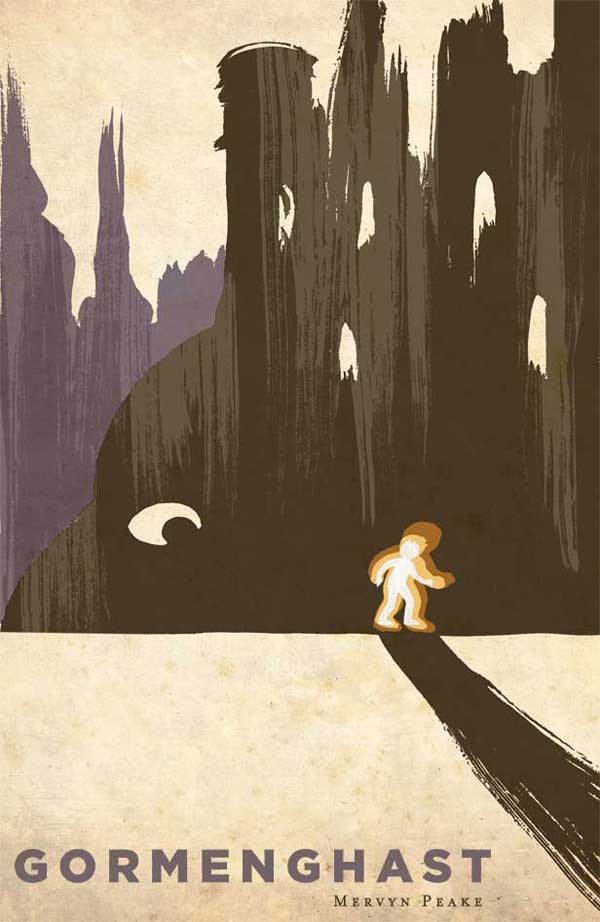
Peake, Mervyn: Titus Groan. The first of the Ghormenghast Novels. This was a remarkably slow read, oddly and loosely plotted (in some ways almost without plot), full of demanding and self-indulgent writing. But I’ve also never read anything like it: Peake has a gift for arresting imagery and wordplay. His work is like a novel-length set of Edward Gorey drawings.
5802178429_8bdb4f03d1_o

Art credit: Michelle Duckworth


Peake, Mervyn: Gormenghast.  The second Gormenghast Novel. I think that in most ways I preferred Titus Groan, even though Gormenghast has more action. Peake’s work is by turns inspiring and maddening: he will turn a phrase or describe a scene in such an arresting way that I can’t imagine how he managed it; then, he’ll try to squeeze out of a plot difficulty with a hamfisted and frustrating plot twist, coincidence, or ad hoc explanation. While there’s plenty that frustrated me about this book and its predecessor, I probably have enough momentum here to finish the Gormenghast novels next year.

Penn, Rob: It’s All About the Bike. This was an enchanting little history of the bicycle. I’m not certain how accurate it is on every point, but I loved the stories of the bike’s early days, interspersed with Penn’s quest for his own “lifetime bike.” It makes me want to assemble a bike myself.

Romano, Tom. Write What Matters. This book was dedicated to my dad and contained some sweet moments from his life (as well as from the life of another beloved and departed writing teacher of mine, Ken Brewer). While I didn’t always follow Tom’s organization, I loved Tom’s voice and his fierce love as a writing teacher. His words about rough drafts have helped me during this tough slog through the sloppiest rough draft I’ve ever attempted: Pacifica.

Schwarz, Barry. The Paradox of Choice: Why More Is Less. I picked up this easy, engaging read in my research into structured pathways at my community college. The book is funny, humanistic, and it digests a lot of psychological and economic research into a reader-friendly form. I may want to pass this book along to my daughter to help her with her career-picking struggles.

Sterner, Robert and James Elser: Ecological Stoichiometry. This book took me several attempts, but when I really sat down to deal with it, I got through it in about 8 months of two-pages-a-day reading. It really is a remarkable scientific work, and I came away convinced that phosphorous is the most ecologically important chemical on Earth (because of its role making up RNA). I’d love to do science like this! I realize, though, that it’s not the kind of science that most people do in their spare time. I’ve definitely decided to keep reading in the biological sciences, though, and perhaps a cool home project will present itself.

Wilde, Oscar. The Picture of Dorian Gray.  I’d been meaning to read this since taking a long ago grad school class on the symbolists and decadents. Overall, this seemed like a Poe-esque gothic tale peppered with Lord Henry’s bon mots and aphorisms. Plot-wise, it dragged a bit—it seemed highly influenced by Huysman’s Against Nature—and there were few truly sympathetic characters besides Basil. At the end, it struck me as a much more conventional morality play than I had been led to believe it would be—maybe that’s why I came away a bit disappointed. The art for art’s sake motto of the aestheticists ultimately seemed to give way to a somewhat conventional Victorian morality, less daring in its conclusions than Hardy or George Eliot or Flaubert or Dostoevsky.

Wilson, David Sloan: Darwin’s Cathedral. This book really affected me powerfully–I wrote about it in my previous blog post. The idea that religious behavior is adaptive and selected for through multi-level group selection is revolutionary (though maybe it shouldn’t be). I can see how this book is influencing my approach to writing Pacifica: Jude wants to build the next religion that will expand our moral circle to include all humanity and be compatible with science.

I hope that 2015 was a good reading year for you, perhaps so good that it would be impossible to fit your thoughts into a single blog post. I’ll see you in the new year!
Glad Solstitial Tidings

20 Sunday Dec 2015

Posted by Joe in Biology, Musings and ponderation

≈ 2 Comments

Tags

Christmas, David Sloan Wilson, mythopoesis, natural selection, The Winter Solstice, utopia

Tomorrow I’ll be ringing in the winter solstice with my wife at Breitenbush Hot Springs. There will be poetry, yoga, maybe some ecstatic dancing of some kind–who knows? I’ve never been to a Breitenbush solstice, but I loved spending some time there last year and I think it’s extremely likely I’ll have a good time.

One thing I bet I won’t hear, given the circles I travel in, is many references to the birth of Jesus or other Christmas-related greetings. That’s not a problem for me–in fact, I far prefer it. I consider Christmas the most debased festival in the liturgical calendar (and anyway, as a Quaker, I feel a scruple about observing any religious holidays at all).

My friends’ silence might seem curious at first blush, given that practically all of my close friends are culturally Christian if not nominally Christian. Most today would not consider themselves Christians of any stripe: my friends are atheists, agnostics, spiritual tourists, a’la carte Buddho-Hindu-Taoists, Sufi-curious, and neopagans. But, aside from the Friends in my Quaker meeting, I can’t think of many who regard Christianity sympathetically today.

Frankly, the Christian movement–which has been an accomplice of oppression and intolerance at least as often as it has worked to bring peace and justice to the world–deserves plenty of opprobrium. To say it in Christian language, The Church has been so soiled by the world that it has departed from Christ. So I’m not surprised to have friends who may have been raised in a Christian church who today distance themselves from what they regard as a fountainhead of exploitation.

But what I do find curious is how often my friends and acquaintances–even many of those who consider themselves atheists–engage in behaviors that might be considered reverent or even spiritual. While I know a few people whose atheism is so deeply held that they are able to see all ceremony as ridiculous, more often people seem to gravitate towards reverence even if they reject the particular rituals they grew up with.

One of the most important books I read this year explores this phenomenon: David Sloan Wilson’s Darwin’s Cathedral. Wilson’s thesis is that religious behavior is evolutionarily adaptive, that our urge to find sacredness in the world is a way of enforcing group cohesion and eliciting altruistic behavior. This thesis is radical in biology circles, partly because it depends on a concept of natural selection that acts on groups as well as on individuals. It’s beyond the scope of this post to unpack the reasons this idea is derided by most biologists (nor why I believe it is correct); for now I’ll just offer a quote from David Sloan Wilson and his co-author E.O Wilson (no relation) that summarizes the entire argument behind group level selection: “Selfishness beats altruism within groups. Altruistic groups beat selfish groups. Everything else is commentary”.

Friends, I wish you well this holiday season. If you believe that altruism exists, I urge you to practice it. If you believe that altruism does not exist, I urge you to look harder. May you one day find yourself practicing altruism unawares. I wish you happiness in this season, not on account of the solstice, nor on account of the birth of Jesus (who was very unlikely to have celebrated his birthday on December 25), but on account of the biology of our species, on account of the deep urge to be kind to one another, in spite of the ways I fall short.

The Zeroth Draft

12 Saturday Dec 2015

Posted by Joe in My Fiction, Pacifica

≈ Leave a comment

Tags

Pacifica, sci-fi, writing practice, zeroth drafts

I finished the roughest draft of a novel I’ve ever roughed out in a rough world. It is so rough that I couldn’t bring myself to write Pacifica: first draft at the beginning of the notebook–instead I titled it Pacifica notes. It’s a ridiculous mix of fatuous underwriting and deep purple gasbaggery. But, if you don’t mind characters appearing,  disappearing, and changing gender midway through, it’s also a finished draft.

So far as I can tell, I wrote about 60,000 words–shorter than Stranger Bird, but still a novel. I would guess there are 15,000 words I’ll toss out immediately and maybe that many new words to add. And it’s still too early to tell whether it will ever amount to anything.

But, while I feel more exhausted than excited, it does feel at least a little good to have a story of that scope and sweep, and with a beginning, middle, and end on paper.

2127729064_e6f501a363_z

Photo Credit: Miheco

← Older posts
Newer posts →

Subscribe

  • Entries (RSS)
  • Comments (RSS)

Archives

  • February 2026
  • January 2026
  • November 2025
  • September 2025
  • August 2025
  • July 2025
  • May 2025
  • April 2025
  • March 2025
  • January 2025
  • December 2024
  • October 2024
  • September 2024
  • August 2024
  • June 2024
  • May 2024
  • April 2024
  • March 2024
  • February 2024
  • January 2024
  • December 2023
  • October 2023
  • August 2023
  • July 2023
  • June 2023
  • April 2023
  • March 2023
  • May 2022
  • August 2021
  • June 2021
  • January 2021
  • October 2020
  • May 2020
  • March 2020
  • February 2020
  • January 2020
  • July 2019
  • June 2019
  • December 2018
  • October 2018
  • July 2018
  • May 2018
  • April 2018
  • January 2018
  • December 2017
  • November 2017
  • September 2017
  • August 2017
  • July 2017
  • June 2017
  • May 2017
  • April 2017
  • March 2017
  • February 2017
  • January 2017
  • December 2016
  • November 2016
  • October 2016
  • August 2016
  • July 2016
  • June 2016
  • May 2016
  • March 2016
  • February 2016
  • January 2016
  • December 2015
  • November 2015
  • October 2015
  • July 2015
  • May 2015
  • March 2015
  • February 2015
  • January 2015
  • December 2014

Categories

  • A Place for my Stuff
  • Advertising
  • Artificial Intelligence
  • Beta Readers
  • Biology
  • Book reviews
  • Curious Fictions
  • Dungeons and Dragons
  • Exit Black
  • fantasy
  • Games
  • HPIC
  • Journeys
  • Let's All Admire That Fantastic Can
  • Lit News
  • Literary criticism
  • Musings and ponderation
  • My Fiction
  • Pacifica
  • Politics
  • Reading Roundup
  • Science
  • Science Fiction
  • Science Fiction Writers of America
  • SETI
  • Stories
  • Stranger Bird
  • The Ideal Vehicle
  • The Time of Troubles
  • Uncategorized
  • Utopia and Dystopia
  • Welcome
  • YA fantasy

Meta

  • Create account
  • Log in

Authors

  • Joe's avatar

Blog at WordPress.com.

  • Subscribe Subscribed
    • The Subway Test
    • Join 145 other subscribers
    • Already have a WordPress.com account? Log in now.
    • The Subway Test
    • Subscribe Subscribed
    • Sign up
    • Log in
    • Report this content
    • View site in Reader
    • Manage subscriptions
    • Collapse this bar
 

Loading Comments...