• About
  • My Fiction
  • Reviews

The Subway Test

~ Joe Pitkin's stories, queries, and quibbles regarding the human, the inhuman, the humanesque.

The Subway Test

Author Archives: Joe

I Fall to Pieces

09 Wednesday Dec 2015

Posted by Joe in My Fiction, Uncategorized

≈ 3 Comments

Tags

flash fiction, Mercury Retrograde

I’ve written flash fiction (i.e. a story of less than 1000 words) only a couple of times in my life. It’s not a genre I’m comfortable with. But I liked this attempt at flash fiction–I hope you will too. Readers who have seen my story “Lamp of the Body” will recognize the name of the bar. I am no lover of astrology (more accurately, I’m an astrology loather), but I always thought “Mercury Retrograde” would be a cool name for a bar. Anyway, I hope you like it: “I Fall to Pieces.”

8132491358_32a4c18f7b_z

Photo credit: Rob Swatski

I Fall to Pieces

Wil has just enough room at the end of the text to address the girl by the pet name he used with her: Soph. He would have liked to write out the full Sophia. But apparently even breakups, like relationships, are about compromise.

Wil feels a jolt of energy move through him when he finishes pecking out the message on his phone. It feels like a flash of purpose; he is old enough to know that such a jolt often spells trouble. But it is hard to walk away from such a flush of energy. He presses the Send button.

He downs the rest of the pint in front of him and wonders whether his tone had been appropriately dignified. 150 characters is not a lot to work with when establishing a tone. Probably that is one reason not to break up with someone via text messaging.

He imagines her out with someone else, someone who looks like Ethan Hawke. Or maybe a huge black swan. What does it matter? She is in the Rose Garden where Wil had walked with her on their first date. Only now, instead of walking beside her, taken in by her, Wil inhabits each rose bush like a troll as she walks by.

Which leads him to wonder whether he was in fact breaking up with her. Or had his message simply shown her, at last, that he understood that she was ignoring him? You send a text. Ok, maybe she didn’t receive it. You leave a voice mail, you leave a Facebook message. She doesn’t answer them. You send up smoke signals and a poem tied to the leg of a homing pigeon. You blink to her in Morse Code. She ignores every overture, explicit and implied, written and spoken and telepathic. Who is breaking up with whom, really?

The waitress comes back and he orders without looking up. Instead he gazes around the bar at the couples and singles. Half of them—half of the couples, even—are pecking away at smart phones, taking pictures of their beers, announcing to Facebook acquaintances that they are sitting @ Mercury Retrograde, perhaps summoning a real friend from his house in the glorious sunset. Would it have been better to have sent her a Facebook message instead of a text? In addition to a text? Wil dismisses the latter possibility as soon as it occurs to him: have some dignity, you sorry bastard, he tells himself.

He is tired of dissecting the last word she said to him (before she said goodbye):yes. Do you want to see Obscure Object of Desire at the Laurelhurst, he had asked her. What she said was yes. Had it been a yes of unalloyed, infatuated enthusiasm, as he had assumed when he first heard her say it? Or was there a subtext, an undercurrent of sarcasm or cruelty or carelessness or lack of resolve? He is exhausted from running over the contours of that yes in his mind, but he cannot help himself from worrying over it the way one picks at a festering sliver in the palm of the hand.

The bar stereo is playing Patsy Cline’s greatest hits. “I Fall to Pieces,” Wil’s favorite. You walk by, and I, fall to pieces, she sings. That’s a song that only makes sense in a small town in the fifties. When and where would Wil just see her walking by? You ignore my texts and I fall to pieces, he thinks.

Wil realizes that he should not have ordered another pint as soon as the waitress brings it. He contemplates the full glass morosely, watches the foam spread over the top of the nut-brown ale as though it is a map of lost continents spread over a dark ocean. Perhaps an entire civilization of yeast had burgeoned and died in this glass, unmourned by all except Wil in his drunkenness.

A cheer goes up throughout the bar. On the muted bar televisions a news program is reporting the first holographic marriages to be ceremonialized in New York. Wil looks up from his beer at the pair of slender, aged holographs in tuxedos exchanging vows on the screen, and at the dozens of patrons rejoicing that everyone is free now to love whoever they want.

Building Worlds

05 Saturday Dec 2015

Posted by Joe in Dungeons and Dragons, Musings and ponderation

≈ 2 Comments

Tags

fantasy, maps, marketing, mythopoesis, sci-fi, utopia

When I was  in sixth grade, I made a map out of my imagination. I drew it in colored pencils on six pieces of graph paper which I connected with masking tape, so that I could fold it like a codex or some mystical road map. While I’ve largely forgotten what it looked like, I remember that I had drawn a continent which clustered around an inner sea, a dragon-infested Mediterranean. The land was divided into kingdoms and empires, a crazy-quilt of realms filled with Dungeons and Dragons creatures, which is to say filled with a Lord of the Rings-fanboy descendants of Tolkien’s elves and dwarves and orcs.

map_of_earthsea

A Map of Earthsea, by Liam Davis, after Ursula Le Guin


What first drew me to fantasy and science fiction as a reader, and as a gamer and as a writer, was the world building. I’m reminded of the words of a friend’s son who said that you can tell if a book is going to be good if there’s a map at the beginning of it. When I read fantasy as a kid, I could put up with a lot of weak writing–poor characterization, wooden dialogue, tedious exposition–if there was a map in the book that represented a world that I would want to exist.

And yet, a map is also judged by its verisimilitude. Middle Earth, Earthsea, The Hyborian Age all drew me in with their plausibility: however oddly shaped the continents, those drawings seemed like maps of the actual world from a much earlier time, or a map of what might be the world. A map with no connection to a world that the reader does know is a useless map.

That’s the tricky thing about world building. There is no building a truly new world, untethered from any human world. Every map we draw, every pantheon of ancient deities we imagine for a game world or a novel, is a variation on a theme that was laid down in the real world. The Shire looks a lot like rural England. Earthsea is an imagined Bronze Age for the San Juan Islands. Gormenghast is the drama of a noble English house played out in Beijing’s Forbidden City. The City in Little, Big is New York City. The challenge with such world-building is to arrange these oddly-lensed realities into a world which seems totally distinct.

There’s a tension in fantasy and science fiction–as there is with all art–between the craving for the new and the comfort of the familiar. Audiences long for the new world, that giddy disorientation that comes from reading of an unfamiliar hero or a far country and knowing that these people and places fit into a coherent world that the book is slowly uncovering. But readers also crave the comfort of recognition, in the original sense of the word recognize: to know again. That is, readers are still happy to pay for something that reminds them of Lord of the Rings or Alice in Wonderland, no matter how many others complain about how much derivative fiction is out there. A book with a map that looks something like the real world is far likelier to appeal to readers than a book with a map of a totally new place, a place so different as to be unrecognizable. But some, thank goodness, can’t rest until they find the totally new place.


Whence The Subway Test

27 Friday Nov 2015

Posted by Joe in Musings and ponderation

≈ 1 Comment

Tags

fantasy, monsters, mythopoesis, Neanderthals, sci-fi

The Subway Test is the name of this blog. I didn’t feel right calling it JoePitkin.com or anything else with my name in it. When I was cooking up the soup bones of the blog, I stirred through different ideas in my stories for a blog name. The Subway Test seemed like a decent provisional name, and the longer I post here the better the name feels.

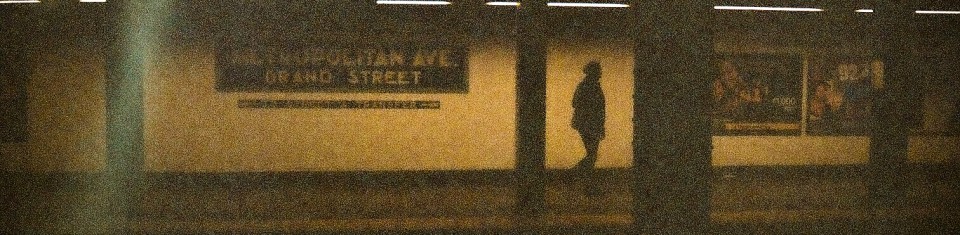
But what does it mean? It comes from one of my favorite stories, an early one called “So-Sz,” which explores the musings of Sasquatch after he has learned to read and write by studying the encyclopedia. The narrator references “the subway test,” which I read about 20 years ago in Scientific American, as a thought experiment about how much like modern Homo sapiens were the Neanderthal. Take a Neanderthal man, dress him in a three-piece suit, give him a briefcase and a haircut, and put him on the subway. Will anyone notice that he is not like the others? If not, then he has passed the subway test.

2770887841_d78daf2c4d_o

Photo Credit: Matt Celeskey

(As an aside, this article and the concept of the subway test came out long before Svante Pääbo’s work showing that all Eurasians carry a significant number of Neanderthal genes. I suspect Neanderthal would pass the subway test because a lot of people on the subway are at least part Neanderthal themselves.)

Anyway, the idea appealed to me because, as I’ve said before, the function of all art is to explain to ourselves what it means to be a human being. One of the things I most love about science fiction and fantasy is that these genres spend a lot of time working with creatures that are clearly non-human, as well as creatures that are almost human, half human, or human only on first inspection. Scratch the surface, and many sci fi characters are actually gods or demons or monsters of some kind.

But, scratch the surface a little further and you will find that those gods, demons, aliens, dragons, sentient planets, etc. are really humans in alien masks, like the characters of an ancient Greek play. As Stanislaw Lem says in his amazing novel Solaris, “We have no need of other worlds. We need mirrors. We don’t know what to do with other worlds. A single world, our own, suffices us; but we can’t accept it for what it is.” All that traveling, all those robots sent sojourning across the cosmos, all that scanning of distant stars for Dyson Spheres: all we are really looking for is a mirror. Put on a suit and board the subway. Will anyone notice who you really are?

Anthologies to Watch For

23 Monday Nov 2015

Posted by Joe in My Fiction

≈ Leave a comment

Tags

anthology!, marketing, sci-fi

I may be having trouble getting my new work picked up for publication, but I got news yesterday that my already-published work will be coming out in two different anthologies. Gardner Dozois has decided to pick up “The Daughters of John Demetrius” for The Year’s Best Science Fiction #33, and Tom Dooley will be using “Better than Google” in Eclectica Magazine’s 20th anniversary speculative fiction anthology. Seriously, there’s an online magazine celebrating its 20th anniversary next year.

I’ll post more particulars as the dates approach–thanks for reading!

Who Is John Demetrius?

21 Saturday Nov 2015

Posted by Joe in My Fiction, Stories

≈ 4 Comments

Tags

dystopia, John Demetrius, monsters, mythopoesis, sci-fi, utopia

3387245474_946fb66867_o

Photo Credit: Tina Negus

The last thing I had published–the last thing I’ve had published in a very long time, it feels like to me–is a story called “The Daughters of John Demetrius” in the October issue of Analog. (I know that October was only a month ago, but I usually date my publications by the date an editor accepts them, rather than when the story actually appears in print, and I haven’t had anything accepted for publication since April). I was trying something new with this story, working to reduce the infodump and the throat-clearing that I think can be a weakness of my work. So, while there’s quite a backstory to the characters and the setting (near-future northern Mexico), I deliberately left a lot unsaid or only hinted at.

And, while quite a few people seem to like the story, the reviews I’ve gotten often complain of the backstory and setting being not fleshed out enough. As Greg Hullender at Rocket Stack Rank charitably puts it, “There seems to be a well-developed world behind this little story, and it definitely leaves you wanting to know more about it.”

I feel a bit as though I failed to hit the sweet spot with this story–while reminding myself, as always, that no story is to everybody’s taste. But Hullender and other reviewers are right: there is a world behind the story. Last month’s Analog piece is one of four stories I’ve written that I refer to as “John Demetrius Stories.” They don’t fit into a single narrative–I’m not planning to make them into a single narrative, anyway–and the first two I wrote are not intended for publication, but I do think that I have a story cycle growing in my mind that centers around the character of John Demetrius.

Who is John Demetrius? Well, I’m not entirely sure myself. The character came to me after the death of my brother Dave, and I  wrote the first story with the idea of John Demetrius as a loose fictionalization of my brother. The loose fictionalization has gotten looser and looser over time, to the point that John Demetrius is my brother as he might visit me in dreams today.

I will say this: John Demetrius was a brilliant genetic engineer from a few generations before the story cycle takes place. He experimented on his own genome, he became an utter pacifist, and he wandered out of America into the south, siring children and coming to be regarded after his disappearance as some kind of spiritual master. He is, for the characters in the stories, a legendary figure whose real identity has been obscured by years of cultural accretions and appropriations of his name for all kinds of political purposes. Mythologically, he’s a reworking of the Green Man myth, a cousin of Tom Bombadil and Osiris and Jesus.

And that’s all I will say. “The Daughters of John Demetrius” is available in October’s Analog. I have another John Demetrius story, “Proteus,” which I hope to refine as soon as the current draft of Pacifica is finished. I have more ideas after that. If I can get a few of them published, I might even try to stitch them together into a single cycle: The John Demetrius Stories.

The Pacifica Process

14 Saturday Nov 2015

Posted by Joe in Uncategorized

≈ Leave a comment

Tags

NaNoWriMo, volcanoes, writing practice

I’ve always regarded NaNoWriMo participants with a mixture of admiration and skepticism: I love the can-do spirit of the movement, but I’m also curious about what kinds of novels come out of the experience. I remember when I was first considering NaNoWriMo for myself, I read an article by founder Chris Baty that “Slow writers find they can write about 800 words of novel per hour; a speedy writer (and good typist) can easily do twice that.” I knew then that I was not the droid Chris Baty was looking for.

Whatever the merits of NaNoWriMo, someone writing 800 words per hour is not a slow writer in my book. When I was writing Stranger Bird, I rarely wrote faster than 250 words per hour, I would guess–and that was on days that I was focused and serious. And that worked for me–Stranger Bird turned out well, I think, and while it may never get picked up for publication, it’s not a badly written novel at all.

mt lassen volcano

So why do I even care how fast Chris Baty thinks a slow writer can write? Well, for a number of reasons, I don’t have the luxury of writing time that I had when I was working on Stranger Bird: long empty summer months when writing a novel was really the only thing I was doing. One of the main reasons I turned to writing short fiction since then has been that a slowpoke like me can cobble a good story together with the dribs and drabs of time that are available to me: a half hour here, a few minutes before bed there, maybe a couple of uninterrupted hours on the weekend.

Pacifica is the working title of my second novel. Often I’ve felt foolish for taking a run at it: I feel so starved for time on most days that I’ve no idea how the whole draft will come together. As I work on it, I have to calm myself down daily, get clear with myself that this draft will be sloppy, come to accept that it will be full of dead ends and plot holes. All first drafts are loose, but I am consciously giving myself permission to write something truly horrible in the rough draft, in the hopes that somewhere in the slop of it there will be a story I can draw out. Otherwise the book will never come together; I just don’t have the time to write a tighter rough draft. This isn’t a NaNoWriMo project–I’ve been working on this draft since July and have at least another month or two to go–but I feel as though I’ve absorbed something of the NaNoWriMo ethic.

It’s been an uncomfortable process, almost painful some days. And it may turn out to be a flaming disaster of an experiment. But if anything good comes of it, it will be because I got over my control freakery long enough to allow 50,000 words to erupt on to the page.

On the Popularity of Vampires and Zombies

10 Saturday Oct 2015

Posted by Joe in Uncategorized

≈ 3 Comments

Tags

monsters, mythopoesis, nerd culture

For my first post in three months, I’ve been wondering what accounts for the popularity over the last ten years or so for vampires and zombies in genre literature. Of all the monster archetypes that seem to say something about the human predicament–the Dr. Jekyll/Mr. Hyde character, Frankenstein’s creature, the cosmic hostility of Cthulhu–I’ve seen more vampire and zombie books, movies, video games, Happy Meal toys, and cutesy merchandise than for any other monster.

I say this knowing that vampires have largely passed from the flow tide popularity they had during the heady days of the Twilight Industrial Complex. But Twilight was really just a recapitulation of the energy of the Anne Rice books and movies that had been popular 20 years before. I fully expect that a few years from now there will be another vampire fad, hopefully less annoying than Twilight, but still mining the anxieties and desires that the vampire represents for us.

My tentative conclusion is that both zombies and vampires are about exploitation. What resonates with us, I think, is that modern people are dimly aware of–and anxious about–having been domesticated. The modern American is in some ways as domesticated as cattle and laying hens: our time is strictly managed by school and work, our food comes to us pre-processed (and often pre-cooked and practically pre-digested), and we are all taken advantage of, to a lesser or greater degree, by companies and agencies and authorities that understand human psychology and probability and algorithms better than we do.

In other words, we see ourselves in the zombie: the zombie is in a kind of un-life, a feeling people are all too familiar with after binge watching a TV show for 14 hours (or playing X-box or trolling YouTube or Facebook for 14 hours). In the vampire, we see the exploiter: the advertisers and employers and investment bankers whom we perceive to be insatiable for our money and our labor. We vote and play the lottery and pay our insurance premiums, all while being dimly aware that those asking for our votes or advertising the lottery are playing us for suckers, figuratively sucking us dry. Perhaps we are unconsciously anxious about the power the exploiter (the vampire) has over us, as well as of the chaos and misery to come when the exploited (the zombies) turn their indiscriminate and poorly thought-out hatred on the world. As a community college English teacher not so far from Umpqua Community College, where an ordinary English class ended very badly last week, I’ve been thinking more than I usually do about young men’s poorly thought-out hatred.

I’m genuinely curious, though, about why these monster types have such staying power with us. The Dr. Jekyll/Mr. Hyde character, or Frankenstein’s creature, both seem just as relevant to me as the vampire and the zombie, yet neither of the first two have anything like the resonance of the zombie to us today. I suppose one could make the argument that our AI fears, as represented in Ex Machina or Blade Runner or 2001, are our modern reworking of the Frankenstein myth. Even if true, though, zombies are still more popular right now. Why?

Where is the hopeful sci-fi?

21 Tuesday Jul 2015

Posted by Joe in Uncategorized

≈ 1 Comment

Tags

dystopia, sci-fi, utopia

A long while back a friend from my Quaker meeting, knowing that I write and teach sci-fi, asked for a list of what she called “hopeful sci-fi stories.” I believe her criteria were these:

  1. No alien invasions
  2. No dystopias

I thought about it for a while and realized that much of sci-fi—probably most of it—wouldn’t pass her test.

Photo credit: Marco Monetti

Photo credit: Marco Monetti

It also occurred to me that one reader’s hopeful future is another’s dystopia. For example, one of the first writers I would propose for the list of hopeful science fiction would be Arthur C. Clarke. It’s true that there are aliens in most of Clarke’s work—at least the books and stories I’ve read—but Clarke’s vision of humanity’s future is progressive, expansive, and I would argue millenarian. Clarke’s basic thesis in 2001, Rendevous with Rama, Fountains of Paradise, and elsewhere is that humans are destined to take to the stars, to become ever more technologically advanced, to live ultimately as gods (that is, as creatures that would seem godlike to us by today’s standards). I find the idea appealing—I’m basically a Teilhardian-style Christian—but I know that Clarke’s technophilia is a turn-off to some readers. Does hopeful sci-fi depend on our building space elevators and then Dyson spheres and ultimately leaving behind our earthly bodies entirely?

As a corrective, I would also suggest the example of Ursula Le Guin. Much of her work is just as dystopian as it is utopian, but I can think of several works in her Hainish series that portray something like a hopeful vision for humanity. The Left Hand of Darkness portrays a world which, for all of its troubles, features well-adapted human societies (or at least one of them) striving to deepen their inner lives rather than trying to build bigger, more effective guns. The enemy in the book—like the enemy in most of Clarke’s work—is ignorance rather than an alien or human invader.

There are other examples, but those two jump to mind first. Later, I’d like to unpack why we seem so enamored of dystopian fiction, especially lately. But for now, what books, stories, movies, or games would pass my friend’s test? Where is the hopeful sci-fi?

A New Pitkin Podcast!

09 Thursday Jul 2015

Posted by Joe in Uncategorized

≈ Leave a comment

I’m over the moon to see my story “The Fairy Ring” come up on PodCastle #371! I’ve not heard the reading myself, but I’ll give it a good listen tonight.

Photo Credit: E. Dronkert

Photo Credit: E. Dronkert

The blog’s been quiet, but I’ve been writing away: I’m deep into the second draft of one of my John Demetrius stories, “Proteus,” and my story “The Wingbuilder” has racked up an impressive number of rejections in just one month of sending it out (clearly it’s not to everybody’s taste). I’m trying again to find an agent for my novel, Stranger Bird. There’s only so much time in the day for blogolalia.

But–I have have big plans for some new posts: for months I’ve promised a friend from my Quaker meeting a little writing about the science fiction of hope and aspiration (rather than our culture’s current obsession with dystopia and apocalypse).  There’s more on the way!

Why Fantasy?

17 Sunday May 2015

Posted by Joe in My Fiction

≈ Leave a comment

Tags

fantasy, mythopoesis, nerd culture, PodCastle

When people ask what I write, I almost always say science fiction. I almost never say fantasy, even though in many ways fantasy is my first love, going all the way back to reading The Hobbit and Watership Down and Roald Dahl when I was a kid. I’ve wondered lately why that is: am I embarrassed that I read and write and teach fantasy fiction?

In spite of all the blessings of nerd culture entering the mainstream, I guess I do feel more guarded about my love of fantasy. Both fantasy and sci-fi are snobbishly dismissed as escapist genre writing by some who have a very specific, Harold Bloomish notion of what literature is (I say “Bloomish” because the real Harold Bloom has been a vocal supporter of the work of fantasists like John Crowley and Ursula LeGuin). But even in the realm of nerd fiction, I get the impression that it’s more popularly acceptable for adults to be into science fiction than into fantasy. Perhaps that’s changed in the current market of the Lord of the Rings-Industrial- Complex and Game of Thrones. But I think there’s still a residual shame for many folks about their love of fantasy. Science fiction is about heavy, heady ideas: the ethics of progress, the shape we want our future to take. What’s fantasy about? Dragons?

podcastleHere’s an answer that took me a while to come to, but which makes me more ready to tell strangers that I write fantasy: fantasy–if it’s good–looks at the human experience sideways. All art is about what it means to be human, but fantasy (like surrealism or avant-garde music) takes a look at the human experience from an oblique angle, representing our fears and desires as creatures and powers that don’t exist in the everyday. This is what mythical stories did for earlier people, and fantasy for me is an attempt to apply mythical thinking to fiction, in a world where change comes too quickly and radically for traditional myth-making structures to keep up.

I’ve definitely written more science fiction than fantasy, but this last week I had a fantasy story picked up at the first place I’d sent it (PodCastle, the amazing fantasy podcast). I’m excited to hear it read, and to have others hear it, and I’m ready to say to people, when they ask, that I write science fiction and fantasy, and to be able to say why I do.

← Older posts
Newer posts →

Subscribe

  • Entries (RSS)
  • Comments (RSS)

Archives

  • February 2026
  • January 2026
  • November 2025
  • September 2025
  • August 2025
  • July 2025
  • May 2025
  • April 2025
  • March 2025
  • January 2025
  • December 2024
  • October 2024
  • September 2024
  • August 2024
  • June 2024
  • May 2024
  • April 2024
  • March 2024
  • February 2024
  • January 2024
  • December 2023
  • October 2023
  • August 2023
  • July 2023
  • June 2023
  • April 2023
  • March 2023
  • May 2022
  • August 2021
  • June 2021
  • January 2021
  • October 2020
  • May 2020
  • March 2020
  • February 2020
  • January 2020
  • July 2019
  • June 2019
  • December 2018
  • October 2018
  • July 2018
  • May 2018
  • April 2018
  • January 2018
  • December 2017
  • November 2017
  • September 2017
  • August 2017
  • July 2017
  • June 2017
  • May 2017
  • April 2017
  • March 2017
  • February 2017
  • January 2017
  • December 2016
  • November 2016
  • October 2016
  • August 2016
  • July 2016
  • June 2016
  • May 2016
  • March 2016
  • February 2016
  • January 2016
  • December 2015
  • November 2015
  • October 2015
  • July 2015
  • May 2015
  • March 2015
  • February 2015
  • January 2015
  • December 2014

Categories

  • A Place for my Stuff
  • Advertising
  • Artificial Intelligence
  • Beta Readers
  • Biology
  • Book reviews
  • Curious Fictions
  • Dungeons and Dragons
  • Exit Black
  • fantasy
  • Games
  • HPIC
  • Journeys
  • Let's All Admire That Fantastic Can
  • Lit News
  • Literary criticism
  • Musings and ponderation
  • My Fiction
  • Pacifica
  • Politics
  • Reading Roundup
  • Science
  • Science Fiction
  • Science Fiction Writers of America
  • SETI
  • Stories
  • Stranger Bird
  • The Ideal Vehicle
  • The Time of Troubles
  • Uncategorized
  • Utopia and Dystopia
  • Welcome
  • YA fantasy

Meta

  • Create account
  • Log in

Authors

  • Joe's avatar

Blog at WordPress.com.

  • Subscribe Subscribed
    • The Subway Test
    • Join 145 other subscribers
    • Already have a WordPress.com account? Log in now.
    • The Subway Test
    • Subscribe Subscribed
    • Sign up
    • Log in
    • Report this content
    • View site in Reader
    • Manage subscriptions
    • Collapse this bar
 

Loading Comments...