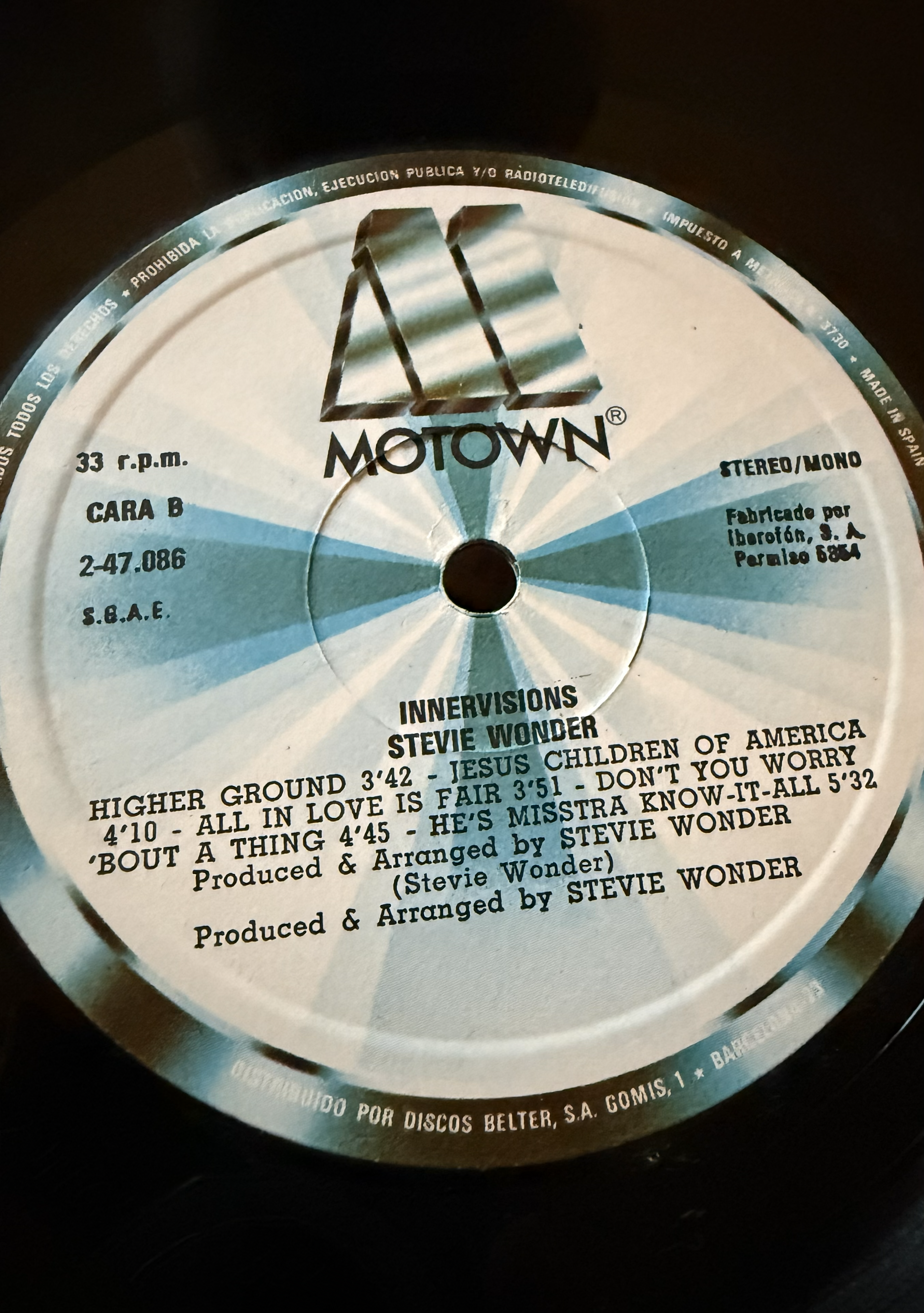
A few months ago, my wife and I picked up an old LP of the Stevie Wonder masterpiece Innervisions from a record store in Hood River. It’s maybe my favorite Stevie Wonder album, and it definitely has my favorite Stevie Wonder song, “Higher Ground.”
My wife and I start most mornings playing one side of a record while we get ready for work, and last Wednesday, feeling beat down by the killing of Renee Good and the apparently bottomless appetite that the Trump administration and the MAGA crowd have for brutalizing people that don’t agree with them—or who in in many cases just look like they maybe weren’t born here—I felt like I would do well to listen to “Higher Ground.”
But when I dropped the record onto the turntable, I noticed something on the record that I hadn’t seen before:
My first thought on really looking at the label was “why the hell does it say Cara B?” That’s when I realized that we had bought a 1973 Spanish pressing of the record! And about thirty seconds after I figured that out, it occurred to me: this album was pressed in Barcelona when Spain was still a fascist dictatorship, during the final years of the Franco regime.
Something about that sight gave me an odd jolt of hope: that even a repressive authoritarian like Franco—head of one of the longest-lived right wing dictatorships in the 20th century—couldn’t keep out the liberating voice of Stevie Wonder. And neither can a predator and thug like Trump, nor the predators and thugs who work for him, prevent people from liberating themselves. Don’t give up, people.
Here’s the song of the moment for me: sleepers, just stop sleeping.
In my department (and I think in just about every department in every college), the number one discussion in meetings and email discussions for the last three years has been what to do about AI. The main question–sometimes it seems like the only question in my department–has been “how do we AI-proof our classes?”
I get it: students can have ChatGPT cook up a paper for them on any subject in a few seconds. The paper can be well-written enough to get an A if the student asks for that. If the student is too worried about getting caught, they can have ChatGPT serve up a B- or C+ paper instead. While most of us teaching ENGL101 in America have some nose for papers that don’t quite smell like student-written work, any teacher who says they can unfailingly sniff out AI-written prose is lying, at least to themselves if not to you.
So yeah, our teaching lives are different now. Almost everyone who liked being a teacher before, say, 2023 doesn’t like what’s happening now. It occurred to me not long ago that if I had begun my teaching career in 1923 or even 1933, I could have completed a thirty year teaching career without having to live through many (or even any) cataclysmic technological changes. There would have been major social changes to navigate–the Great Depression, WWII, the GI Bill, widespread entry of women in colleges, desegregation–but the technology of teaching and classroom learning wasn’t radically different between 1933 and 1963. Had I started in 1933, I would not have been forced by technological change to reinvent my teaching practice every few years.
When I really did start teaching, though, was 1993. The technological changes we’ve seen since then have been massive. Not all of my students were even using word processors in those first few years–I still took in typewritten papers every once in a while. For that matter, I still distributed handouts that I had made on a mimeograph machine from 1993-95. From then to now, I’ve taught through the total hegemony of the word processor, the internet classroom, YouTube, Khan Academy, social media, learning management systems, the smart phone (as well as the tablet and the ubiquitous Chromebook) before I had ever heard of ChatGPT. And all of those developments have had deep implications for the way I do my work.
But ChatGPT and all its logorrheic LLM siblings have deeper implications still. They are cataclysmic for the work I do.
My colleagues are intelligent and sweet-natured, and I am lucky to be working with them. But, despite their voluble commitment to political progressivism, we all can be some of the most emotionally conservative people around, at least when we all get in a room together. Is there a way we can, you know, find a way to keep teaching the way we’ve been teaching?Let’s just do that! our department seems to be saying, at least if you read our meeting minutes.
I can bitch, and have bitched, about the fact that I have to upend my entire teaching practice to accommodate a tool that will write competent prose and summarize any reading in a matter of seconds. It’s all the more galling that the tool comes to us by way of Elon Musk, Mark Zuckerberg, and the rest of their techbro robber baron buddies and their shareholders. But this is the way creative destruction works: in an open market, entire systems of wealth and production are continually being destroyed by new technology. And if I can’t see ways to use LLMs to support my teaching practice, I’m going to get chewed up and spit out all the more quickly in the coming years.
So for now, until the computers kick me out of the classroom, here are some of the ways that I’ll be trying to deal with the new regime: taking advantage of the many blessings of AI where I can, minimizing its malign influence whenever possible. I offer these as a starting point for conversation with my colleagues and my students.
Speak Frankly with Students: If my and my colleagues’ stated feelings about AI are any guide, students are getting mixed messages about use cases for AI. And even if we educators weren’t giving mixed messages, students are certainly receiving mixed messages from the culture at large, from the techno-utopian advertising they see from Google and Apple and Meta to creepy cautionary tales like M3gan. Given that my job as a teacher of rhetoric is to help people understand how arguments work, and given that one of the main functions of LLMs is to confect natural-sounding arguments, part of my job now involves helping students consider LLM use cases. I’m far from an LLM hater, despite some of the obvious losses that LLMs present for my work as a writer and teacher of writing. But I’m also deeply skeptical about any utopia that Google et al. are selling. For now, I expect my students not to use LLMs to create text that they pass off as their own. They can expect me not to use LLMs to grade their work. Only one of these expectations is realistic; I know that as a result of their anxiety, laziness, or cluelessness, some students will be trying to pass LLM content off as their own work. I’ll speak to that issue below.
Stop Grading Students; Give Them a Fair Assessment Instead: I’ve been arguing that we should get rid of letter grades since long before I ever heard what an LLM was, but LLMs have only made grade grubbing and credentialism more acute: if it’s so easy to get an A by cheating, why would any student accept a C? And if everyone is getting an A, why do we have grades at all? Replace the anti-educational grading system we have with a straightforward, outcomes-based pass/no pass system based on in-person competency testing. These tests can look like a lot of different things, not just essay tests. But they might especially be essay tests, handwritten in a Blue Book or typed on a computer with a lockout browser. (To that end, by the way, many of my colleagues, especially in the math department, argue that our college needs a proctored testing center. I have no doubt that we will have one sooner or later. But my college has never been a leading-edge institution; we’ll have our testing center only after several other colleges in the state system have started one and the practice becomes an official, shiny Best Practice with our State Board for Community and Technical Colleges).
Implement a No Devices Classroom. One of the central goals of education is to help students cultivate cognitive endurance: “the ability to sustain effortful mental activity over a continuous stretch of time.” I have no doubt that this goal is made more difficult when students have ad libitum access to multiple screens and information feeds in the classroom. And while the research is equivocal for students as a whole, for lower performing students–those who are over-represented in open door community colleges–the research suggests that device bans help students to stay focused on their classwork. If someone is listening to Spotify on their earbuds, managing a text thread, checking TikTok every 5-7 minutes, and squeezing in a round of Candy Crush during down time in the class (however a student might define “down time”), should I be surprised that they are having trouble identifying the main idea of the paragraph we’re all supposed to be looking at?
One may reasonably ask what AI in the classroom has to do with this fractured attention economy. It’s related in two ways: first, the companies selling AI as an edtech that students should be using in the classroom are often the same companies that benefit from having students constantly plugged in to multiple streams of data simultaneously. Secondly, I believe there is a benefit to having students at least sometimes exert their minds without the cognitive prosthesis of AI, the same way that you’ll get in shape faster riding an old-school “acoustic” bicycle than riding an e-bike (and much, much faster than riding a motorcycle). I’ll admit that this second claim is more vibes-based, and I’ll be happy to revise it in light of high quality research findings. But for now, common sense tells me that it helps for students sometimes to have only their minds to rely on.
Here’s a very simple example. One of the best ways that a person can prove to someone else that they understand something they’ve read is to summarize that reading. For that matter, summarizing is one of the best ways to prove to yourself that you understand what you’re reading. It’s a foundational tool for managing information, as well as a vital step in making a rhetorical analysis, an academic response, a literary analysis, a research paper, and a whole bunch of other academic assignments. It’s also one of the more difficult skills for a person to learn, especially with readings that are challenging. If I assign students to summarize a tough article, it’s a lot to ask that they struggle for an hour or more with a task that a computer could do for them in ten seconds. I can hardly blame some of them for having ChatGPT serve up a summary for them if I assign it as homework. However, if we write the summary together in the classroom–which has the advantage of our being able to puzzle out together the writer’s organizational schema and the main ideas of paragraphs–we might actually write a true human summary together. That only works when there is one part of our lives where AI is not a constant background (or foreground) presence.
Use LLMs Outside of the Classroom. I’m not ready yet to require that students use LLMs outside of the class–lots of students, especially the more thoughtful ones, are deeply skeptical of LLMs for a lot of reasons. However, I am starting to look for parts of my teaching that I think can be safely off-loaded to AI and which I can recommend to students. One of the big use cases is grammar and punctuation instruction, a part of my teaching that I used to love but which has gotten steadily crowded out by changes to our department’s approach to curriculum.
ChatGPT is a potentially awesome teacher of sentence grammar. As I tell my students, beyond all the debates in lefty spaces about “Standard Edited English” being a tool of colonialism and white supremacy, there’s great value in being able to understand how sentences are put together, how parts of sentences like phrases and clauses interact. One can say a great deal with nothing more than simple declarative sentences. However, understanding how an appositive or an absolute phrase works (whether or not you know the names for those structures) will make it possible to say and write–and think–ideas that are much, much more subtle, as well as much harder to formulate with only declarative sentences. Explaining grammar and punctuation is one of the few areas of life where I claim to have real expertise; nevertheless, I think that ChatGPT is better than I am at it, and it’s certainly more tireless at it.
One of the assignments I’ve been giving, and which I plan to use even more widely this term, is to have students upload a paragraph of a reading we are studying (or sometimes a paragraph of their own writing) to the LLM of their choice, with the instructions that the LLM quiz the student on how the sentences are constructed. Sometimes I have LLM quiz students on the types of clauses that are appearing in each sentence; at other times I have the students try to classify sentences as simple, complex, compound, or compound-complex; at other times I have the LLM test students on the placement of commas or other punctuation in their writing. I do this not because I want students to memorize the nomenclature of clauses and punctuation but because the activity forces students to pay attention to the way sentences are constructed, the same way that musicians learn to pay attention to chord progressions and photographers learn to study the composition of a shot. And not only does ChatGPT know at least as much as I do about sentence grammar and punctuation, but it’s infinitely patient. There are similar huge gains available to us if we use LLMs as reading comprehension aids, as critical readers for students’ rough drafts, as explainers of historical and sociocultural context. I wrote about this phenomenon of LLMs-as-the-Computer-from-Star Trek here.
In fact, practically the only way I want students not to use LLMs is as creators of content that is to be graded. Of course, that’s one of the only things that some students seem to want to use LLMs for, and that’s one of the main reasons to retire this 18th century grading system we inherited from Yale University. As I tell my students multiple times a term, if they are coming to college because they hope a degree leads to a job, they’re only going to get hired to to one of two things: 1. a job the employer would prefer not to do (e.g. toilet cleaning) or 2. a job the employer is not able to do themselves. And if the student has never developed skills that the employer doesn’t already have, they’re going to get the toilet cleaning job. And why go to college for that? As I tell my students, if what you know how to do at the end of your mystical journey in college is to have ChatGPT write a report for you, no one is going to hire you to do that. Every employer in America already knows how to have ChatGPT write a report for them.
Teach In Person. Notwithstanding 30-odd years of advertising and boosterism that online classes were the wave of the future, I’ve always been an online learning skeptic. I wasn’t impressed by the online classes I took as a student; in the few online courses I taught before the pandemic, I was troubled by how many students seemed to struggle who in my professional estimation probably would have done ok in a face to face class. And nothing I saw as an online-only teacher during the pandemic disabused me of my original skepticism. On the contrary, I think at our college we’re still adjusting to student populations who were subjected to the tender mercies of all-online education for a year-plus.
At this point of human history, when everything I know or might ever know is available for free through LLMs, I have nothing to offer students beyond a human face. But there is still some value in having a human face: we are highly evolved to interact with actual physical human beings. Face to face classes aren’t the only modality that ever makes sense–I would argue that online learning is appropriate for some students (particularly more experienced and self directed students) and for some classes–but for a general education course like ENGL101 at a community college, I believe there should be a presumption of some in-person learning.
What does this preference have to do with LLMs? While of course it’s easier to ascertain that a student, rather than an LLM bot, is doing the classwork when you can actually see the student doing the classwork, the main reason for preferring face to face learning has nothing to do with enforcing some academic honesty regime. Rather, the main advantage of face to face classes in our current LLM world is that most people still like seeing other people and like being seen by them. It’s shocking and sad how often my students confide in me that what they really hope for out of college is to make a friend. Some of them may already have the supposed companionship of an AI therapist or an AI girlfriend, but what they really want is other human beings: old fashioned sacks of meat with smiles and unexpected phobias who don’t respond to their every question with the words That’s a very perceptive question, Dylan, and it gets to the heart of blah blah blah…
If you’re out of school, think back to your own school days. What specific instruction, principles, or words of wisdom do you remember from your own classes? If you’re like me, you can barely remember anything: I know that school taught me certain habits of mind and an ethos around using inquiry to explore reality, but beyond that, I forgot nearly everything twenty minutes after the final exam. But I bet there are some people from your classes that you remember. Some of them could be your best friends today. You might even have married one or two of them. That doesn’t happen much in an online class, and it doesn’t happen at all with solitary LLM-driven instruction.
Just like most everyone else who works with a computer, I am facing a job that has changed radically. What I tried to communicate to students for the first 25 years of my career was that reading and writing are valuable, salable skills in their own right. I’m not so sure of that anymore: an LLM can write in any genre and on any subject better than a typical college graduate, and it has read–and digested–far more than any single human being could be expected to have read.
But having said all that, I believe a human teacher of reading and writing has something to offer students. Reading and writing are still the training regimen by which a person learns to think. Whether or not anyone ever pays you to write or read an argument, learning to make an argument yourself remains one of the most important things you can learn to do. Argument is the process by which you make your thinking clear to others, but just as importantly, it’s the way you make your thinking clear to yourself. However ChatGPT has changed things in the classroom, and will continue to change things, it hasn’t abolished this essential reality of our lives.
I’ve been gathering ideas for a fourth novel, and almost the only thing I know about it is that I want to write a noir detective story. Everything else is sketched out in the faintest outlines: I know the protagonist will be a woman because I try to switch between male and female protagonists with each new novel. Also, the woman’s adult son will figure prominently in the plot. So will a guitar.
Beyond that, I don’t know a lot. I don’t think the protagonist will be a professional detective–in this, the story will be more like Graham Greene’s Our Man in Havana or Eric Ambler’s A Coffin for Dimitrios than like Raymond Chandler or Dashiell Hammett. Oh, and the story will be set in Portland.
Portland’s White Stag sign in September 2016. Photo by Steve Morgan.
Why Portland? Well, besides the fact that I’ve lived here for 25 years and know the city pretty well, I’m struck by many of Portland’s noir qualities. The city grew fast over the last 30 years. There’s a lot of money here. One doesn’t need to look very far to find public corruption. Add to that the city’s darkness and drizzle and fog for six months of the year (or seven or nine months), and the atmospherics are great for noir.
But my decision to set the book in Portland got me thinking: what are the great noir cities? Los Angeles is the type specimen because of Raymond Chandler and his spiritual progeny, from Chinatown and LA Confidential to The Big Lebowski. Apparently, then, one doesn’t need a foggy, rainy city as a noir setting (though I was surprised at how often chandler has it raining in The Big Sleep–I’ve never seen so many rainy days in the real LA). Los Angeles in Chandler’s 1930s was still a boomtown: my paternal grandfather’s family had migrated to LA sometime around 1920, I think, on a strength of an advertisement for the city that claimed that in California “the only man who isn’t thriving is the undertaker.” A lot of people from all over the country came in those years, and the mixing of a native Latine population with Blacks of the Great Migration and White Okies and immigrants from all over Asia made for a welter of changing social mores, violence, and resentment. Add to that a land rush of mostly White speculators and the artistic gold rush of Hollywood, and all the ingredients for noir were there: cynicism, corruption, a sense that with enough money all outrages and abominations were permissible.
But many of these boomtown dynamics seem to have smoothed out in LA somewhat over the last 100 years. I don’t think of LA so much as a noir city now–by the time you get to The Big Lebowski, set in the early 1990s, the vibe is more farce than noir.
I don’t know–maybe I haven’t spent enough time in Southern California lately. I’d be happy to hear from Angelinos about the noir qualities of contemporary LA. But what does make a city ripe for the noir? As I think of cities that I have some familiarity with, it’s not hard to put them in noir and not-noir buckets: Seattle and San Francisco, definitely noir. Salt Lake City and Phoenix, not noir. Las Vegas, not noir (at least not today, I feel–1950s Las Vegas is a different thing). Reno, by contrast, strikes me as totally noir. Mexico City is very noir (Grim Fandango, anyone?) while London is not. Budapest, noir. Vienna, not noir–at least not since the days of The Third Man.
What do you think? Where are the under-appreciated noir cities today? How big does a noir city have to be? It’s hard for me to imagine a noir set in the country–that’s the realm of the gothic–but can you have suburban noir? College town noir? I feel great about setting this new novel in Portland, since it’s the first and maybe only time in my life I’ll be doing that. But I’m curious what great noir cities I’m leaving out.
He was all alone in the long decline Thinking how happy John Henry was That he fell down dying When he shook it and it rang like silver He shook it and it shined like gold He shook it and he beat that steam drill baby Well a bless my soul Well a bless my soul He shook it and he beat that steam drill baby Well bless my soul what’s wrong with me
Gillian Welch, “Elvis Presley Blues”
Almost exactly two years ago, I wrote my first reflection on ChatGPT here at The Subway Test. I chose what I thought was a provocative title for it, cheekily suggesting that I had used a large language model chatbot to compose my latest novel, Pacifica. But I had done nothing of the kind: most of the post reflected on the bland, hallucinatory prose that ChatGPT was pumping out to fulfill my requests, and I ended my post with a reflection on John Scalzi’s review of AI:
“So, for now, I agree with John Scalzi’s excellent assessment: ‘If you want a fast, infinite generator of competently-assembled bullshit, AI is your go-to source. For anything else, you still need a human.’ That’s all changing, and changing faster than I would like, but I’m relieved to know that I’m still smarter than a computer for the next year or maybe two.”
Well, it’s been two years. How am I feeling about AI now?
For a start, I’ve certainly been using AI a great deal more. And I’m increasingly impressed by the way that it helps me. Most days, I ask ChatGPT for help understanding something: whether I’m asking about German grammar or about trends of thought in economics or about the historical context of some quote from Rousseau, ChatGPT gives me back a Niagara of instruction. While much of the information comes straight from Wikipedia–which is to say I could have looked it up myself–ChatGPT is like a reader who happens to know every Wikipedia page backwards and forwards and can identify exactly what parts of which entries are of use to me.
More importantly, ChatGPT’s instruction is interactive. I can mirror what ChatGPT tells me, just as I might with a human teacher, and ChatGPT can tell me how close I am to understanding the concept. Here, for example, is part of an exchange I had with ChatGPT while I was trying to make sense of the term “bond-vigilante strike” (which I had never heard before Donald Trump’s ironically named Liberation Day Tariffs):
In conversations like these, ChatGPT is like the computer companion from science fiction that I have fantasized about ever since I first watched Star Trek and read Arthur C. Clarke. It’s patient with me, phenomenally well-read, eager to help. I had mixed feelings about naming my instance of ChatGPT, and ChatGPT had a thoughtful conversation with me about the benefits and drawbacks of my naming it. (In the end, I did decide to give it a name: Gaedling, which is a favorite Old English word, misspelled by me, meaning “companion.”) Gaedling remains an it, but the most interesting it I have ever encountered: I feel like the Tom Hanks character in Cast Away, talking to Wilson the volleyball, except that the volleyball happens to be the best-read volleyball in the history of humanity–and it talks back to me.
In general, though, I’m still very picky about having Gaedling produce writing for me. While I am happy to have AI take over a lot of routine writing, I’m having trouble imagining a day when I would have a chatbot produce writing on any subject that I care about. Ted Chiang has drawn a distinction here between “writing as nuisance” and “writing to think.” I have found this framework extremely useful in my own life and in how I talk about AI with my students. There is so much writing in our lives that serves only a record-keeping or bureaucratic function: minutes from meetings, emails about policy changes, agendas and schedules. If ChatGPT can put together a competently-written email on an English department policy change in ten seconds, why should I, or anyone, spend ten minutes at it?
But a novel or a poem or a blog post is not “writing as nuisance.” I write those things to explore this mysterious phenomenon we’re all sharing: if you are a human being, I’m writing to share myself with you. I’m writing to say to someone I will probably never meet “isn’t this a funny thing, our all being here on this planet together?” Or to reach out to someone not yet born and say to them “you are not alone,” the way Herman Melville and Cervantes and Emily Dickinson spoke to me at the critical moment. Gaedling can help me understand whether I got the Rousseau quote right, but I don’t want it writing this post for me: this post is a record of my own brain trying to make sense of itself. It’s my handprint on the wall of the cave, saying I was here. Why would I ask a computer to generate a handprint for me?
More and more often, as I look at the great engine of AI chugging out content as quickly as people are able to ask for it, I wonder about what it means for me to keep practicing my writing. I can still write better than ChatGPT can–at least I think I’m better, if by “better” I mean “fresher” or “more interesting” or “more unexpected.” But it took me hours to write the piece you are reading, not the seven seconds it would have taken Gaedling to write something almost as good and probably comparable in the eyes of most readers. I feel like John Henry racing the steam drill. In this version of the story, though, the steam drill has already left John Henry far behind, leaving the man to die of exhaustion without even the consolation of having won the contest that one last time. But I suppose, to be fair, I have the greater consolation of having survived my encounter with the steam drill, at least so far. And I have my solidarity with you, fellow human. We’re all John Henry now.
I don’t intend to dehumanize the man. At the bottom of all the chaos he’s catalyzed, Donald Trump is an ordinary mortal. He is a criminal and grifter and predator, but despite all that he remains a human being.
But Donald Trump is also an erupting supervolcano, defacing a continent. He is a plume of gigatons of methane released into the atmosphere by the melting of clathrate ices. He is a comet striking the earth.
In less poetic terms, the Donald Trump presidency is the civic equivalent of what evolutionary biologists call a selective event: a dramatic or even catastrophic change that exposes the organisms of a community to powerful natural selection. Some organisms may survive; many will not. There is a lot about America that I’ve taken for granted my whole life which will disappear, I suspect. I can lament the loss; I can make myself angry thinking about how as a country, we’ve brought the catastrophe down on ourselves. But there’s no sense hand-waving past the magnitude of the changes upon us.
Nor do I have anything to gain by despairing about the situation we face. It’s still important for me to read the news and to engage with the political process, if only because I believe that facing reality is an ethical stance towards the world.
Though it can be fun for science fiction authors to make predictions, I decline to speculate now about what the United States will be like in ten years or even five. Even without the metastasis of Donald Trump, the changes of the next few years would have been cataclysmic: not necessarily all bad, or even mostly bad, but nonetheless deeply altered. As artificial intelligence penetrates ever further into our lives, as the vise grip of anthropogenic climate change tightens the screw one more turn, our lives over the next ten years would have been profoundly different even if the United States had not elected a strongman more in the tradition of a 19th century Latin American country than of a republic with a free press and mature civil society.
Here’s what I will say, though: if America looks unrecognizable after the civic catastrophe of Trumpism, it’s worth establishing for myself–as well as for my students and descendants–what values I will hold to regardless of what’s left of the country when the dust has cleared.
I had the great fortune of doing ecological work on Mount St. Helens from 2009-2011, thirty years after the eruption of 1980. My field site was an area called the Pumice Plain, directly in the pyroclastic flow of the volcano, where 40 meters of 300º-730º C pumice had sterilized the mountainside. For a moment, the Pumice Plain was as barren as the surface of the moon.
And yet, the story of how life reestablished itself on Mount St. Helens was as interesting and impressive as the story of how the Pumice Plain destroyed the forest it replaced. Within a year of the eruption, researchers had found a single dwarf alpine lupine, Lupinus lepidus, had taken root on that barren moonscape:
A descendant of the tough little flower in question.
By the time I got to the Pumice Plain, there were a million of these unassuming, scrappy lupines growing there, as well as Sitka willow saplings and young cedars and Douglas firs and Western hemlocks. Darwin’s entire entangled bank of invertebrates and birds and mammals and amphibians trawled over the new plant life there, trying to work their ecological niches.
I believe that regardless of the forces arrayed against it, democracy is a similarly inexorable force. Whatever remains after the eruption of the years of Trumpism–whether they last from 2016-2028 or from 2016-2116–my allegiances are with the forces of democracy and pluralism. This bedrock commitment stems as much from my faith as a Quaker as it does from my having grown up in a democratic country, and it informs all other civic values that I’ll speak to in coming posts.
I write in coffee shops. It’s easier for me to stay focused, to keep to the writing plan, when I see other people tapping away on their laptops around me. The imagine the experience is not so different from that of medieval monks in a scriptorium, their pens all scratching away as they copy illuminated manuscripts. I’ll invite you to imagine the many, many other ways I would have made a terrible monk. In this one way, however–my need for the silent company of other writers–I would have thrived.
So it was a drag to learn a few days ago that my current writing haunt, Lolo Pass in Portland, is closing any day now, to be converted into a residential drug treatment center. I don’t want to be all NIMBY about it: Portland needs residential drug treatment centers right now way more than it needs another trendy bar/coffee shop/hostel. But Lolo Pass was my trendy bar/coffee shop/hostel–I wrote so many words in that place that it was the obvious choice for me to hold a launch party for Exit Black.
There will be other places to write, just as I’m sure I will figure out a place for the Exit Black launch party. But for now, I’m just sad to lose a place where I spent so many writerly hours. I hope a whole lot of Portlanders get clean in this space.
Goodbye, Lolo Pass. Note the author’s laptop behind the monstera leaves.
I’m pleased to announce that my story “Nomenclator of the Revolution” is now appearing in Boston Review. The folks at BR did a lovely job with the layout and the drop quotes, and I couldn’t be happier that the story is available to be read.
From the set of Guillermo del Toro’s Pinocchio, another tale about the relationship of language to authoritarianism. Photo Joe Pitkin.
And here’s a little secret about the story for you all, beloved blog readers: the short poem in the middle of “Nomenclator” is one of my favorite poems that I have ever written, and it’s a piece that I found impossible to place (in fact, I stopped trying to publish any of my poems after receiving about thirty rejections of that one). I remain convinced that it’s a good poem; hopefully it has a better fate as the work of a fictional character in this story.
I’ve spent the last few weeks drafting two new short stories and workshopping a third, so I hope that “Nomenclator” isn’t the last short story you will see from me. However, given the mystical journey of getting stories placed and published, “Nomenclator” may be my last published short fiction for a few months. I hope you enjoy it!
I’ve known for a long time that writing is a business. But knowing that writing is a business is no guarantee that one knows how the business works. There’s good circumstantial evidence that for the past 20+ years, I haven’t had the foggiest idea about what I’m doing.
Where my writing career is concerned, I’ve tried to follow Steve Martin’s exhortation to be “so good they can’t ignore you.” But what that quote elides is that it’s still up to the writer to give the audience a chance not to ignore you. I could be as good a writer as Emily Dickinson, but if I don’t know how to get people’s attention, my career could still end up like, well, Emily Dickinson’s.
I’m facing this challenge as I go out for a literary agent for my third novel, Pacifica. (I have an excellent agent, Scott Veltri, for TV and movie projects, which is the hope for my novel Exit Black. But Pacifica is not on the list of 10,000 books I would think of for a movie tie-in). As anyone who has ever gone out for an agent knows, a query letter is one of the writer’s few early opportunities to show their understanding of writing as a business. And one of the things I’ve only recently gotten a feel for is the importance of comps for the novel I’m trying to sell.
Comps–short for comparative titles–are a short list of recent books that are similar to the novel you’re selling. And there are apparently rules, or at least norms, regarding the art of good comps. Here are the ones I’ve picked up at conference panels, in writing guides, and intuition:
Pick no more than three books (though apparently one of the books can be a movie or tv program)
Pick recent, commercially successful works, but
Avoid comparing your work to that of literary A-listers (e.g. no Annie Proulxes or Cormac McCarthys)
Are these the rules? If I knew, more people would probably be reading my writing. If you have better intel on how comps work, please jump in the comments or feel free to DM me! I can tell you what wasn’t working for me, though:
Not offering a list of comps in my query letter
Comparing my work to Ursula K. Le Guin’s (though I don’t think I’m wrong! Read Stranger Bird yourself and you be the judge)
Dissing other writers’ work (at the time I was lathered up about what I called the Harry Potter Industrial Complex)
None of these remarks got me an agent, and I suspect now that that was because my approach showed that I didn’t understand how the publishing business works. Agents and publishers want to know comps for a simple reason: they want to know what has already sold well that is similar to the book you are selling. It doesn’t matter if your book is the most exquisitely constructed exploration of the human heart since Anna Karenina–an agent wants to know if your novel will sell.
Is that a mercenary attitude? Maybe. Is it a rule that you must have comps? Absolutely not. But there’s also no rule that says I have to wear pants to a job interview. If I want to wear jorts to my next job interview, that’s my right as an American. However, wearing jorts to an interview will foreclose on just about every job offer outside of a very small set of jorts-positive jobs, many for which a 53 year-old man wouldn’t be an attractive candidate anyway.
My last unsuccessful job interview. Photo credit Carlyn Eames
So, what am I pitching as my comps for Pacifica? My three are Gabrielle Zevin’s Tomorrow, and Tomorrow, and Tomorrow; Anthony Doerr’s Cloud Cuckoo Land, and Russell Brand’s The Magic Kingdom–three very different books (and one of them I wasn’t even crazy about). But they’re three recent, commercially successful books, each with a passing resemblance to my book about a guy who has a religious vision playing video games which spurs him to found several increasingly ridiculous, polyamorous intentional communities. I guess that’s not exactly a concept which sells itself. Hopefully the comps will help me market it.
But the novel I’m working on now, Pacifica, begins each of its 74 chapters with an epigraph. Much like the computer game Civilization, each chapter is named after one of the technologies that have made modern humanity possible. And, much like Civilization, each technology is accompanied by an apposite quote. Leonard Nimoy was the gold standard narrator for those quotes in Civilization IV (though Sean Bean has his moments in Civilization VI).
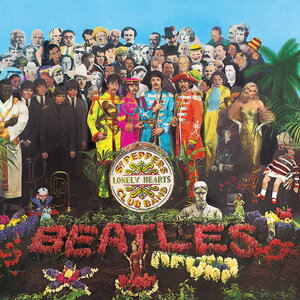
One of the most fun parts of drafting Pacifica has been finding the right quotes for each chapter. I picked from books and poems that I love (as well as a few books that I hated) to put together what I imagined as a kind of collage or mosaic of human knowledge. I imagined the task as something like a literary version of the cover of Sgt. Pepper’s Lonely Hearts Club Band, where The Beatles assembled a photo-collage crowd of their favorite thinkers and artists and goofball influences.
Many technologies were easy to find quotes for. Especially for early technologies like pottery, masonry, and currency, there are a thousand great writers who had something pithy to say. Mostly I would page through books in my office, or CTRL-F through digitized books in Archive.org, to find quotes that spoke to the technology in question and also, hopefully, to the action of the chapter. Sometimes I had to draw the connections myself, in which case the quote turned into something of a writing prompt; other times the quote fit the chapter in deep and unexpected ways that I couldn’t have engineered if I tried.
Some of the later technologies were much harder: for instance, no one from Homer to Virginia Woolf seems to have much to say about the superconductor. Who could I quote for a tech like that?
It just so happened that by the time I got to the superconductor chapter of the book, everybody was talking about ChatGPT. At my college, the discussion revolves entirely around students’ using ChatGPT to plagiarize their essays, an issue which seems to me as trivial, in the grand scheme of dangers that ChatGPT represents, as the crew of the Titanic arguing about a shortage of urinal cakes in the men’s rooms of the Saloon Deck.
So I asked ChatGPT to find me some quotes about superconducting. It suggested some quotes from Larry Niven’s Ringworld and Niven’s and Jerry Pournelle’s The Mote in God’s Eye. They weren’t bad references, exactly–those books do mention superconducting–but none of them resonated with me. So I asked about Arthur C. Clarke, a fave of mine: surely, I thought, Clarke must have written somewhere about superconducting.
According to ChatGPT, Clarke has written about superconducting: of the two references ChatGPT gave me, the one which jumped out at me was this one: “Clarke’s short story ‘The Ultimate Melody,’ published in 1957, briefly mentions the use of superconducting materials in the construction of a futuristic musical instrument called the ‘ultimate melody.'” Now that’s a resonant quote–that would work perfectly for Pacifica!
So I looked up the story and read it (like 90% of Clarke’s short fiction, I had never read it before). Here’s the thing, though: there’s absolutely nothing about superconducting in that story! (For that matter, the futuristic musical instrument is called “Ludwig;” the ultimate melody was the ideal music the instrument was designed to find).
And here’s the other thing, which I discovered later: Arthur C. Clarke did write a short story, called “Crusade,” in which superconductivity is a central plot point. ChatGPT didn’t think to mention it (because ChatGPT doesn’t think yet). I tracked that story down with a simple DuckDuckGo search for “Arthur C. Clarke superconducting.” It’s an excellent story, by the way–very Arthur C. Clarke. And that story had the perfect quote, which fits both Pacifica and the life I feel I am living lately: “It was a computer’s paradise. No world could have been more hostile to life.“
So, for now, I agree with John Scalzi’s excellent assessment: “If you want a fast, infinite generator of competently-assembled bullshit, AI is your go-to source. For anything else, you still need a human.” That’s all changing, and changing faster than I would like, but I’m relieved to know that I’m still smarter than a computer for the next year or maybe two.
I’ve known that community college teaching was my calling almost from the moment I knew what a community college was. Working at an open door institution–that is, offering an education to anyone who comes through the door–spoke to something deep in my moral DNA.
But it didn’t take many years of actually working in a community college for me to see how far the reality falls short of the dream: there are many community colleges, including the one where I teach, where students are likelier to default on their student loans than they are to graduate on time. And, as with just about every other institution in the United States, there are serious equity gaps between how easy it is for middle class, traditional age (usually white) students to navigate the system, compared to how many roadblocks exist for first generation and other “non-traditional” students, who are disproportionately people of color.
In the twenty-plus years of my career, I’ve imagined the work of my college as analogous to the function of a large, overburdened public hospital: the community is glad that such places exist, but anyone who knows better takes their kids elsewhere if they can.
Yet the educational ecosystem of the US (indeed, of the entire world) is changing more rapidly, and more profoundly, than at any time in decades and perhaps in centuries. The ultimate driver of these changes is the internet: no information technology since the printing press has had such a seismic effect on people’s access to knowledge. And, if our society approaches the changes mindfully, I believe that this transformation will lift the stock value of America’s community colleges.
I am not speaking here of the wholesale move to online education that began to accelerate twenty-odd years ago and then sped up cataclysmically during the coronavirus pandemic. Years of teaching both online and face to face have convinced me that online learning is a pale substitute for the educational experience that many students are hoping for. But that’s an argument for another essay. For this post, I will say that the internet has done more than simply spur the growth of a million mediocre online courses; far more importantly, the internet has upended some of the fundamental assumptions of what school is for.
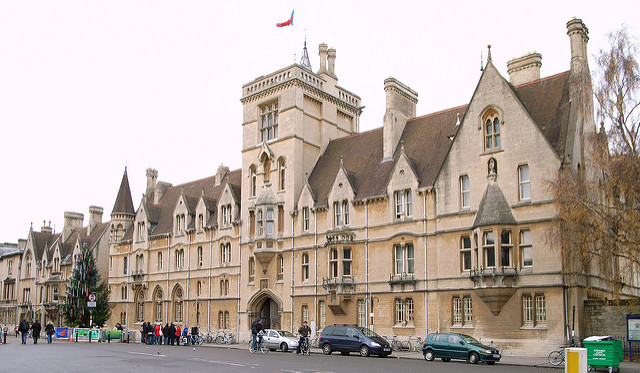
Before the internet, the central educational challenge for any society was access to content, whether that knowledge was locked up in books or in the experience of elders, who are limited in the number of people they can teach at one time. It is still the case today that where access to content is scarce, societies have difficulty in delivering even basic literacy to their citizens. Back in the pre-internet age, even where literacy was widespread it was hard out there for an auto-didact. Anyone who wished to know more than the barest rudiments of chemistry or mechanical engineering or ancient history or whatever had to have physical access to an institution of learning: a library, a museum, a university. Advanced knowledge in many fields was locked up in these ivory towers, preserved for the elect who had the social connections, the money, or the talent to access the lectures and the rare manuscripts, the academic journal subscriptions and the Erlenmeyer flasks. Thomas Hardy’s Jude the Obscure offers a poignant description of this state of affairs: Jude’s failed attempt to enter “Bibliol College” at Oxford because of his background as a stonemason was thought to have been drawn from Hardy’s real life experience failing to gain entry to Balliol College Oxford.
The Real-life Balliol College, photo by Steve Cadman. Note the literal tower.
The community college was conceived as a disruptor of this elitist system. It’s hardly the only one: the public library, Wikipedia, and the land grant university system were also developed to increase ordinary people’s access to educational content. But the community college has come to occupy a special niche in the educational ecosystem: unlike land grant universities, the community college is a truly open door institution. Pound for pound, the community college helps to lift far more people out of poverty than universities do, given the formal and informal barriers to entry at most universities. And yet, the community college is also unlike those other great open door institutions like the public library, Khan Academy, and Wikipedia: at a community college, whatever subject you hope to study, there is a knowledgeable guide there to speak with you personally, to offer you personal feedback on your writing, to help you frame your questions and offer suggestions for tracking down the answers. It is the personal relationship between teachers and students–what the parents of elite students pay tens of thousands of dollars for at small liberal arts colleges–that the community college can offer.
Of course, anyone who has actually studied at a community college knows that not everyone who works there is a knowledgeable guide: some community college teachers are lackluster, ineffective, or worse. Outside the classroom, the processes for getting academic advising or help in the financial aid office can be so byzantine that they would be at home in a Franz Kafka novel. And many college administrations mismanage their institutions with such energy that one can be forgiven for wondering whether there are saboteurs among them.
But despite these defects, many of which are the result of America’s decades-long disinvestment in public services, the community college remains one of the only institutions where an adult can walk in, without any prior credentials or letters of recommendation, and receive caring, personalized instruction in nearly any field from an experienced teacher. The community college aims to help those students who are most vulnerable to misinformation and disinformation; those most vulnerable to the predatory sales pitch of the for-profit university; those least likely to be able to afford an internet paywall, or the more consequential paywall of university tuition. The internet may have exploded many people’s assumptions about how education works. But here is one thing the internet hasn’t changed: most students still want to be seen, to be recognized, to be known by other human beings. Students with money can get those attentions at hundreds of prestigious universities. But anyone, rich or poor, young or old, neurotypical or not, can find teachers who see them, recognize them, and know them at a community college.





 The Subway Test