• About
  • My Fiction
  • Reviews

The Subway Test

~ Joe Pitkin's stories, queries, and quibbles regarding the human, the inhuman, the humanesque.

The Subway Test

Tag Archives: fiction

The Race Goes Not to the Swift

01 Tuesday Sep 2026

Posted by Joe in Literary criticism, Musings and ponderation

≈ 8 Comments

Tags

books, Devon Halliday, fiction, music, rock, Sean Hayes, writing

Carlyn and I went to see the great Sean Hayes (the Petaluma folkie, not the wonderful Will and Grace actor) at Polaris Hall in Portland a couple of weeks ago. It was probably my sixth time going to a Sean Hayes show, this time a fantastic duo concert with guitar master John Courage. It was also an opportunity for Carlyn and me to introduce our very special friends, Tanya and David, to Sean Hayes’s music. I am crazy for how Hayes builds a song out of practically nothing. I’m a decent songwriter myself (for a hobbyist, anyway) and I am in awe of how Hayes does his work: it seems sometimes like he builds his songs out of a three note lick and a refrain repeated 16 times.
There’s one kind of joy in finding a songwriter who writes songs more or less the way you do but does it better than you can. There’s an entirely different kind of joy in finding someone better than you who also happens to write songs in such a different way that you can’t even tell what he’s doing. Listening to Sean Hayes gives me this second kind of joy.

And yet, Sean Hayes has only 47,695 monthly listeners on Spotify. The word only is misleading here: I think 98% of Spotify performers have fewer than 1,000 monthly listeners, and 80% of performers have fewer than 50, if Claude is to be believed. And a figure of 47K monthly listeners is still amazing compared to my readership as a novelist–probably higher by two or even three orders of magnitude.

So when I say “Sean Hayes has only 47,695 monthly listeners on Spotify,” it’s because there are some far less talented songwriters who have more fans than Sean Hayes–again, two or three orders of magnitude more. As Ecclesiastes tells us, the race goes not to the swift.

I got to thinking about Hayes’s fandom partly in the context of Devon Halliday’s recent Substack essay, “Literary Fiction Has Lost the Plot.” This essay, which seems to have gone viral in my corner of Substack, offers a close reading of the first pages of two famous current novelists and takes them down a peg, basically arguing that the writing on page one of each novel is so bad that there’s no good reason to move on to page two.

There’s a lot Devon Halliday and I agree about here. The writers she takes down are both very famous–one of the writers has won the Pulitzer, and the other has been longlisted for the Booker Prize–and neither of the first pages of their novels is (in my opinion) anything breathtaking. In the case of the Pulitzer winner, I think you could make the case that his first page is actively bad.

Having said that, I think Halliday is wrong about the importance of first pages. As she says of the first novel, Emma Cline’s Switzy,

You probably think I’m being too harsh. Switzy is a long and complex novel that tracks the unraveling of a mind—maybe the later pages will justify this slow, vague, broody opening!

So what if they do? The first page of a novel must justify itself.

While I do think it’s true that “the first page of a novel must justify itself,” I also think it’s a shame for us to conclude that the first page of a novel must justify itself on the first page. To my mind, that is an extremely modern and mostly made-up problem, a result of millions of people self-publishing their novels and web comics and music and poetry–we’re all squawking for attention like the geese in Kundera’s The Book of Laughter and Forgetting, and you’d better hook your audience fast because they grew up on TikTok and will only spend a few seconds, if that, waiting for you to amuse them.

But I bet you can come up with counter-examples of novels, even relatively recent ones, that sneaked up slowly on you. My most recent read, Murakami’s The Wind-Up Bird Chronicle, is a classic example: if you judge by the first ten pages or so, it sounds like the book is going to be about a guy looking for his lost cat in the alley behind his house. But the story slowly, and with great creepiness, turns into a surreal, noir exploration of the soul of Japan.

That slow pacing is the fruit of a literary reputation. Literary reputation is a kind of emotional line of credit that can be drawn down very slowly before the reader is going to demand that the writer produce a justification for what they’re doing. I’m a decent writer, but I’m no Murakami–to return to a musical analogy, if Murakami is someone with the literary reputation of David Bowie, I’m more like a busker at the top of the subway stairs. If someone discovered a lost Bowie track today, millions of people would listen through it with the most generous ear imaginable, because hey—this is a previously undiscovered David Fucking Bowie track! The opening chords could seem anodyne, or poorly mixed, or even boring, and we would keep listening because Bowie was surely going somewhere when he wrote that intro.

But my situation, the busker’s situation, is the situation of most writers. In my case, I’ve got about 15 seconds, if that, to impress you with my busking before you start descending the stairs to the trains. (And even then, you might not notice even if the playing and the composition are the most brilliant thing to touch your ears all year. Remember that Washington Post experiment where Joshua Bell played Bach in a DC Metro station and practically everyone walked right by him. I think only one adult over several hours—a serious violinist himself—ultimately noticed that it was Joshua Bell. For what it’s worth, lots of little kids paused to listen before their parents dragged them away.)

Writerly jealousy is a non-trivial problem in the creative writing classes I teach. As befits an open door community college, every class I have ever taught contains a broad mix of student ability: there are many students who are more earnest than skilled, but there are promising and even scarily talented writers as well. So there’s a lot of jealously: some students care a lot about their work, and they are often good enough readers to see that their writing isn’t as strong as that of some others in the class. The challenge is compounded by the fact that some of the most talented writers are also the least interested in devoting themselves to writing long term–often enough they are engineering or biology majors taking an “ice cream class.”

So every term I tell my students about Jimi Hendrix and Neil Young at Woodstock. Hendrix and Young were friends; according to legend, they even arrived together at Woodstock in a hotwired pickup truck, some agent or promoter having sent them to the wrong regional airport. Both men played guitar at the festival. And, I tell my students, of the 500,000 people that were at Woodstock, I doubt that anyone in the audience thought that Neil Young was the better guitarist.

But Neil Young is awesome. And the world of guitar has plenty of space for Neil Young. More importantly, there are ways that Neil Young plays a solo that never would have occurred to Jimi Hendrix for all his talent, or to any other human being, for that matter.

(One might add that Neil Young is also still alive, and that some, like me, consider Neil Young a greater songwriter than Jimi Hendrix. But that’s all beside the point: even if Jimi Hendrix were a better human being in every way than Neil Young, Neil Young remains a priceless and indispensible musician.)

There are a million ways to write a story, to write a song, to play a song, to engage with the world. Work hard at what you’re doing, the way you’re doing it, then belt it out. People will give you the 15 seconds or they won’t. If they don’t, and your work is nevertheless wonderful, the point is that you made wonderful work. The race goes not to the swift.

Here’s one way of writing and singing a song that you should listen to, I’m telling you: Sean Hayes doing “When We Fall In” at Le Poisson Rouge a few years back. I first listened to it before Carlyn and I were even married, and I knew as soon as I heard the first eight bars of the song that I was, in fact, in deep with her.
Morally Complex Fantasy for an Amoral Age

03 Monday Aug 2026

Posted by Joe in fantasy, Literary criticism, Musings and ponderation, My Fiction, Stories, The Time of Troubles, Utopia and Dystopia

≈ 12 Comments

Tags

books, Conan, dark fantasy, Elric, Fafhrd and the Gray Mouser, fantasy, fiction, pulp fantasy, swords and sorcery, writing

I have been writing a swords & sorcery story.

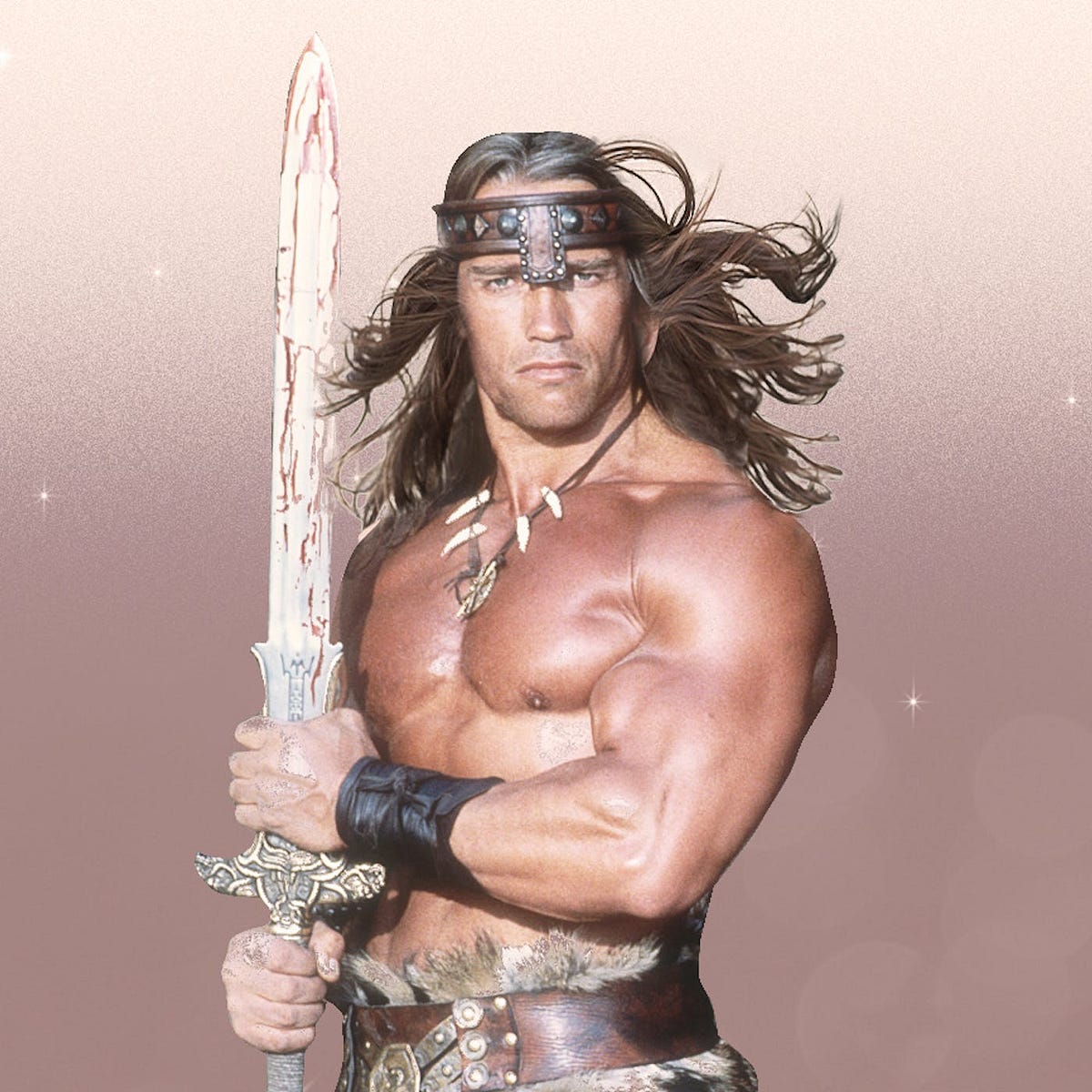
For much of my adult life, I would have said swords & sorcery was a guilty pleasure, the adolescent male libido-fueled stuff of Conan the Barbarian and Frank Frazetta chainmail bikini posters.

Schwarzenegger’s Conan–swords and sorcery for the Reagan years.

But I’m learning to give up on needless guilt. Early in my friendship with Carlyn, I said some music I was listening to (I don’t remember what) was a guilty pleasure of mine. She replied “I intend not to feel guilty about my pleasures.” It was about the wisest thing I had ever heard anyone say. Reader, I married her for that reason as much as for any other.

So, swords & sorcery–morally complicated pulp fantasy. Less heroic, more hard boiled. Lots of fragments, at least the way I’m writing it. The city where my story is set, Kyrenaikos, is as noir a place as Fritz Leiber’s Lankhmar, Raymond Chandler’s LA, or Adventure Time‘s City of Thieves.

I’m learning, too, to feel comfortable with pulp fantasy’s one sentence paragraphs, bane of my career as an English teacher.

And my story is definitely post-Conan: the protagonist is nonbinary, and the main badass is three and a half feet tall. I’m trying to draw more on the weirdness of Michael Moorcock’s Elric and the sass of Fritz Leiber’s Fafhrd and the Gray Mouser, leavened with my classic Pitkin open endings and wry asides.

It’s also a classic Pitkin career move for me. Swords & sorcery is one of the least popular subgenres of fantasy today. Today all the buzz is around romantasy (think Sarah Maas), cozy fantasy (think Legends and Lattes), LitRPG (e.g. Dungeon Crawler Carl), and the Critical Role Industrial Complex. I definitely know how to spend dozens of hours writing something the market never asked for.

But I believe swords and sorcery is the right subgenre for the Trump years. Not just because of the noir qualities of the moment, the chaos and corruption and amorality and incompetence of the times (though for those reasons, too). Not just because Elon Musk seems almost literally to be an evil sorcerer of overwhelming power. But even more, I want to exhort readers, or maybe just myself, to (in the words of an old bumper sticker) remember who I wanted to be.

Swords & sorcery, like its sister subgenre hard boiled detective fiction, follows flawed people in corrupt situations who have a tough job to do. The protagonists of these stories may be conflicted; their motives may be impure, even mercenary at first. But they always seem to find that their moral universe cannot simply be handwaved away. The protagonists of swords and sorcery may be immoralists, but they are not amoral.

I am (like many of you) a lackluster moral example, certainly not the kind of person you’d want to rely on to restore the American republic. But we’re all we’ve got. So I teach community college by day, volunteer for Indivisible on the weekends, and write about more or less good people fighting to keep their moral compass under impossible circumstances.

And even if swords & sorcery wasn’t the right genre for this cataclysmic, corrupt moment in American history, I’m having more fun writing this story than I’ve had in a long time. I commit to taking my joys where I can find them today.

The Subway Test Is Free

11 Tuesday Nov 2025

Posted by Joe in Uncategorized

≈ 5 Comments

Tags

books, Exit Black, fantasy, fiction, Pacifica, reading, Stranger Bird, substack, writing

I mean this in both the “free speech” and “free beer” senses of the term: I use The Subway Test to say what I want, and I have no intention of charging you for my words of wisdom.

I have nothing against the Heather Cox Richardsons and Matt Yglesiases and Paul Krugmans of the Substack world– on the contrary, I love what they are doing, and I’m glad they get financial support for it. And I have a soft spot, or at least an “oh, buddy, bless your heart” compassion, for the thousands of people on Substack with a tiny following who are trying to tease those singles or tens of readers into some stream of income for themselves.

But I have a decent job that I like doing, at least most days, and I get paid enough teaching first year composition at a community college to keep body and soul together. I write slowly, and I know that a paid readership wouldn’t improve me on that score. If I had, say, 14 paid subscribers to please with a regular feuilleton of my own wit and incisive commentary, the pressure to please them would not improve my writing, increase my happiness, or add anything of value to your lives.

But for all that, if you read something here that makes you think, “I like that Pitkin–that slowpoke speaks my mind,” there are other ways you can support me.

A like on one of my posts is nice. A comment is even better.

And if you really want to give me some money, feel free to buy my novel Stranger Bird. It’s a charming YA fantasy written during the height of the Harry Potter Industrial Complex–in reaction to those heady times, I looked back to the older style of YA fantasy that Ursula Le Guin, Lloyd Alexander, and Richard Adams were practicing back in the 1960s and 70s. The result is literally magical.

Or, if you’re not so sure about YA fantasy, you could spring for Exit Black, my 2024 meditation on space tourism which is really a meditation on violence, techbros, and American predators and prey. There’s also a great audiobook version of this one, read by the incomparable Catalina Hoyos.

Or, if you really want to support me, start an independent publishing house of impeccable good taste and artistic daring, and pick up Pacifica to be published in your catalog. That’s my top support tier: if you spend thousands of dollars on me, you’ll have a publishing house with at least one title. That one is a reach goal.

Where Is the Noir?

04 Monday Aug 2025

Posted by Joe in Musings and ponderation, My Fiction, Stories, Utopia and Dystopia

≈ 3 Comments

Tags

books, detective fiction, fiction, film-noir, noir, novels, Portland, writing

I’ve been gathering ideas for a fourth novel, and almost the only thing I know about it is that I want to write a noir detective story. Everything else is sketched out in the faintest outlines: I know the protagonist will be a woman because I try to switch between male and female protagonists with each new novel. Also, the woman’s adult son will figure prominently in the plot. So will a guitar.

Beyond that, I don’t know a lot. I don’t think the protagonist will be a professional detective–in this, the story will be more like Graham Greene’s Our Man in Havana or Eric Ambler’s A Coffin for Dimitrios than like Raymond Chandler or Dashiell Hammett. Oh, and the story will be set in Portland.

Portland’s White Stag sign in September 2016. Photo by Steve Morgan.

Why Portland? Well, besides the fact that I’ve lived here for 25 years and know the city pretty well, I’m struck by many of Portland’s noir qualities. The city grew fast over the last 30 years. There’s a lot of money here. One doesn’t need to look very far to find public corruption. Add to that the city’s darkness and drizzle and fog for six months of the year (or seven or nine months), and the atmospherics are great for noir.

But my decision to set the book in Portland got me thinking: what are the great noir cities? Los Angeles is the type specimen because of Raymond Chandler and his spiritual progeny, from Chinatown and LA Confidential to The Big Lebowski. Apparently, then, one doesn’t need a foggy, rainy city as a noir setting (though I was surprised at how often chandler has it raining in The Big Sleep–I’ve never seen so many rainy days in the real LA). Los Angeles in Chandler’s 1930s was still a boomtown: my paternal grandfather’s family had migrated to LA sometime around 1920, I think, on a strength of an advertisement for the city that claimed that in California “the only man who isn’t thriving is the undertaker.” A lot of people from all over the country came in those years, and the mixing of a native Latine population with Blacks of the Great Migration and White Okies and immigrants from all over Asia made for a welter of changing social mores, violence, and resentment. Add to that a land rush of mostly White speculators and the artistic gold rush of Hollywood, and all the ingredients for noir were there: cynicism, corruption, a sense that with enough money all outrages and abominations were permissible.

But many of these boomtown dynamics seem to have smoothed out in LA somewhat over the last 100 years. I don’t think of LA so much as a noir city now–by the time you get to The Big Lebowski, set in the early 1990s, the vibe is more farce than noir.

I don’t know–maybe I haven’t spent enough time in Southern California lately. I’d be happy to hear from Angelinos about the noir qualities of contemporary LA. But what does make a city ripe for the noir? As I think of cities that I have some familiarity with, it’s not hard to put them in noir and not-noir buckets: Seattle and San Francisco, definitely noir. Salt Lake City and Phoenix, not noir. Las Vegas, not noir (at least not today, I feel–1950s Las Vegas is a different thing). Reno, by contrast, strikes me as totally noir. Mexico City is very noir (Grim Fandango, anyone?) while London is not. Budapest, noir. Vienna, not noir–at least not since the days of The Third Man.

What do you think? Where are the under-appreciated noir cities today? How big does a noir city have to be? It’s hard for me to imagine a noir set in the country–that’s the realm of the gothic–but can you have suburban noir? College town noir? I feel great about setting this new novel in Portland, since it’s the first and maybe only time in my life I’ll be doing that. But I’m curious what great noir cities I’m leaving out.

“In and Out of Rain,” photo credit Tony Moore.

We’re #8! We’re #8!

13 Monday Jan 2025

Posted by Joe in Advertising, Book reviews, Exit Black, Lit News, My Fiction, Science Fiction

≈ 10 Comments

Tags

Blackstone, books, Carolina Hoyos, Discover Sci-Fi, Exit Black, fiction, sci-fi, Science Fiction, writing

That was my publisher’s note to me when we learned that Exit Black cracked the top ten best sci fi audiobooks in 2024 at Discover Sci-Fi. I’m super stoked: while I would have loved for Exit Black to take the #1 spot, of course, there’s no shame losing out to the likes of Adrian Tchaikovsky narrating his own book and Jeff VanderMeer having his work read by Bronson Pinchot. Carolina Hoyos is a hell of a reader, and I was very lucky to have gotten to work with her.

I loved every step of this project with Blackstone Publishing, and to make my Captain Obvious Statement of the Day: Blackstone knows audiobooks. Thanks so much to all of you who voted and all of you who listened. And, if you haven’t listened yet, if you ever feel a hankering for a tale about a bunch of techbros getting their comeuppance, Exit Black couldn’t be more timely.

Freaking Out in Powell’s City of Books

30 Monday Dec 2024

Posted by Joe in Exit Black, Musings and ponderation, Science Fiction

≈ 3 Comments

Tags

book review, books, Exit Black, fiction, independent bookstores, marketing, Powell's City of Books, reading, sci-fi, Science Fiction, writing

As a Portlander, I have to contend with the reality of Powell’s City of Books. It’s the largest independent bookstore in the world, and as you might imagine it has a mighty footprint on the Portland literary scene. A friend who worked there told me about 20 years ago that 40% of Amazon’s book orders actually go through Powell’s. I doubt that that is still the case today, but it gives you some idea of the size of the place, as well as the indirect role Powell’s played in the rise of Amazon. One of Portland’s most popular tourist destinations, Powell’s City of Books is its own Portlandia sketch.

For many years, basically from the time I started writing fiction in my thirties, I had a lot of trouble going into Powell’s. Part of the dread I felt was simple cognitive overload. But I was also contending with two related kinds of self-loathing in the City of Books, one as a reader and one as a writer.

As a reader, I would feel depressed in City of Books to come into contact with all the great books that I hadn’t read and would likely never read. As a writer, I would despair that of the tens of thousands of titles that were on the shelves on any given day, nothing I had written had ever shown up there. In my foolishness, the place had become a visual metaphor for two ways I felt I had come up short as a human being.

Eventually the feeling passed, probably just because I got older. It doesn’t upset me so much anymore that I don’t have that many more books to read in my future. Even if I live a fantastically long life, it seems unlikely that I have more than 2000 books left to read, and the number could be far, far lower than that. The key, as my friend and bandmate John Governale has shown me, is not to try to read all the good books out there, but rather just to remember that there is always a great book out there for me–I don’t need to spend any time reading a bad one.

As for the fact that my stuff had never shown up on the shelves of Powell’s City of Books, I eventually got over myself there, too. I think that as I got better as a writer, I started to find more joy in just writing well (as distinct from winning awards or getting prestigious publications or big book contracts). I still love to get published, but even more than that I love the feeling of putting together a story that really works.

As I tell my students and my kids, there are lots of situations where you start getting good at something right around the time that you don’t have to do that thing anymore. And there was a similar feeling of irony for me when I went into Powell’s City of Books last week and found that my latest novel, Exit Black, is indeed on the shelves there. I still prefer the smaller independent bookstores in my life–Broadway Books, White Oak Books, Annie Bloom’s–but it is a nice feeling to know that a tourist in Portland who wanted to find my work for some reason could find Exit Black right in the Gold Room of Powell’s City of Books, section 722.

Towards 1000 Readers

28 Sunday Jan 2024

Posted by Joe in Book reviews, Exit Black, Lit News, Musings and ponderation, My Fiction, Science Fiction

≈ 6 Comments

Tags

books, Exit Black, fiction, marketing, readers, sci-fi, Science Fiction

Not long after I published my first novel, Stranger Bird, I mused on this blog about how many people might one day read my book. I realized quickly that it would always be tough for me to know, since the number of people who have Stranger Bird on their shelves will always be higher than the number who actually read it. Exhibit A for this argument is my own TBR pile, which has 34 books in it, most of them better than Stranger Bird, and many of which I will probably never get to, TBR piles being what they are in my life.

Here is the dream I had for Stranger Bird back then: I hoped that the book would one day have 100 readers. That excellent book has something like 16 reviews on Amazon right now, so my guess is that 100 readers is a decent ball park estimate for how many people have read, or will read, Stranger Bird.

Why am I bringing this up now, six years later? Because my new novel Exit Black, is traditionally published, with an actual marketing and promotion team working on it, with actual advanced reader copies and early reviews. I want to hope that a lot more people will read this new book. But what is a realistic hope? 10,000 readers? 100,000?

That seems like a lot of readers for an obscure science fiction writer who mostly works as a community college English instructor. For now, let me amplify my dreams by a single, ambitious order of magnitude: I hope that 1000 people will read, and love, Exit Black. I’ll never know how many will actually read it, but if Blackstone sells that many copies, or somewhat more than that, I will nurse the belief that a thousand people will read Exit Black.

I’d love for my number of readers to increase by an order of magnitude with each new book: 10,000 readers for Pacifica when it comes out, 100,000 for unnamed novel #4. At that rate, the entire population of Earth will be reading my ninth novel when I publish it, and then I can die knowing that I was the Colleen Hoover of my generation.

(I suppose that Colleen Hoover herself is the Colleen Hoover of my generation, but whatever).

Anyway, I’m sure that the Earth’s ecosystems have some carrying capacity for readers of Joe Pitkin books and that the population will level out at some limit long before I reach ten billion readers. I don’t have to worry about that right now. Right now, I’m hustling to get a thousand.

Hello, Knowledge Seekers

21 Thursday Dec 2023

Posted by Joe in Journeys, Musings and ponderation, My Fiction

≈ 11 Comments

Tags

community college, creative-writing, education, english, fiction, resolutions, teaching, writing, writing practice

I once had dreams of writing witty, engaging content for this blog once per week. I guess I still nurse that fond hope. But obviously something about my strategy hasn’t been working so far: I believe this is only my fourteenth post this year.

The main reason for the slowdown is what it’s always been: my job. Teaching has been in many ways a wonderful career; in other ways, it has seemed like a wish I made on the monkey’s paw: I loved reading and writing, and so I thought that becoming an English major was a natural fit. And what better job for an English major than teaching community college English?

Little did I know when I was a 23 year-old teaching assistant that there would be weeks upon weeks of my job, year after year, where I would do nothing but read or write–and that none of that reading and writing would be for pleasure. I’ve probably read 20,000 student essays by this point in my career: many were thoughtfully written, and most were at least earnestly written, but not one of them was something I would have picked off of a newsstand shelf for fun. (Nor, to be fair, would my students have written any of them for fun). And every one of those essays, even the most slapped-together, carelessly constructed rush jobs, demanded that I write something real in response. By the time I get home most days, I barely have the mental energy to read the directions on a microwave burrito, much less read a novel, much less write one.

And yet, I can’t bring myself to quit teaching. I love community college students: I love their grit, their humor, their intellect, their disarming mix of cluelessness and commitment. I love seeing students ten or fifteen years later and hearing their excitement when they tell me that they still remember how to use commas around an appositive or that they never again started a conclusion with the words “in conclusion.” Often they remember things that I barely remember saying or things that aren’t really that important in the full analysis of what makes good writing. But some of what they remember is a kind of totem to them, and years later, they are better writers.

There are several weeks every term that I feel the fatal stroke or heart attack is just around the corner for me, that I’m just a day or two away from collapsing at the front of a classroom or dying with a stack of half-graded essays in my inbox. And then, every term (usually around finals week), the mental fog lifts again. I feel like I can go on for one more term, or maybe even for a whole year. I’m always reminded in those moments of the lines from the wonderful Jane Kenyon poem “Back,” which I believe she wrote about the lifting of a depression, but which I feel could apply to any teacher at the end of an academic term:

. . . I fall into my life again

like a vole picked up by a storm
then dropped three valleys
and two mountains away from home.

I can find my way back. I know
I will recognize the store
where I used to buy milk and gas .
. .

Every day, I walk into class with the greeting “Hello, classmates!” or “Hello, knowledge seekers!” I try to present myself as though I were a wise, relentlessly optimistic trail guide leading them on their mystical journey through that ancient land of rhetoric. Some students surely must know that even thirty years into my career, I’m still faking it. But often enough, students take me up on what I’m offering: they follow along whether they realize or not what a sham all my optimism and confidence are. And some of them–many of them, most of them–finish up in a different place than where they started.

Portrait of the teacher by a beloved ENGL101 student in fall 2023.

New Fiction on the Tubes

15 Sunday May 2022

Posted by Joe in Science Fiction, Stories

≈ 5 Comments

Tags

2022 Gravity Award, fiction, sci-fi, Science Fiction

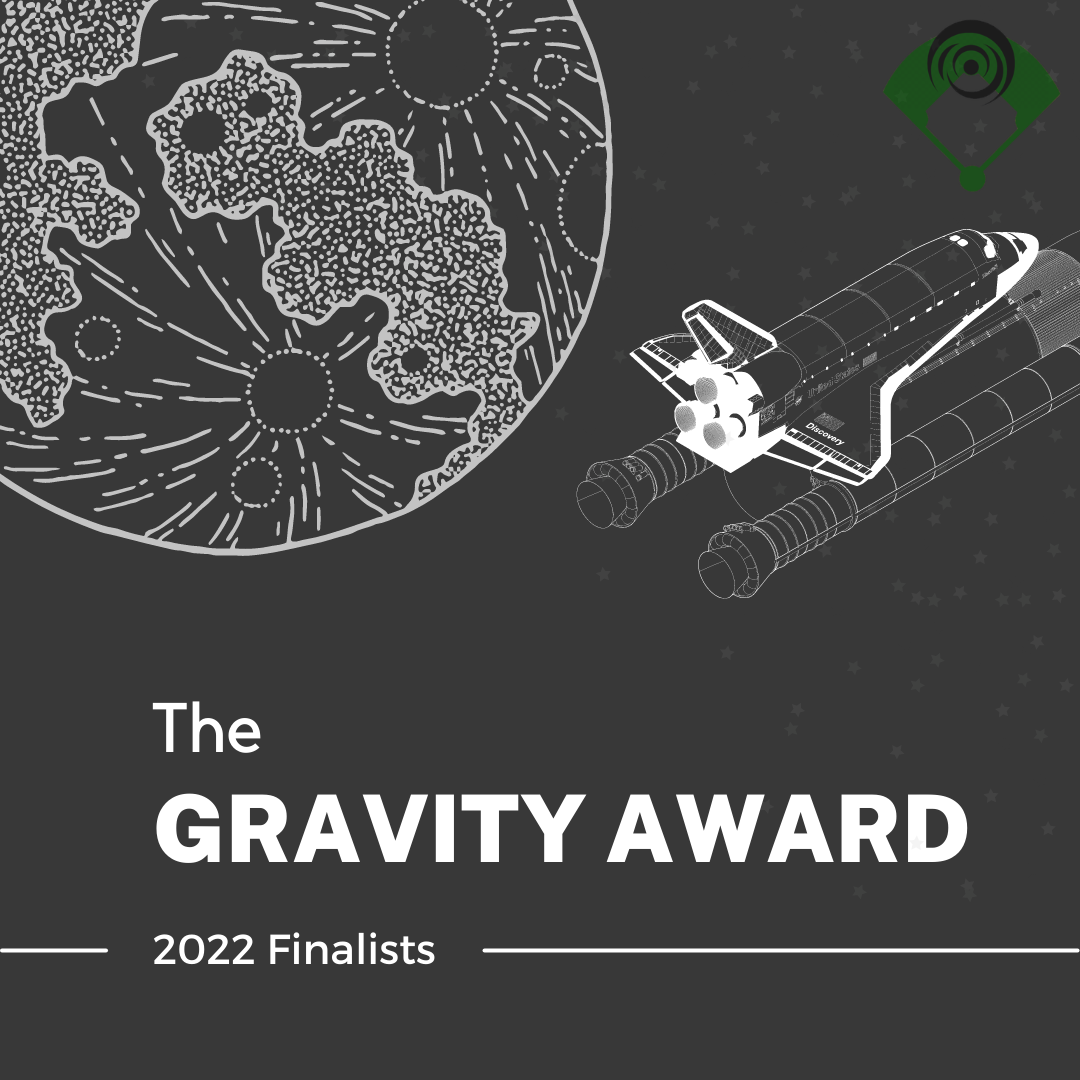
Image courtesy of http://www.centerfieldofgravity.com

I’m pleased to announce that my story “Before Concord” has been chosen as a finalist for the 2022 Gravity Award by the fine folks at Center Field of Gravity. As they say on the Oscars, it’s an honor just to be nominated.

“Before Concord” is a favorite of mine: it’s my first satisfactory attempt at a hard-boiled detective story (though, because I’m me, it’s set on the University Republic of Mars at the end of the 22nd century). With all the novel work I have been doing lately, I’m very happy to see one of my shorter pieces get picked up.

The winner will be announced this Tuesday the 17th of May, and you can read the story in all its nominated glory here.

Subscribe

  • Entries (RSS)
  • Comments (RSS)

Archives

  • September 2026
  • August 2026
  • July 2026
  • June 2026
  • May 2026
  • March 2026
  • February 2026
  • January 2026
  • November 2025
  • September 2025
  • August 2025
  • July 2025
  • May 2025
  • April 2025
  • March 2025
  • January 2025
  • December 2024
  • October 2024
  • September 2024
  • August 2024
  • June 2024
  • May 2024
  • April 2024
  • March 2024
  • February 2024
  • January 2024
  • December 2023
  • October 2023
  • August 2023
  • July 2023
  • June 2023
  • April 2023
  • March 2023
  • May 2022
  • August 2021
  • June 2021
  • January 2021
  • October 2020
  • May 2020
  • March 2020
  • February 2020
  • January 2020
  • July 2019
  • June 2019
  • December 2018
  • October 2018
  • July 2018
  • May 2018
  • April 2018
  • January 2018
  • December 2017
  • November 2017
  • September 2017
  • August 2017
  • July 2017
  • June 2017
  • May 2017
  • April 2017
  • March 2017
  • February 2017
  • January 2017
  • December 2016
  • November 2016
  • October 2016
  • August 2016
  • July 2016
  • June 2016
  • May 2016
  • March 2016
  • February 2016
  • January 2016
  • December 2015
  • November 2015
  • October 2015
  • July 2015
  • May 2015
  • March 2015
  • February 2015
  • January 2015
  • December 2014

Categories

  • A Place for my Stuff
  • Advertising
  • Artificial Intelligence
  • Beta Readers
  • Biology
  • Book reviews
  • Curious Fictions
  • Dungeons and Dragons
  • Exit Black
  • fantasy
  • Games
  • HPIC
  • Journeys
  • Let's All Admire That Fantastic Can
  • Lit News
  • Literary criticism
  • Musings and ponderation
  • My Fiction
  • Pacifica
  • Politics
  • Reading Roundup
  • Science
  • Science Fiction
  • Science Fiction Writers of America
  • SETI
  • Stories
  • Stranger Bird
  • The Ideal Vehicle
  • The Time of Troubles
  • Uncategorized
  • Utopia and Dystopia
  • Welcome
  • YA fantasy

Meta

  • Create account
  • Log in

Authors

  • Joe's avatar

Blog at WordPress.com.

  • Subscribe Subscribed
    • The Subway Test
    • Join 174 other subscribers
    • Already have a WordPress.com account? Log in now.
    • The Subway Test
    • Subscribe Subscribed
    • Sign up
    • Log in
    • Report this content
    • View site in Reader
    • Manage subscriptions
    • Collapse this bar
Loading Comments...