• About
  • My Fiction
  • Reviews

The Subway Test

~ Joe Pitkin's stories, queries, and quibbles regarding the human, the inhuman, the humanesque.

The Subway Test

Tag Archives: sci-fi

Science Fiction: the New Philosophy?

06 Saturday Aug 2016

Posted by Joe in Literary criticism, Musings and ponderation, Science Fiction

≈ 2 Comments

Tags

Bertrand Russell, nerd culture, sci-fi

One of the best books I’ve read in a while–and one of the most engaging graphic novels I’ve ever read–is Logicomix. It’s one of those books that seems so improbable that I think a lot of readers probably picked it up just to see how the authors would carry off a graphic novel biography of Bertrand Russell and his quest to systematize all mathematics in Principia Mathematica. Frankly, the topic sounds about as dull as Principia Mathematica itself–I’ve always thought of Principia as being one of those books that people refer to in order to sound educated but which nobody has actually read. And, after learning that Russell and his collaborator, Alfred North Whitehead, spent several hundred pages of densely-packed logic script in order to “prove” that 1+1=2, I suspect I won’t be reading Principia Mathematica anytime soon.

But Logicomix is about so much more than Bertrand Russell’s monumental (and ultimately failed) endeavor to create a self-contained logical system for all maths. Really it’s a surprisingly engaging story about how human beings make meaning out of the universe. I loved the book and will be giving it to loved ones that are into that sort of thing. And, the book made me curious about Russell, whom I’d never really encountered very deeply in college, even though I spent a couple of meandering years as a philosophy major as an undergrad.

I looked up this delightful little interview with Russell, filmed near the end of his life, one of the millions of forgotten treasures on YouTube. In front of the curtain painted to look like a library of ancient books, Russell holds forth in his high-pitched, elfin voice on the uses of philosophy. His basic thesis is that science deals with questions of “how things are” in the world, while philosophy serves to speculate about “how the world might be,” that is, to ask questions which science is not yet prepared to answer.

I think that’s a pretty solid explanation, though it immediately got me thinking that Russell’s definition could just as easily apply to science fiction. Perhaps it applies to science fiction even better: far, far more people read and watch science fiction than philosophy. The field of philosophy has ceded much of the intellectual territory that it occupied in Russell’s day: topics like metaphysics and epistemology get much more airplay in fields like theoretical physics and cognitive science than they do in traditional philosophy departments. Even in 1960 when the interview was filmed, Russell was speaking of the retreat of academic philosophy from topics that could be properly answered by science. But I think even in the realm of thought experiments and counter-factuals, science fiction is adding at least as much to the questions of “how the world might be” as philosophy–or any other academic subject, for that matter.

I know that not all science fiction is Stanislaw Lem and Margaret Atwood–there’s still a huge body of science fiction that doesn’t even try to concern itself with serious questions, science fiction whose sole purpose is an escapist entertainment about laser guns and robots with big boobs. And that stuff can be fun–I’m not too much of a snob to enjoy a Guardians of the Galaxy-type confection. But as we explore the deep stuff, the nature of our universe and of the human predicament, it’s hard to think of a question of metaphysics, epistemology, phenomenology, ethics or aesthetics that hasn’t been explored at least once by some pretty great science fiction.

I’m sure someone who sees this post was a better philosophy major than I. Can you think of an exception to my claim in the paragraph above?

Publication Updates

23 Saturday Jul 2016

Posted by Joe in A Place for my Stuff, My Fiction, Science Fiction, Stories

≈ Leave a comment

Tags

anthology!, cognitive overload at the bookstore, sci-fi, self-googling, that strumpet Fame, writing practice

I got some good news last week: Trevor Quachri, the editor of the venerable Analog magazine, has decided to pick up my story “Proteus.” I’m not sure when it will be coming out, but it’s been wonderful to have a little run of acceptances after such a long dry spell of rejections last year. I’ll keep you posted when “Proteus” is due to come out, as well as when my story “Count Eszterhazy’s Harmonium” will appear in Kaleidotrope.

“Proteus” will be the 15th story I’ve published. In other words, I’ve published 1.66667 stories per year since I started writing science fiction in 2007. What seems like kind of a paltry rate of publication will still, eventually, yield a decent sized harvest of stories. If I’ve learned nothing else from writing, I’ve learned to be patient.

In other publication-related news, Gardner Dozois’ The Year’s Best Science Fiction: Thirty-Third Annual Collection is on the shelves now, as is Rich Horton’s The Year’s Best Science Fiction & Fantasy 2016 Edition. My story “The Daughters of John Demetrius” shows up in both of them. It was a wonderful experience to stumble across the Dozois anthology on the “What’s Hot” shelf at Powell’s City of Books last week. Going to Powell’s is often a bit depressing for me: I often come away feeling overwhelmed by how many great books are out there, that feeling that there are way more good books to read than there are days in life to read them. Other times I go in and feel like I don’t amount to much as a writer as I stroll among the towers of great authors and literary hucksters and folks who just got lucky in the publishing game. It was a sweet moment to see that I too get lucky once in a while.

joe with Dozois

The author in his natural habitat. Photo by the lovely  Carlyn Eames.

Science Fiction As a Gateway Drug

14 Thursday Jul 2016

Posted by Joe in Biology, Games, Journeys, Musings and ponderation, Science Fiction

≈ Leave a comment

Tags

nerd culture, sci-fi, Sid Meier's Alpha Centauri, utopia

For a few years in boyhood at least, I loved science and technology. One of my fondest childhood television memories was of watching the original Cosmos miniseries with my dad, seeing Carl Sagan in his turtleneck and corduroy blazer as he traveled the universe on his “Ship of the Imagination” over Vangelis’ spacey soundtrack. I can remember my dad scoffing pretty frequently at Sagan’s goofily over-acted facial expressions–Sagan perpetually appeared to be having some kind of ineffable and mystical experience on his dandelion-seed ship–but the show appealed to the ten year-old me, so much so that I believed in 5th grade that I was destined to become a physicist.

I left science behind in junior high school for the same reasons that a lot of kids do: math and science classes were difficult (often not all that well-taught, too); I struggled with the emotions of puberty and my parents’ divorce and didn’t find factoring polynomials to provide much of an escape from my problems. For a couple of years I became a lackluster student in most subjects, but especially so in science and math, culminating in my freshman year of high school with the lowest grade I received in my many years of formal schooling (a D+ in biology).

Somewhere around age 14 I realized that the kids I thought were cool–the orchestra and debate kids who watched Stanley Kubrick movies and listened to classical music for fun–seemed to get As and Bs pretty effortlessly. And I wanted enough to be like them that I wised up in school a little. However, my perception of those cool kids was that coolness was all about literature and music, Camus and Sartre and Kafka and Stravinsky and Bauhaus (the band, not the architectural movement). Coolness had little to do with science and math beyond getting good grades. And so my trajectory through high school, college, and some time beyond kept me almost entirely in the humanities, with results which I probably could have predicted and which might have depressed me if I had predicted them: by age 24 I had a master’s degree in English and was an adjunct faculty member of a tiny community college.

Given where I ended up, how did I come back to science at all? I came back the same way that many, many young people get into the sciences in the first place: through science fiction. In 1998 I purchased one of the seminal computer games of all time: Sid Meier’s Alpha Centauri. Players of Alpha Centauri guide a faction of colonists through the development of humanity’s first settlement beyond the solar system. I was fascinated by the idea of a planet-wide university, of colonists building supercolliders and space elevators and massive ecological engineering projects.I loved the idea of a human society devoted to the acquisition of knowledge and careful stewardship of natural resources–an ideal that sometimes seems far removed from the society I actually live in.

Sid Meier's Alpha Centauri - PC - IGN

I also realized (pretty slowly, after a couple hundred hours of game play) that all of the projects which the game modeled on this fictional alien world were projects that real human beings were actively pursuing on this planet, for good and ill. Among them, there are massive environmental protection projects, ecological restoration projects, and sustainability efforts whose success or failure will determine the future of human civilization. I realized that I wanted to live in a world of science, not merely as an observer, but as an active participant.

In years since, the burgeoning of the internet, with its powerful democratizing effects, its incubation of the citizen science movement, of “outsider science,” of the makers’ movement, has convinced me that the ideal of a human society made entirely of scientists, naturalists, and ecologists could be our society. All people can become scientists. Becoming a scientist requires time and dedication, but it requires no secret gnosis that is kept from non-scientists. Do I want to learn how volcanism works? I have only to read and observe for several hundred hours before I will know a good deal about it (ironically, that’s about how much time I spent playing Sid Meier’s Alpha Centauri). Do I want to learn calculus? Khan Academy is right here on the internet, assuring me that I can learn anything, for free, forever.

You Can Learn Anything | Valley Oaks Charter School Tehachapi

As there is in most science fiction, there’s a lot of hand-waving and pseudo-scientific ersatz explanation in Sid Meier’s Alpha Centauri. Some of the hand-waving, now that I know a little more about science, seems pretty laughable in retrospect. But that hand-waving got me in the door, years after I’d thought I’d closed the door. People like Gene Roddenberry and Sid Meier have done as much to recruit scientists as anyone on earth.


Writerly Updates

04 Thursday Feb 2016

Posted by Joe in My Fiction, Stories

≈ Leave a comment

Tags

John Demetrius, marketing, Quixotry, sci-fi, that strumpet Fame, writing practice

It’s a gas to hear that Tom Dooley’s awesome and quixotic Eclectica Anthology Kickstarter was a rousing success and the books are coming out! True to my style as a writer, I’ll be in the Speculative Edition.

Closer to home, I finally got my newest story, “Proteus,” out the door to an editor. Maybe he’ll take it, maybe not, but it feels good to have new work going out.

An Anthological Appeal!

04 Monday Jan 2016

Posted by Joe in My Fiction, Stories

≈ Leave a comment

Tags

"best of" anthologies, marketing, sci-fi, that strumpet Fame

Happy New Year, gentle readers!

As many of you know, my work will be coming out in three anthologies over the next few months: Rich Horton’s The Year’s Best Science Fiction and Fantasy and Gardner Dozois’ The Year’s Best Science Fiction; both of them are anthologizing my story “The Daughters of John Demetrius.”

ECLECTICA LOGO


The third of the anthologies is a different case: in honor of its 20 year publishing history, Eclectica magazine is publishing an anthology of the best speculative fiction to appear there–including my story “Better than Google.”

Eclectica’s publisher, Tom Dooley, is hoping to move beyond the print-on-demand market and actually place the book in bookstores. To that end, he has a Kickstarter campaign to gin up support. If you are a fan or a generous well-wisher, please consider contributing!

The part that blows my mind is that Eclectica is a magazine that has been published online since 1996. I was getting on the internet using a 14,400 baud modem back in those days. Eclectica was some of the best literature around, all at 14.4 kilobytes (yes, kb) per second.

I’ve still been sitting through a dry spell with my new material–it’s been several months since I’ve had a new story picked up. But keep watching the skies–I’ll have more stories out soon.


The Year in Reading

29 Tuesday Dec 2015

Posted by Joe in A Place for my Stuff, Musings and ponderation

≈ 4 Comments

Tags

biology, books, fantasy, sci-fi

Because it was one of my 2015 New Year’s resolutions to read more books, I paid some mind to my reading habits this year. This resolution was a real softball pitch to myself, since in all of 2014 I read only eight books. At that paltry rate, even if I am lucky enough to live another 40 years, I will only read 320 more books in life.

(In my defense, 2014 was the year I finished up graduate school and got remarried, so the first half of 2014 didn’t leave me a lot of reading time. Still, eight books. It’s hard to call yourself a writer if you only read eight books a year).

This year I did somewhat better: 15 books (not counting re-reads of books that I was teaching this year). How did I fare with these? What follows is a brief review of each title in my motley 2015 bookshelf:

Apollinaire, Guillame: The Heresiarch + Co. This was a gift from Gloria on her return from France. I found these stories charming—hilarious, sweet-natured, wry, odd, just a bit surreal. Sometimes the plotting seemed a little artless, but there were other touches of language that seemed masterful, like the poet with “the gift of ubiquity” and the cigar with the plea for help written inside. Apollinaire is a favorite poet of mine, so I was predisposed to love his fiction.

Austen, Jane. Emma. The second Austen novel I’ve read, I found this book a perfectly delightful comedy of manners and a sly (perhaps over-subtle) critique of the British class system and the limits placed upon English women. Emma’s character is almost thoroughly unsympathetic for the first half of the book or so, but she acquits herself admirably. Austen’s humor is gentle, understated, and yet at the same time absolutely electric. The characters were generally types—something like the types of Shakespearean comedy—rather than fully fleshed out bundles of complication. But that’s Austen’s style.

Bailey, Thomas R., Shanna Smith Jaggars, and Davis Jenkins. Redesigning America’s Community Colleges. This was a wonky read, but a very good one. While I was already convinced of our need to develop guided pathways for community college students, this book provides both evidence supporting the argument as well as some suggestions for further research and colleges to watch. I have a feeling I’ll be consulting  this book a good deal in the coming years.

Dyson, Freeman: Disturbing the Universe. One of the best books of essays I’ve read. Freeman is very much like Loren Eisley as a writer—somewhat less sublime but also funnier. Some of these essays have lasted better than others, but I am quite taken with Dyson’s powerful and utterly unique moral vision.

Le Guin, Ursula K. The Lathe of Heaven. I reviewed this earlier in the year. It’s a gripping read, one of those stories which breaks a cardinal rule of writing (in this case, no “it was all a dream” stories) but which Le Guin gets away with because, hey, she’s Ursula Le Guin. I don’t know that this novel held together at the end quite as well as some others of hers—like Left Hand of Darkness—but I was taken with the humor and horror of this story, as well as with Le Guin’s of-the-era argument for the quieter, wiser ways of Taoism as a corrective to the evangelical Judeo-Christian Western Rationalism that brought us the Vietnam War and global warming and the DSM.

Link, Kelly. Stranger Things Happen. I loved these stories overall. The best of them were truly chilling and surreal, like Twin Peaks on the page. Link is masterful at, well, linking disparate, subterranean connections in her work, and the best stories—like the first three in the book—do things that I couldn’t imagine doing as a writer. At times the writing is a little precious or too eager to crack a joke, but Link is the real deal.

Newport, Cal: So Good They Can’t Ignore You. The best career advice book I’ve read. This quick read annoyed me in a few places—Newport mostly interviews the beneficiaries of privilege, like himself, and he has a lot to say about what being a faculty member at Georgetown will be like before he’s even started the job—but the career advice Newport gives here is sound and a valuable corrective to the conventional wisdom of “following your passion.” I bought this book for my oldest daughter and will pass it along to the younger girls when the time is ripe.

Peake, Mervyn: Titus Groan. The first of the Ghormenghast Novels. This was a remarkably slow read, oddly and loosely plotted (in some ways almost without plot), full of demanding and self-indulgent writing. But I’ve also never read anything like it: Peake has a gift for arresting imagery and wordplay. His work is like a novel-length set of Edward Gorey drawings.

5802178429_8bdb4f03d1_o

Art credit: Michelle Duckworth


Peake, Mervyn: Gormenghast.  The second Gormenghast Novel. I think that in most ways I preferred Titus Groan, even though Gormenghast has more action. Peake’s work is by turns inspiring and maddening: he will turn a phrase or describe a scene in such an arresting way that I can’t imagine how he managed it; then, he’ll try to squeeze out of a plot difficulty with a hamfisted and frustrating plot twist, coincidence, or ad hoc explanation. While there’s plenty that frustrated me about this book and its predecessor, I probably have enough momentum here to finish the Gormenghast novels next year.

Penn, Rob: It’s All About the Bike. This was an enchanting little history of the bicycle. I’m not certain how accurate it is on every point, but I loved the stories of the bike’s early days, interspersed with Penn’s quest for his own “lifetime bike.” It makes me want to assemble a bike myself.

Romano, Tom. Write What Matters. This book was dedicated to my dad and contained some sweet moments from his life (as well as from the life of another beloved and departed writing teacher of mine, Ken Brewer). While I didn’t always follow Tom’s organization, I loved Tom’s voice and his fierce love as a writing teacher. His words about rough drafts have helped me during this tough slog through the sloppiest rough draft I’ve ever attempted: Pacifica.

Schwarz, Barry. The Paradox of Choice: Why More Is Less. I picked up this easy, engaging read in my research into structured pathways at my community college. The book is funny, humanistic, and it digests a lot of psychological and economic research into a reader-friendly form. I may want to pass this book along to my daughter to help her with her career-picking struggles.

Sterner, Robert and James Elser: Ecological Stoichiometry. This book took me several attempts, but when I really sat down to deal with it, I got through it in about 8 months of two-pages-a-day reading. It really is a remarkable scientific work, and I came away convinced that phosphorous is the most ecologically important chemical on Earth (because of its role making up RNA). I’d love to do science like this! I realize, though, that it’s not the kind of science that most people do in their spare time. I’ve definitely decided to keep reading in the biological sciences, though, and perhaps a cool home project will present itself.

Wilde, Oscar. The Picture of Dorian Gray.  I’d been meaning to read this since taking a long ago grad school class on the symbolists and decadents. Overall, this seemed like a Poe-esque gothic tale peppered with Lord Henry’s bon mots and aphorisms. Plot-wise, it dragged a bit—it seemed highly influenced by Huysman’s Against Nature—and there were few truly sympathetic characters besides Basil. At the end, it struck me as a much more conventional morality play than I had been led to believe it would be—maybe that’s why I came away a bit disappointed. The art for art’s sake motto of the aestheticists ultimately seemed to give way to a somewhat conventional Victorian morality, less daring in its conclusions than Hardy or George Eliot or Flaubert or Dostoevsky.

Wilson, David Sloan: Darwin’s Cathedral. This book really affected me powerfully–I wrote about it in my previous blog post. The idea that religious behavior is adaptive and selected for through multi-level group selection is revolutionary (though maybe it shouldn’t be). I can see how this book is influencing my approach to writing Pacifica: Jude wants to build the next religion that will expand our moral circle to include all humanity and be compatible with science.

I hope that 2015 was a good reading year for you, perhaps so good that it would be impossible to fit your thoughts into a single blog post. I’ll see you in the new year!
The Zeroth Draft

12 Saturday Dec 2015

Posted by Joe in My Fiction, Pacifica

≈ Leave a comment

Tags

Pacifica, sci-fi, writing practice, zeroth drafts

I finished the roughest draft of a novel I’ve ever roughed out in a rough world. It is so rough that I couldn’t bring myself to write Pacifica: first draft at the beginning of the notebook–instead I titled it Pacifica notes. It’s a ridiculous mix of fatuous underwriting and deep purple gasbaggery. But, if you don’t mind characters appearing,  disappearing, and changing gender midway through, it’s also a finished draft.

So far as I can tell, I wrote about 60,000 words–shorter than Stranger Bird, but still a novel. I would guess there are 15,000 words I’ll toss out immediately and maybe that many new words to add. And it’s still too early to tell whether it will ever amount to anything.

But, while I feel more exhausted than excited, it does feel at least a little good to have a story of that scope and sweep, and with a beginning, middle, and end on paper.

2127729064_e6f501a363_z

Photo Credit: Miheco

Building Worlds

05 Saturday Dec 2015

Posted by Joe in Dungeons and Dragons, Musings and ponderation

≈ 2 Comments

Tags

fantasy, maps, marketing, mythopoesis, sci-fi, utopia

When I was  in sixth grade, I made a map out of my imagination. I drew it in colored pencils on six pieces of graph paper which I connected with masking tape, so that I could fold it like a codex or some mystical road map. While I’ve largely forgotten what it looked like, I remember that I had drawn a continent which clustered around an inner sea, a dragon-infested Mediterranean. The land was divided into kingdoms and empires, a crazy-quilt of realms filled with Dungeons and Dragons creatures, which is to say filled with a Lord of the Rings-fanboy descendants of Tolkien’s elves and dwarves and orcs.

map_of_earthsea

A Map of Earthsea, by Liam Davis, after Ursula Le Guin


What first drew me to fantasy and science fiction as a reader, and as a gamer and as a writer, was the world building. I’m reminded of the words of a friend’s son who said that you can tell if a book is going to be good if there’s a map at the beginning of it. When I read fantasy as a kid, I could put up with a lot of weak writing–poor characterization, wooden dialogue, tedious exposition–if there was a map in the book that represented a world that I would want to exist.

And yet, a map is also judged by its verisimilitude. Middle Earth, Earthsea, The Hyborian Age all drew me in with their plausibility: however oddly shaped the continents, those drawings seemed like maps of the actual world from a much earlier time, or a map of what might be the world. A map with no connection to a world that the reader does know is a useless map.

That’s the tricky thing about world building. There is no building a truly new world, untethered from any human world. Every map we draw, every pantheon of ancient deities we imagine for a game world or a novel, is a variation on a theme that was laid down in the real world. The Shire looks a lot like rural England. Earthsea is an imagined Bronze Age for the San Juan Islands. Gormenghast is the drama of a noble English house played out in Beijing’s Forbidden City. The City in Little, Big is New York City. The challenge with such world-building is to arrange these oddly-lensed realities into a world which seems totally distinct.

There’s a tension in fantasy and science fiction–as there is with all art–between the craving for the new and the comfort of the familiar. Audiences long for the new world, that giddy disorientation that comes from reading of an unfamiliar hero or a far country and knowing that these people and places fit into a coherent world that the book is slowly uncovering. But readers also crave the comfort of recognition, in the original sense of the word recognize: to know again. That is, readers are still happy to pay for something that reminds them of Lord of the Rings or Alice in Wonderland, no matter how many others complain about how much derivative fiction is out there. A book with a map that looks something like the real world is far likelier to appeal to readers than a book with a map of a totally new place, a place so different as to be unrecognizable. But some, thank goodness, can’t rest until they find the totally new place.


Whence The Subway Test

27 Friday Nov 2015

Posted by Joe in Musings and ponderation

≈ 1 Comment

Tags

fantasy, monsters, mythopoesis, Neanderthals, sci-fi

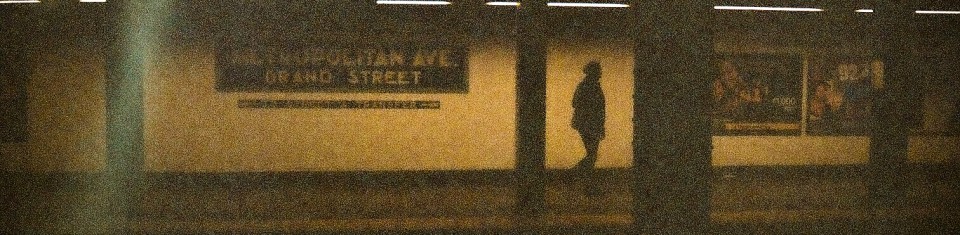
The Subway Test is the name of this blog. I didn’t feel right calling it JoePitkin.com or anything else with my name in it. When I was cooking up the soup bones of the blog, I stirred through different ideas in my stories for a blog name. The Subway Test seemed like a decent provisional name, and the longer I post here the better the name feels.

But what does it mean? It comes from one of my favorite stories, an early one called “So-Sz,” which explores the musings of Sasquatch after he has learned to read and write by studying the encyclopedia. The narrator references “the subway test,” which I read about 20 years ago in Scientific American, as a thought experiment about how much like modern Homo sapiens were the Neanderthal. Take a Neanderthal man, dress him in a three-piece suit, give him a briefcase and a haircut, and put him on the subway. Will anyone notice that he is not like the others? If not, then he has passed the subway test.

2770887841_d78daf2c4d_o

Photo Credit: Matt Celeskey

(As an aside, this article and the concept of the subway test came out long before Svante Pääbo’s work showing that all Eurasians carry a significant number of Neanderthal genes. I suspect Neanderthal would pass the subway test because a lot of people on the subway are at least part Neanderthal themselves.)

Anyway, the idea appealed to me because, as I’ve said before, the function of all art is to explain to ourselves what it means to be a human being. One of the things I most love about science fiction and fantasy is that these genres spend a lot of time working with creatures that are clearly non-human, as well as creatures that are almost human, half human, or human only on first inspection. Scratch the surface, and many sci fi characters are actually gods or demons or monsters of some kind.

But, scratch the surface a little further and you will find that those gods, demons, aliens, dragons, sentient planets, etc. are really humans in alien masks, like the characters of an ancient Greek play. As Stanislaw Lem says in his amazing novel Solaris, “We have no need of other worlds. We need mirrors. We don’t know what to do with other worlds. A single world, our own, suffices us; but we can’t accept it for what it is.” All that traveling, all those robots sent sojourning across the cosmos, all that scanning of distant stars for Dyson Spheres: all we are really looking for is a mirror. Put on a suit and board the subway. Will anyone notice who you really are?

Anthologies to Watch For

23 Monday Nov 2015

Posted by Joe in My Fiction

≈ Leave a comment

Tags

anthology!, marketing, sci-fi

I may be having trouble getting my new work picked up for publication, but I got news yesterday that my already-published work will be coming out in two different anthologies. Gardner Dozois has decided to pick up “The Daughters of John Demetrius” for The Year’s Best Science Fiction #33, and Tom Dooley will be using “Better than Google” in Eclectica Magazine’s 20th anniversary speculative fiction anthology. Seriously, there’s an online magazine celebrating its 20th anniversary next year.

I’ll post more particulars as the dates approach–thanks for reading!

← Older posts
Newer posts →

Subscribe

  • Entries (RSS)
  • Comments (RSS)

Archives

  • November 2025
  • September 2025
  • August 2025
  • July 2025
  • May 2025
  • April 2025
  • March 2025
  • January 2025
  • December 2024
  • October 2024
  • September 2024
  • August 2024
  • June 2024
  • May 2024
  • April 2024
  • March 2024
  • February 2024
  • January 2024
  • December 2023
  • October 2023
  • August 2023
  • July 2023
  • June 2023
  • April 2023
  • March 2023
  • May 2022
  • August 2021
  • June 2021
  • January 2021
  • October 2020
  • May 2020
  • March 2020
  • February 2020
  • January 2020
  • July 2019
  • June 2019
  • December 2018
  • October 2018
  • July 2018
  • May 2018
  • April 2018
  • January 2018
  • December 2017
  • November 2017
  • September 2017
  • August 2017
  • July 2017
  • June 2017
  • May 2017
  • April 2017
  • March 2017
  • February 2017
  • January 2017
  • December 2016
  • November 2016
  • October 2016
  • August 2016
  • July 2016
  • June 2016
  • May 2016
  • March 2016
  • February 2016
  • January 2016
  • December 2015
  • November 2015
  • October 2015
  • July 2015
  • May 2015
  • March 2015
  • February 2015
  • January 2015
  • December 2014

Categories

  • A Place for my Stuff
  • Advertising
  • Artificial Intelligence
  • Beta Readers
  • Biology
  • Book reviews
  • Curious Fictions
  • Dungeons and Dragons
  • Exit Black
  • fantasy
  • Games
  • HPIC
  • Journeys
  • Let's All Admire That Fantastic Can
  • Lit News
  • Literary criticism
  • Musings and ponderation
  • My Fiction
  • Pacifica
  • Politics
  • Reading Roundup
  • Science
  • Science Fiction
  • Science Fiction Writers of America
  • SETI
  • Stories
  • Stranger Bird
  • The Ideal Vehicle
  • The Time of Troubles
  • Uncategorized
  • Utopia and Dystopia
  • Welcome
  • YA fantasy

Meta

  • Create account
  • Log in

Authors

  • Joe's avatar

Blog at WordPress.com.

  • Subscribe Subscribed
    • The Subway Test
    • Join 144 other subscribers
    • Already have a WordPress.com account? Log in now.
    • The Subway Test
    • Subscribe Subscribed
    • Sign up
    • Log in
    • Report this content
    • View site in Reader
    • Manage subscriptions
    • Collapse this bar
 

Loading Comments...