I decided to go in for a new head shot recently. It’s been over six years since my most recent head shots, and not only have I gotten more wizened over that time, but I also have a new book coming out in the next few months.
As with my last photos, my new head shot is he work of the incomparable Pat Rose. You can check out her amazing work here: she’s an institution of Portland portraiture. Having my photo taken by her feels a lot like I imagine sitting for a painted portrait would feel, and at the end of it all she produces an image that is wonderful and painterly as though Jan Van Eyck had painted me.
So, in honor of the coming Exit Black (and of my advancing age), I give you “Portrait of Joe Pitkin, aged 52”. . .
Hello, literarians and assorted (and beloved) fellow weirdos!
I received an email from my publisher, Blackstone, yesterday with a publication schedule for my second novel, Exit Black. I’m excited to announce that my little bundle of joy is due to come out in February of 2024 (or, to use Cesare Emiliani’s Holocene Calendar, February 12024). I promise not to pester you about it every day for the next eight months!
I also promise not to ever refer to Exit Black as “my little bundle of joy” again. But it sure is a little bundle of something–little bundle of action? Little bundle of thrills? Little bundle of artfully strung-together words? That last one feels a little too on-the-nose.
I experienced a weird constellation of three events last week. First, my editor, my agent, and I hashed out the jacket copy for my upcoming novel, Exit Black. It was weird to realize that I was basically helping write ad copy for a book that I labored over for two years. Second, I sent out a query to a literary agent for the book I drafted after Exit Black, called Pacifica. (My current excellent and extant agent, Scott, works on film and TV projects, and Pacifica definitely isn’t movie material, so I am looking for a bookish agent as well).
And third, I was driving down Broadway in Portland when I saw this bumper sticker ahead of me:
Millennials and Zoomers–and their parents who might have watched Spongebob Squarepants with them twenty years ago–will recognize this as Squidward Tentacles’ self portrait, “Bold and Brash.” I was happily shocked to see it on a bumper sticker. And I realized when I saw it that this publication process I am experiencing with my books is drawing up all of my deeply Squidwardian impulses: my vanity, my hunger for approval, my inner conflict about how art intersects with commerce. Squidward, c’est moi.
If you need a blast from the past, or you somehow never saw the original, here is a clip of me Squidward from the episode “Artist Unknown:”
I’m late bringing this news to The Subway Test–a sign of the recent moribunditude of my blog. But last year I entered the Aura Estrada Short Story Contest at Boston Review and…I didn’t win. But my story, called “Nomenclator of the Revolution,” was a finalist for the award, and that means the story will be appearing in Boston Review soon!
One of the reasons I feel so proud to have “Nomenclator” coming out in Boston Review–besides the obvious, that Boston Review is an excellent publication which has hosted writing from titans like Rita Dove, John Updike, Susan Sontag, and Saul Bellow–is that “Nomenclator” had been rejected by 26 other magazines before it was accepted at Boston Review.
Which is another way of saying don’t invest too much meaning in any particular rejection of your work. When a story of mine is rejected a few times–say, half a dozen rejections or so–I do need to look hard at what I’m sending out. Maybe the piece isn’t ready. Maybe it’s not as good as I would like to believe it is. But once in a while, I scrutinize the much-rejected story and it still looks good to me. It’s hard to assess my own work honestly. But if I really believe the story is good, then I’ll keep sending it out until I find someone who agrees with me.
One of my formative memories as a writer was seeing the great poet William Stafford read at the end of his career. He would have been 75 or 76 years old at the time–a wizened, kindly fellow who I appreciated only later as one of the most important poetic voices in the 20th century. At one point in the reading, he introduced one of his poems by reciting the names of all the magazines and journals that had rejected it. The list was long–I don’t remember how many publications were on it–but, journal names being what they are, the list sounded like a poem of its own. I didn’t have the courage to tell Stafford how important his reading had been to me, and he died mot much later. But thank you, William Stafford, for reading that list when I was 19 years old.
But the novel I’m working on now, Pacifica, begins each of its 74 chapters with an epigraph. Much like the computer game Civilization, each chapter is named after one of the technologies that have made modern humanity possible. And, much like Civilization, each technology is accompanied by an apposite quote. Leonard Nimoy was the gold standard narrator for those quotes in Civilization IV (though Sean Bean has his moments in Civilization VI).
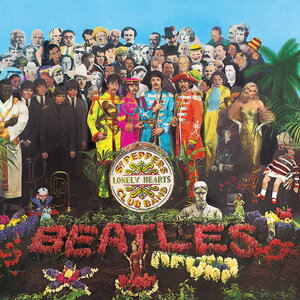
One of the most fun parts of drafting Pacifica has been finding the right quotes for each chapter. I picked from books and poems that I love (as well as a few books that I hated) to put together what I imagined as a kind of collage or mosaic of human knowledge. I imagined the task as something like a literary version of the cover of Sgt. Pepper’s Lonely Hearts Club Band, where The Beatles assembled a photo-collage crowd of their favorite thinkers and artists and goofball influences.
Many technologies were easy to find quotes for. Especially for early technologies like pottery, masonry, and currency, there are a thousand great writers who had something pithy to say. Mostly I would page through books in my office, or CTRL-F through digitized books in Archive.org, to find quotes that spoke to the technology in question and also, hopefully, to the action of the chapter. Sometimes I had to draw the connections myself, in which case the quote turned into something of a writing prompt; other times the quote fit the chapter in deep and unexpected ways that I couldn’t have engineered if I tried.
Some of the later technologies were much harder: for instance, no one from Homer to Virginia Woolf seems to have much to say about the superconductor. Who could I quote for a tech like that?
It just so happened that by the time I got to the superconductor chapter of the book, everybody was talking about ChatGPT. At my college, the discussion revolves entirely around students’ using ChatGPT to plagiarize their essays, an issue which seems to me as trivial, in the grand scheme of dangers that ChatGPT represents, as the crew of the Titanic arguing about a shortage of urinal cakes in the men’s rooms of the Saloon Deck.
So I asked ChatGPT to find me some quotes about superconducting. It suggested some quotes from Larry Niven’s Ringworld and Niven’s and Jerry Pournelle’s The Mote in God’s Eye. They weren’t bad references, exactly–those books do mention superconducting–but none of them resonated with me. So I asked about Arthur C. Clarke, a fave of mine: surely, I thought, Clarke must have written somewhere about superconducting.
According to ChatGPT, Clarke has written about superconducting: of the two references ChatGPT gave me, the one which jumped out at me was this one: “Clarke’s short story ‘The Ultimate Melody,’ published in 1957, briefly mentions the use of superconducting materials in the construction of a futuristic musical instrument called the ‘ultimate melody.'” Now that’s a resonant quote–that would work perfectly for Pacifica!
So I looked up the story and read it (like 90% of Clarke’s short fiction, I had never read it before). Here’s the thing, though: there’s absolutely nothing about superconducting in that story! (For that matter, the futuristic musical instrument is called “Ludwig;” the ultimate melody was the ideal music the instrument was designed to find).
And here’s the other thing, which I discovered later: Arthur C. Clarke did write a short story, called “Crusade,” in which superconductivity is a central plot point. ChatGPT didn’t think to mention it (because ChatGPT doesn’t think yet). I tracked that story down with a simple DuckDuckGo search for “Arthur C. Clarke superconducting.” It’s an excellent story, by the way–very Arthur C. Clarke. And that story had the perfect quote, which fits both Pacifica and the life I feel I am living lately: “It was a computer’s paradise. No world could have been more hostile to life.“
So, for now, I agree with John Scalzi’s excellent assessment: “If you want a fast, infinite generator of competently-assembled bullshit, AI is your go-to source. For anything else, you still need a human.” That’s all changing, and changing faster than I would like, but I’m relieved to know that I’m still smarter than a computer for the next year or maybe two.
I’ve had a long spell away from this blog while I was drafting my third novel, Pacifica. But now that Pacifica is (finally, after a thousand sighs) drafted, and as I prepare for the publication of my second novel, Exit Black, by Blackstone this year, I’m able to give a little more attention to this space. I’ve missed being here, and I’ve missed interacting with you through The Subway Test. I hope to connect with you a little more frequently in the coming months!
So, feel free to call me Mr. Gravity for the rest of 2022. Or Professor Gravity if that appeals to you more. On second thought, don’t call me that: a name like Professor Gravity suggests that I might actually understand gravity, and as my physics teacher said long ago, gravity is harder to understand than you think. Just keep calling me Joe.
Many thanks to Brad and Rob for their fine publication, Center Field of Gravity, which I hope you will check out.
I’m pleased to announce that my story “Before Concord” has been chosen as a finalist for the 2022 Gravity Award by the fine folks at Center Field of Gravity. As they say on the Oscars, it’s an honor just to be nominated.
“Before Concord” is a favorite of mine: it’s my first satisfactory attempt at a hard-boiled detective story (though, because I’m me, it’s set on the University Republic of Mars at the end of the 22nd century). With all the novel work I have been doing lately, I’m very happy to see one of my shorter pieces get picked up.
The winner will be announced this Tuesday the 17th of May, and you can read the story in all its nominated glory here.
My story “Potosí” recently came out in Analog, and it’s gotten lots of the positive and negative attention that I had hoped it would. In the case of this story, I looked forward to some negative attention, as “Potosí” is a not-so-veiled indictment of the Trumpian worldview, and some readers of science fiction, unfortunately, are also white supremacists. (This is not to say, by the way, that everyone who hated the story is a white supremacist. People could have any number of reasons for disliking the story; however, a few people who hated it had objections which were rooted in a white supremacist worldview).
I’ve also been happy with how the story looks in Analog. Even though the magazine is print-only, it’s still nice in this internet age to see one’s name in print. However, I do have one regret about how the piece looks: my bio was omitted from the end of the story. That’s normally not a big deal at all for me–I suspect the editors left it off for space-saving reasons, and the folks at Analog have done more than just about anyone to promote my work. They were even kind enough to run a full page biosketch on me a couple of years ago. But there was a line in my bio for this story that I really wanted to appear in the magazine. Here is is:
“The author gratefully acknowledges the assistance of Phil Ekstrom in working out the physics of this story.”
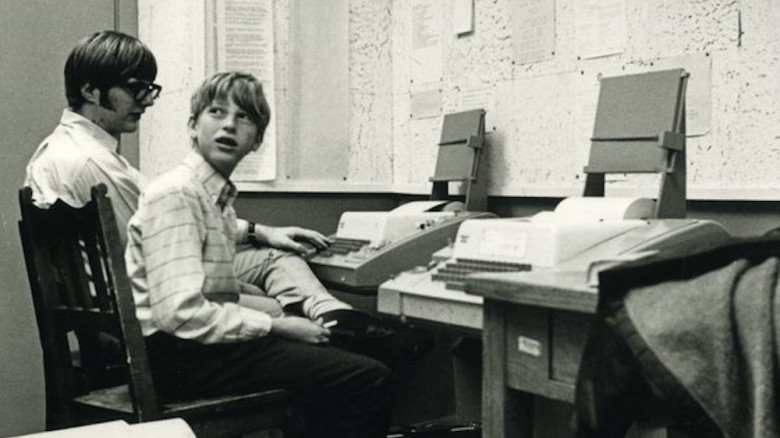
Phil is a friend of mine whose knowledge of physics not only exceeds my own (that’s an exceedingly easy accomplishment), but his knowledge of physics also exceeds my knowledge of any field at all, including writing. He’s a man of great accomplishment in a wide number of fields of physics and engineering; while it’s hardly his greatest achievement, some will recognize his work in the photo below: Phil was one of the people who wired up the young Bill Gates’ and Paul Allen’s first computer.
A teenage Bill Gates looks to the top of an imagined stack of 100 billion dollar bills –Getty Images
“Potosí” involves a decent amount of classical mechanics–most of the story takes place in the microgravity of a small asteroid being pushed this way and that by space tugs, mass drivers, and the imaginary forces of human greed and anger. I’m reasonably good at describing the greed and anger part, but I needed a lot of help with the physical forces. I can tell Phil has years of experience explaining things to undergraduates of varying talent; he certainly needed to call on those skills in order to explain my story to me.
The story has some (I hope small) violations of physical laws, where I did a little handwaving in order to accomplish an artistic goal. But to the extent that “Potosí” is any example of hard sci-fi–as opposed to the science fantasy of Star Wars or the kilomoles of handwavium in Star Trek–I have Phil Ekstrom to thank for giving the story some semblance of rigor. Thanks, Phil.
One of my literary heroes, Ursula K. Le Guin, died yesterday after a long illness. In her careful, forceful prose, and in her far-reaching moral vision, Le Guin expanded for me the concept of what a science fiction and fantasy writer could be. She was not the first great fantasy writer, but she was the first fantasy writer I encountered whose work had the feel of a high-literary novel. I’ll miss her.
Someday I’ll write a longer appreciation of her work in which I try to explain how meaningful her writing has been for me. For now, I’ll simply reprise the last essay I wrote about Le Guin, a post about her marvelous book The Lathe of Heaven.



 The Subway Test